| Piú votate |
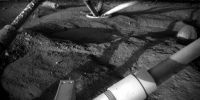
PHOE-SOL097-PIA11074.jpgDOES "NASA" READ US? - Sol 9757 visite...O forse siamo soltanto "bravi"?!? I "granuli" che il Dr Faccin per primo - e praticamente da subito - aveva notato essere presenti su una delle zampe del Lander, adesso - e SOLO dopo 97 Soles... - sono stati notati anche dalla NASA la quale, pochi giorni dopo una delle nostre usuali pubblicazioni che esprimono dubbi e curiosità, interviene pesantemente su queste features dedicandogli un frame e qualche parola sul Planetary Photojournal.
Coincidenza (l'ennesima)? Causualità (l'ennesima)? Fortuna (si, certo, come no...)? La risposta è ardua. O forse no.
La risposta è semplicissima e, a parere ci chi scrive, potrebbe essere "nascosta" nella nostra stessa "Lista Utenti".
E comunque sia, c'è di che essere fieri!
Caption NASA:"The Robotic Arm Camera on NASA's Phoenix Mars Lander took this image on Sept. 1, 2008, at about 04:00 M.L.T., during the 97th Martian Day, or Sol, since landing.
The view underneath the Lander shows growth of the clumps adhering to leg strut (upper left) compared with what was present when a similar image was taken about three months earlier (see PIA10759).
The view in this Sol 97 image is southward. Illumination is from the early morning Sun above the North-Eastern horizon. This is quite different from the illumination in the Sol 8 image, which was taken in mid-afternoon.
The science team has discussed various possible explanations for these clumps.
One suggestion is that they may have started from a splash of mud if Phoenix's descent engines melted icy soil during the landing.
Another is that specks of salt may have landed on the strut and began attracting atmospheric moisture that freezes and accumulates.
The clumps are concentrated on the north side of the strut, usually in the shade, so their accumulation could be a consequence of the fact that condensation favors colder surfaces.
In this image, compared with the one from three months earlier, the flat, smooth patches of ice exposed underneath the lander seem to be partly covered by darker material left behind as ice vaporizes away.
The flat patch in the center of the image has the informal name "Holy Cow", based on researchers' reaction when they saw the initial image of it".
Nota Lunexit: "Holy Cow", tradotto in Italiano, significa "Caspita!!!"MareKromium
(1 voti)
|
|
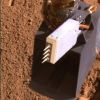
PHOE-SOL099-PIA11073.jpgPhoenix Conductivity Probe after Extraction - Sol 99 (natural colors; credits: NASA)85 visiteCaption NASA:"NASA's Phoenix Mars Lander inserted the 4 needles of its Thermal and Conductivity Probe into Martian soil during the 98th Sol of the mission and left it in place until Sol 99 (Sept. 4, 2008).
The Surface Stereo Imager on Phoenix took this image on the morning of Sol 99 after the probe was lifted away from the soil. This imaging served as a check of whether soil had stuck to the needles.
The Thermal and Conductivity Probe measures how fast heat and electricity move from one needle to an adjacent one through the soil or air between the needles. Conductivity readings can be indicators about water vapor, water ice and liquid water.
The probe is part of Phoenix's Microscopy, Electrochemistry and Conductivity suite of instruments".MareKromium
(1 voti)
|
|
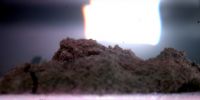
PHOE-SOL099-lg27005-27006-27007.jpgA "Scoop" of Vastitas - Sol 99 (Superdefinition and natural colors; credits: Dr G. Barca)60 visitenessun commentoMareKromium
(1 voti)
|
|
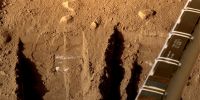
PHOE-SOL097-RC-MF.jpgMelting or Sublimating? - Sol 97 (natural colors; credits: Dr M. Faccin)83 visitenessun commentoMareKromium
(1 voti)
|
|
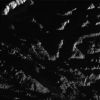
Enceladus-PIA11105.jpgSouth Polar Terrain near Cairo Sulcus64 visiteCaption NASA:"This image is the 1st skeet-shoot image taken during Cassini's very close flyby of Enceladus on Aug. 11, 2008. It captures a Region near the Cairo Sulcus on Enceladus' South Polar Terrain - that is littered with blocks of ice.
The image was taken with the Cassini spacecraft narrow-angle camera on Aug. 11, 2008, a distance of approx. 1288 Km (about 800 miles) above the surface of Enceladus.
Image scale is approximately 10 meters (33 feet) per pixel. MareKromium
(1 voti)
|
|
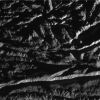
Enceladus-PIA11106.jpgCairo Sulcus62 visiteCaption NASA:"This image is the 3rd skeet-shoot image taken during Cassini's very close flyby of Enceladus on Aug. 11, 2008.
Cairo Sulcus is crossing the southern part of the image. The terrain is littered with blocks of ice.
The image was taken with the Cassini Spacecraft narrow-angle camera on Aug. 11, 2008, a distance of approx. 2446 Km (such as about 1396 miles) above the surface of Enceladus.
Image scale is approximately 18 meters (59 feet) per pixel". MareKromium
(1 voti)
|
|
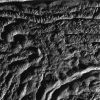
Enceladus-PIA11109.jpgCairo Sulcus59 visiteCaption NASA:"This image is the 4th skeet-shoot footprint taken during Cassini's very close flyby of Enceladus on Aug. 11, 2008. Cairo Sulcus is shown crossing the upper left portion of the image. An unnamed fracture curves around the lower right corner.
The image was taken with the Cassini Spacecraft narrow-angle camera on Aug. 11, 2008, a distance of approx. 3027 Km (such as about 1881 miles) above the surface of Enceladus.
Image scale is approximately 20 meters (66 feet) per pixel". MareKromium
(1 voti)
|
|
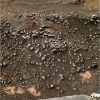
SOL778-1.jpgUnusually-looking Outcrop - Sol 778 (natural colors; credits: Dr G. Barca)69 visitenessun commentoMareKromium
(1 voti)
|
|
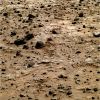
SOL773-1.jpgSmall Volcanic Rocks, Pebbles and Rover Tracks - Sol 773 (natural colors; credits: Dr G. Barca)56 visitenessun commentoMareKromium
(1 voti)
|
|
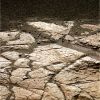
OPP-SOL665-1.jpgMartian Paving - Sol 665 (natural colors; credits: Dr G. Barca)59 visitenessun commentoMareKromium
(1 voti)
|
|

OPP-SOL658-1.jpgThe "Rocky Mosaic" of Meridiani - Sol 658 (natural colors + MULTISPECTRUM; credits: Dr G. Barca & Lunexit)76 visitenessun commentoMareKromium
(1 voti)
|
|

Claritas_Fossae-Smoke-MU.gifDark Smoke moving over Claritas Fossae (GIF-Movie; credits: Mars Unearthed)66 visitenessun commentoMareKromium
(1 voti)
|
|
| 25332 immagini su 2111 pagina(e) |
 |
|
|
|
|
1907 | |
|
|
|
|





