| Piú votate |

Enceladus-PIA11125.jpgDamascus Sulcus68 visiteCaption NASA:"This Cassini image was the eight 'skeet shoot' narrow-angle image captured during the October 31, 2008, flyby of Saturn's moon Enceladus.
The source region for jets II and III (see PIA08385) has been identified. The image was taken with the Cassini Spacecraft narrow-angle camera on Oct. 31, 2008, at a distance of approximately 5568 Km (about 3480 miles) from Enceladus and at a Sun-Enceladus-Spacecraft, or Phase, Angle of 75°.
Image scale is roughly 33 meters (108 feet) per pixel".MareKromium
(1 voti)
|
|
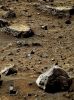
SOL770-3.jpgGusev's Volcanic Rocks - Sol 770 (possible True Colors; credits: Dr G. Barca)59 visitenessun commentoMareKromium
(1 voti)
|
|
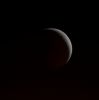
Enceladus-PIA10498.jpgNorthern Craters of Enceladus (natural colors; credits: Lunexit)61 visiteCaption NASA:"This image is part of an observation designed to view the moon's plume of icy particles at a moderately High Phase Angle.
The "Phase Angle" is the angle formed between the Sun, the target being imaged, and the Spacecraft, and it ranges from 0 to 180°. Tiny particles, like those in the plume, brighten substantially at high phase angles.
This view was taken from a vantage point 37° above the Equator of Enceladus (about 504 Km, or approx. 313 miles across). Reflected light from Saturn dimly illuminates the moon's dark side.
The image was taken in visible light with the Cassini Spacecraft narrow-angle camera on Sept. 17, 2008. The view was acquired at a distance of approx. 262.000 Km (such as about 163.000 miles) from Enceladus and at a Phase Angle of 140°.
Image scale is roughly 2 Km (5137 feet) per pixel".MareKromium
(1 voti)
|
|

Enceladus-PIA11123.jpgEnceladus Oct. 9, 2008 Flyby60 visiteCaption NASA:"The image was taken with the Cassini Spacecraft narrow-angle camera on Oct. 9, 2008, from a distance of approx. 47.000 Km (about 29.000 miles) from Enceladus.
Image scale is 279 meters (916 feet) per pixel".MareKromium
(1 voti)
|
|

M-074-HST-GB.JPGM-74: Spiral Galaxy in Pisces64 visiteMareKromium
(1 voti)
|
|
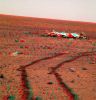
SOL0042-1_copia2-3D.jpgFarewell to the "Nest"! - Sol 42 (Hi-Def3-D - Natural Colors; credits and Copyright: Dr G. Barca and Lunar Explorer Italia)61 visite...Bellissima!...MareKromium
(1 voti)
|
|

SOU-SOL001-80839_full-2.jpgJust Landed! - Sol 1 (possible True Colors; credits: Dr G. Barca & Lunexit)67 visitenessun commentoMareKromium
(1 voti)
|
|
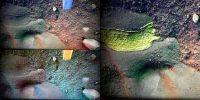
PHOE-SOL113-MF.jpgUnder the Lander... - Sol 113 (false colors; credits: Dr M. Faccin)78 visitenessun commentoMareKromium
(1 voti)
|
|

PHOE-SOL110-lg31792-31793-31794-2.jpgMicroscopic Vastitas - Sol 110 (Superdefinition and True Colors; credits: Dr G. Barca & Lunexit)61 visitenessun commentoMareKromium
(1 voti)
|
|
PHOE-SOL110-lg31889-31890-31891-2.jpgMicroscopic Vastitas - Sol 110 (Superdefinition and True Colors; credits: Dr G. Barca & Lunexit)71 visitenessun commentoMareKromium
(1 voti)
|
|
PHOE-SOL110-MF-LXT.jpgMicroscopic Vastitas - Sol 110 (Superdefinition and True Colors; credits: Dr M. Faccin & Lunexit)65 visitenessun commentoMareKromium
(1 voti)
|
|

Rhea-PIA10464.jpgSouthern View of Rhea60 visiteCaption NASA:"Rhea's bright ray crater features prominently in this southern view. The feature is surrounded by bright ejecta — material thrown outward by the impact that formed the crater.
The view looks toward High Southern Latitudes on Rhea from a perspective 49 degrees below the icy moon's Equator. Rhea's South Pole is at bottom center.
The image was taken in visible green light with the Cassini Spacecraft narrow-angle camera on July 29, 2008. The view was acquired at a distance of approx. 413,000 Km (such as about 257.000 miles) from Rhea and at a Sun-Rhea-Spacecraft, or Phase, Angle of 44°.
Image scale is roughly 2 Km (a little more than 1 mile) per pixel".MareKromium
(1 voti)
|
|
| 25332 immagini su 2111 pagina(e) |
 |
|
|
|
|
1906 | |
|
|
|
|





