| |
| Piú votate |
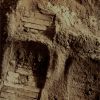
OPP-SOL363-1P161307098EFF42DIP2551L4M1.jpgDry, dry, dry Martian Soil... - Sol 363 (Natural Colors; credits: Lunexit)70 visiteUn'immagine ravvicinata - famosa, per certi versi, in quanto scambiata, da qualche simpatico Ricercatore d'Oltre Oceano, per un frame orbitale... - delle Sabbie di Meridiani. Un frame, da un certo punto di vista, assolutamente "impietoso", poichè mostra - inequivocabilmente - un suolo arido, totalmente e disperatamente secco.
In un certo senso, queste impronte di Opportunity - mutatis mutandis - ci ricordano moltissimo le impronte degli stivali degli "Apollo Boys" sulle sterili - ma ricchissime! - Sabbie Lunari.MareKromium
(1 voti)
|
|

ESP_011873_1675_RED_abrowse.jpgLayering and Faulting in Candor Chasma (Natural Colors; credits: Lunar Explorer Italia)59 visitenessun commentoMareKromium
(1 voti)
|
|
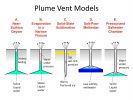
Enceladus-PIA12081.jpgEnceladus' Ice-Plume Models76 visiteCaption NASA:"These illustrations indicate possible ways in which the water vapor and ice particles in the plume of Enceladus may be formed. The Cassini spacecraft recently found a small fraction of salt-rich ice particles from the plumes, while Earth-based observations indicate gas from the plumes is very poor in sodium. These measurements are helping scientists to evaluate how the plumes form.
In model A, salty water boils explosively near the surface of Enceladus when it encounters the vacuum of space. This model can be ruled out, because such explosive activity would spread large amounts of sodium into space where it would have been seen by the Earth-based observers. If this model was correct, then nearly all the ice particles observed by Cassini would be salt-rich, instead of just a fraction of them.
In model B, salty water evaporates more slowly at some depth in a narrow fissure, creating vapor which escapes to the surface to form the plume. This model also seems unlikely because the fissure would rapidly become clogged by salt left behind as water evaporates. The water would also freeze, because not enough heat could reach the water surface up the narrow fissure to replace the heat lost by evaporation.
In model C, the warm ice evaporates directly into vapor to form the plume, in a process called sublimation. The salty particles found in the plume would have been created by liquid water in an earlier epoch and would have been stored in the near-surface layers of Enceladus until the present. These particles would now be incorporated into the plume by the escaping gases. This model cannot be ruled out, but seems unlikely because it may be difficult to dislodge old ice grains from the walls of the fracture.
In model D, the liquid water results from melting of near-surface ice rather than coming from an underlying salty ocean. The water is initially only slightly salty, but its salinity increases as evaporation removes some of the water and leaves the salt behind. Thus, in this model, the salt-rich ice particles seen by Cassini would be derived from initially salt-poor water. This model may be plausible and has not yet been evaluated in detail.
In model E, the water is originally salty, and perhaps comes from a subsurface ocean in contact with an underlying rocky core. The water evaporates slowly into a pressurized chamber, from which water vapor and ice particles, including salty particles from the salt water, escape to the surface along narrow fissures. The large area of the evaporating water surface prevents accumulated salt from clogging the vent and allows enough heat to reach the water surface from below to prevent the water from freezing. This model seems he simplest, and perhaps most likely of the models shown here, but is not the only possibility. Enceladus' plumes may involve a combination of several of these idealized models".MareKromium
(1 voti)
|
|
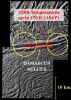
Enceladus-PIA12082.jpgHeat in Damascus Sulcus58 visiteCaption NASA:"This image shows the location of Cassini's most precise measurements so far of the surface temperatures at the active "Tiger Stripe" fractures that cut the South Polar Region of Enceladus. The background image, which shows the Tiger Stripe fracture named Damascus Sulcus, was obtained by Cassini's cameras during the close Enceladus flyby on August 11, 2008 (see PIA11113).
The yellow circles show the approximate location of two of the active plumes of ice particles identified by the Cassini cameras.
The red rectangles show the region of Damascus Sulcus from which heat radiation was measured by Cassini's Composite Infrared Spectrometer (CIRS) at about the same time as the images were taken. The CIRS measurements indicate temperatures up to at least 170 Kelvin (-103 Centigrade or -154 Fahrenheit) near Damascus Sulcus. This is more than 100 degrees Kelvin (180 degrees Fahrenheit) warmer than the surrounding surface, due to heat escaping from Enceladus' interior along the fractures. However, even warmer temperatures are probable over smaller regions close to the Tiger Stripes, and temperatures are expected to be warmer still below Enceladus' Surface.
Therefore, subsurface temperatures may be high enough to melt ice to create liquid water, as is suggested by recent Cassini measurements of the salty composition of ice grains ejected from the Tiger Stripes".MareKromium
(1 voti)
|
|
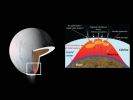
Enceladus-PIA12080.jpgMelted Ice59 visiteCaption NASA:"These drawings depict explanations for the source of intense heat that has been measured coming from Enceladus' South Polar Region. These models predict that water could exist in a deep layer as an ocean or sea and also near the Surface.
Cassini scientists infer that the temperature of the ice in the South Polar Region must be close to its melting point (shown in red). A layer of liquid water (dark blue) might exist between the ice and the silicate core (brown), allowing the ice to deform independent of the rock, providing even more mechanical energy and more flexing of the icy shell for extreme tidal heating.
Tidal heating could also cause friction in faults near the surface, leading to pockets of partially melted ice".MareKromium
(1 voti)
|
|

ESP_012016_1800_RED_abrowse.jpgIani Chaos (Natural Colors; credits: Lunar Explorer Italia)62 visitenessun commentoMareKromium
(1 voti)
|
|
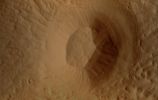
PSP_010630_2115_RED_abrowse-01.jpgCraters and possible "Pingo" in Mamers Vallis (edm - Natural Colors; credits: Lunar Explorer Italia)89 visite"At first this resembles a cinder cone volcano on Earth. However, when magnified, it reveals a feature [found in Arctic regions] on Earth called "Pingo". These are caused by ice protruding through the soil creating a positive-relief geologic feature. If you examine the smaller craters in the surrounding terrain you'll see a checkerboard pattern in each one. These closely resemble melted Pingos on Earth, again suggesting an area of Mars that was once rich with water."
While the student's suggestion that the mound-like structure is a Pingo is reasonable, there is yet no scientific consensus for the origin of these interesting structures.
Nota Lunexit: con tutto il rispetto per le brillanti intuizioni dei ragazzini "sponsorizzati" dalla NASA, l'idea del "Pingo" non stà - davvero - nè in cielo, nè in Terra. Eppure, come leggete, anche a queste boutades (perchè provengono da fanciulli - probabilmente - "quotati" a tutti i livelli), viene dato spazio. Poi però, se chiedi ai Signori di Pasadena o della University of Arizona, ad esempio, cosa potrebbe essere la Silver Sphere (o altri rilievi anomali simili, a parer nostro - e NON SOLO nostro - MOLTO più intriganti dello "pseudo Pingo")...Ecco che cala il silenzio più totale.
Che tristezza...MareKromium
(1 voti)
|
|
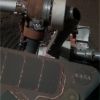
OPP-SOL1895-GB.jpgSolar Panel and Surface... - Sol 1895 (Natural Colors; credits: Dr G. Barca)58 visiteUna colorizzazione in Colori Naturali, realizzata dal nostro eccezionale Dr Barca, la quale non ha assolutamente NIENTE da invidiare alle colorizzazioni NASA (anzi: è di gran lunga migliore!).
Guardate e confrontate, se non ci credete.MareKromium
(1 voti)
|
|
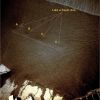
OPP-SOL1884-1N295437261EFFA0__P1981L0M1.jpgSigns of possible collapse - Sol 1884 (Natural Colors; credits: Lunar Explorer Italia)63 visiteProbabilmente Vi ricorderete delle modestissime depressioni che caratterizzano la Superficie di Meridiani e, probabilmente, Vi ricorderete anche della "spiegazione" che per esse venne data dagli Amici di Pasadena: si tratta - dissero alla NASA - di micro-crateri da impatto causati da micro-meteore.
A suo tempo (e cioè quasi 4 anni fa), noi avanzammo subito qualche - riteniamo - legittimo dubbio in ordine alla effettiva bontà di una simile costruzione logica e, grazie anche all'aiuto dell'Ing. Pullini, abbozzammo una teoria alternativa a quella della NASA.
Secondo noi, infatti, le mini-depressioni che caratterizzano Meridiani e che possiamo vedere MOLTO BENE anche in questo frame, sono delle (mini)"collapse feaures", ossìa delle (modestissime) evidenze del verificarsi di fenomeni di subsidenza (o collasso).
In altre parole: per motivi che noi ignoriamo - anche se non ci sembra per nulla assurdo considerare l'ipotesi per cui la causa di questi cedimenti possa essere rinvenuta nella verificazione di lievi (?) eventi sismici -, nel sottosuolo di Meridiani si stanno aprendo delle voragini di dimensioni - per ora - modeste, le quali, attraverso crepe che le collegano alla superficie, stanno un pò alla volta "risucchiando" in profondità sabbie e polveri.
Laddove il cedimento (ed il relativo "risucchio") è più evidente, ecco quindi apparire queste mini-depressioni (mini-hollows) le quali seguono, nella forma, le fattezze delle aperture in cui dette sabbie e polveri vanno a sprofondare. E cioè: se si tratta di fossi (più o meno rotondeggianti), allora l'evidenza è data dalla apparizione di mini-similcrateri (mini-collpase pits), mentre se si tratta di crepe vere e proprie, invece, allora appare quello che vediamo in questo frame (linear collapse features).
La nostra è una teoria, ovviamente, e come tale va considerata (speriamo con benevolenza). In ogni caso, come già dicemmo in passato, a noi pare che il vero mistero di questa storia si trovi nel motivo (assolutamente oscuro) per il quale la NASA, dopo aver concepito - peraltro frettolosamente - una teoria esplicativa di questi fenomeni altamente improbabile (se non addirittura inverosimile), ha poi lasciato cadere il tema nel dimenticatoio, ignorando le successive evidenze apparse sulla Superficie di Meridiani Planum.
Ed infine, come sempre, qualche domanda: e se fosse proprio il Rover Opportunity, con il suo peso, a "stimolare", in qualche modo (e come a suo tempo suggerito dall'Ing. Pullini), i cedimenti che occorrono in profondità e che poi si manifestano in superficie attraverso queste depressioni?
E' possibile che Opportunity, prima o poi, "sprofondi" sotto il suo stesso peso?
Sotto il Deserto di Meridiani può essere che ci sia l'Oceano di Meridiani (magari, in parte ed in alcuni periodi dell'anno, ancora liquido)?
Domande, domande, domande...MareKromium
(1 voti)
|
|

The_Sun-SS-HST.jpgThe Sun, Atlantis and Hubble60 visiteCaption NASA, da "NASA - Picture of the Day" del giorno 16 Maggio 2009:"On Wednesday, May 13th 2009, two, tiny, fast moving spots crossed an otherwise featureless Solar Disk. Not Sunspots though, the dark blemishes were silhouettes of the shuttle orbiter Atlantis and the Hubble Space Telescope side by side.
To record this sharp picture of the orbiting pair against the face of the Sun, astronomer Thierry Legault carefully set up his camera and telescope near the center of a 5 Km wide path of visibility about 100 Km South of Kennedy Space Center in Florida. He opened the shutter for 1/8000th second at 12:17 EDT, catching Atlantis and Hubble at a range of 600 Km while they were moving at a relative speed of about 7 Km-per-second.
The total duration of the transit (Sun crossing) was 0,8". Atlantis (top) is approaching Hubble prior to capturing the space telescope. Thursday (May 14, 2009), Astronauts began a series of spacewalks to perform the maintenance as part of the final mission to Hubble".MareKromium
(1 voti)
|
|

OPP-SOL1881-1P295173318ESFA0__P2568L2M1.jpgThe far distant Rim of Endeavour Crater - Sol 1881 (Natural Colors; credits: Lunar Explorer Italia)59 visitenessun commentoMareKromium
(1 voti)
|
|
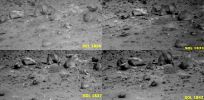
SOL1833-1843-GB-CHANGINGS-03.jpgThe "Unbelievable Behaviour" of some Martian pseudo-Rocks... - Sol 1833/Sol 1843 (credits: Dr G. Barca)87 visitenessun commentoMareKromium
(1 voti)
|
|
| 25332 immagini su 2111 pagina(e) |
 |
|
|
|
|
1900 | |
|
|
|
|
|
|





