| Piú votate |
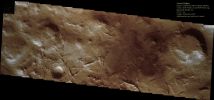
Linear_Ridges-PCF-LXTT.jpgLinear Ridges (Enhanced Natural Colors; credits for the additional process. and color.: Dr Paolo C. Fienga - Lunexit Team)59 visitenessun commentoMareKromium
(8 voti)
|
|

Titan-PIA11001.jpgEthane Lake on Titan63 visiteNASA scientists have concluded that at least one of the large lakes observed on Saturn's moon Titan contains liquid hydrocarbons, and have positively identified the presence of ethane. This makes Titan the only body in our solar system beyond Earth known to have liquid on its surface.
Scientists made the discovery using data from an instrument aboard the Cassini spacecraft. The instrument identified chemically different materials based on the way they absorb and reflect infrared light. Before Cassini, scientists thought Titan would have global oceans of methane, ethane and other light hydrocarbons. More than 40 close flybys of Titan by Cassini show no such global oceans exist, but hundreds of dark, lake-like features are present. Until now, it was not known whether these features were liquid or simply dark, solid material.
"This is the first observation that really pins down that Titan has a surface lake filled with liquid," said Bob Brown of the University of Arizona, Tucson. Brown is the team leader of Cassini's visual and mapping instrument. The results will be published in the July 31 issue of the journal Nature.
Ethane and several other simple hydrocarbons have been identified in Titan's atmosphere, which consists of 95 percent nitrogen, with methane making up the other fiver percent. Ethane and other hydrocarbons are products from atmospheric chemistry caused by the breakdown of methane by sunlight.
Some of the hydrocarbons react further and form fine aerosol particles. All of these things in Titan's atmosphere make detecting and identifying materials on the surface difficult, because these particles form a ubiquitous hydrocarbon haze that hinders the view. Liquid ethane was identified using a technique that removed the interference from the atmospheric hydrocarbons.
The visual and mapping instrument observed a lake, Ontario Lacus, in Titan's south polar region during a close Cassini flyby in December 2007. The lake is roughly 20,000 square kilometers (7,800 square miles) in area, slightly larger than North America's Lake Ontario.
"Detection of liquid ethane confirms a long-held idea that lakes and seas filled with methane and ethane exist on Titan," said Larry Soderblom, a Cassini interdisciplinary scientist with the U.S. Geological Survey in Flagstaff, Ariz. "The fact we could detect the ethane spectral signatures of the lake even when it was so dimly illuminated, and at a slanted viewing path through Titan's atmosphere, raises expectations for exciting future lake discoveries by our instrument."
The ethane is in a liquid solution with methane, other hydrocarbons and nitrogen. At Titan's surface temperatures, approximately 300 degrees Fahrenheit below zero, these substances can exist as both liquid and gas. Titan shows overwhelming evidence of evaporation, rain, and fluid-carved channels draining into what, in this case, is a liquid hydrocarbon lake.
Earth has a hydrological cycle based on water and Titan has a cycle based on methane. Scientists ruled out the presence of water ice, ammonia, ammonia hydrate and carbon dioxide in Ontario Lacus. The observations also suggest the lake is evaporating. It is ringed by a dark beach, where the black lake merges with the bright shoreline. Cassini also observed a shelf and beach being exposed as the lake evaporates. "During the next few years, the vast array of lakes and seas on Titan's north pole mapped with Cassini's radar instrument will emerge from polar darkness into sunlight, giving the infrared instrument rich opportunities to watch for seasonal changes of Titan's lakes," Soderblom said.
More information is available at: http://www.nasa.gov/cassini, http://saturn.jpl.nasa.gov and http://wwwvims.lpl.arizona.edu .
MareKromium
(8 voti)
|
|

The_Milky_Way-CN.jpgInfinite Reflections...61 visitenessun commentoMareKromium
(8 voti)
|
|

OPP-SOL1602-FrontHazCam-RGB.jpgLook: Opportunity is VERY clean! - Sol 1602 (Natural Colors; credits for the additional process. and color.: Dr Marco Faccin - Lunexit Team)72 visitenessun commentoMareKromium
(8 voti)
|
|
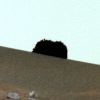
SOL730-2.jpgMars "vegetation"? - Sol 730 (edm - natural colors + MULTISPECTRUM; credits: Dr G. Barca & Lunexit)75 visitenessun commentoMareKromium
(8 voti)
|
|

Aeolian_Features-Yardangs-20080104a-PCF-LXTT.jpgPeri-Equatorial Yardangs (MULTISPECTRUM; credits: Lunexit)58 visiteCaption NASA:"The power of the wind to reshape the surface is readily exposed in the Equatorial Region of Mars, South and East of Olympus Mons. The materials here have been sculpted and resculpted by thousands, if not hundreds of thousand, years of exposure to the wind". MareKromium
(8 voti)
|
|

M-016-95.jpgM 16 - The "Eagle Nebula"62 visite"...O insensata cura dei mortali,
Quanto son difettivi sillogismi
Quei che ti fanno in basso batter l'ali!..."
Dante - Paradiso, 11, 1-3MareKromium
(8 voti)
|
|
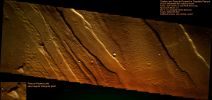
Volcanic_and_Tectonic_features-Graben-20080102a-PCF-LXTT.jpgGraben and Pseudo-Pyramid (Enhanced and Darkened Natural Colors; credits for the additional process. and color.: Dr Paolo C. Fienga - Lunexit Team)65 visiteUn esempio (piccolo e scelto a caso fra TANTISSIMI) di rilievo anomalo a base triangolare, meglio noto come "Pseudo-Piramide". Secondo Hoagland & C., la "D&M Pyramid" era/è un'evidenza "indiscutibile" di artificialità. Ok, diciamo noi, va bene.
Ma se la "D&M Pyramid" è "palesemente" artificiale, allora questa - MOLTO più precisa, netta e squadrata - che cos'è?!? O forse solo Hoagland & C. possono "scoprire" e "battezzare" le Piramidi Marziane?
La Verità? Hoagland dice una stupidata, e tutti la prendono in considerazione (motivazione: "perchè l'ha detto Hoagland"...); noi troviamo un dettaglio MOLTO più "piramidale" del suo...e nessuno sa nè dice nulla.
Ah, cosa riesce a fare il Marketing...MareKromium
(8 voti)
|
|

DoubleSun.jpgLens Flare or something else?!? (credits: Dr G. Barca)79 visiteUn Sole brillante e velato, domina il cielo sopra la Cittadina Ligure di Albissola. Ma che cosa c'è accanto a quel Sole Estivo?
Il Dr Barca, quando ha scattato la fotografia, riferisce di NON AVER visto nulla e quindi, a nostro parere, le possibilità sono solo due:
1) si tratta di un effetto ottico noto come "Lens Flare", in questo caso davvero molto simile a quegli effetti che, presenti in svariati frames Apollo, fecero parlare di UFO per anni ed erroneamente oppure...
2) ...oppure diteci Voi di che cosa si potrebbe trattare...MareKromium
(8 voti)
|
|

PSP_006952_1870_RED_abrowse-00~0.jpgDunefield in West Arabia Terra Unnamed Crater (context frame; MULTISPECTRUM - credits: Lunexit)72 visiteThis image shows dunes in an unnamed crater in the West Arabia Terra region.
The rim of the crater lies to the South of the image (Sx) and a dark, toned field of barchan sand dunes rests on the crater floor in the Northern portion of the observation (Dx). MareKromium
(8 voti)
|
|

NGC-7331.jpgNGC 7331 - Spiral Galaxy66 visiteCari Amici,
utilizziamo questo spazio (generalmente riservato a ben più nobili frammenti di Poesia, Letteratura, Giornalismo et sim.) per lanciare un warning e fare un avviso: abbiamo ricevuto (e continuiamo a ricevere) tantissime richieste di iscrizione alla nostra Associazione le quali, tuttavia, una volta accolte - spesso con magnanimità, dato che coloro che si qualificano completamente e correttamente sono sempre pochi... -, si risolvono in nulla, ossìa i Soggetti abilitati NON ACCEDONO MAI al Sito.
Sin qui, niente di male (anche se ci chiediamo - e mi chiedo! - che senso abbia iscriversi a Lunexit per poi non accedere nemmeno una volta ai suoi Archivi...), ma il punto è che, solo nell'ultima settimana, sono stati individuati e neutralizzati innumerevoli virus i quali, ove trascurati, avrebbero potuto seriamente compromettere la stabilità e l'efficienza di quella Banca Dati che è "Lunar Explorer Italia".
Tutto ciò premesso, il "sospetto" che alcuni individui si iscrivano alla nostra Associazione solo per "farsi aprire una porta" e poi combinare danni, è diventato molto forte.
Soluzione: sino ad oggi, il "NON USO" del Sito comportava cancellazione dell'account una volta trascorso il termine di 45 giorni (e cioè, in altre parole, dopo 45 giorni consecutivi di NON ACCESSO ai nostri Archivi, l'account "inerte" veniva disabilitato); da oggi il termine massimo di inerzia "tollerata", viene ridotto a 14 giorni, dopo di che l'utenza sarà cancellata.
Inoltre, qualora un Soggetto si iscriva e, una volta abilitato, NON ACCEDA al Sito entro 48 ore dal ricevimento dell'abilitazione, sarà cancellato.
Ci scusiamo per questo atteggiamento, che può apparire eccessivamente pignolo o sanzionatorio, ma la Verità è che Lunar Explorer Italia è, si, un "Sito di Tutti", ma è anche - e SOPRATTUTTO - "Il Sito di chi ha un interesse elevato e costante" per le Materie trattate.
Non ci interessano i "floaters" e non ci interessano le iscrizioni "vuote", ossìa richieste da individui non interessati e, a questo punto, potenzialmente anche molesti e dannosi.
Grazie per la Comprensione.
Dr Paolo C. Fienga (Lunar Explorer Italia - Presidente e Socio Fondatore)MareKromium
(8 voti)
|
|
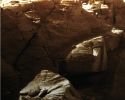
OPP-SOL1581-1P268538296ESF90B0P2540R2M1.jpgThe Inner Rim of Victoria - Sol 1581 (MULTISPECTRUM; credits: Lunexit)58 visitenessun commentoMareKromium
(8 voti)
|
|
| 25332 immagini su 2111 pagina(e) |
 |
|
|
|
|
190 | |
|
|
|
|





