| Piú votate |
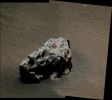
OPP-SOL2024-GB.jpgAnother Meteorite on the way to Endeavour Crater - Sol 2024 (Natural Colors; credits: Dr G. Barca & Lunexit)67 visitenessun commentoMareKromium
(1 voti)
|
|
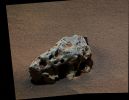
OPP-SOL2024-MF-PanCam.jpgAnother Meteorite on the way to Endeavour Crater - Sol 2024 (Natural Colors; credits: Dr M. Faccin & Lunexit)70 visitenessun commentoMareKromium
(1 voti)
|
|
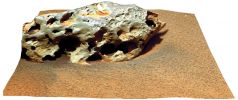
OPP-SOL2024-PV-MF-PanCam.jpgAnother Meteorite on the way to Endeavour Crater - Sol 2024 (Perspective View and Natural Colors; credits: Dr M. Faccin)71 visitenessun commentoMareKromium
(1 voti)
|
|
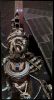
SOL2017-PANCAM-MF.jpgSpirit and Surface - Sol 2017 (True Colors; credits: Dr M. Faccin)60 visiteSpirit è "super-impolverato"? Secondo la NASA, si; ma per quanto si vede in questo splendido frame...noi diremmo proprio di no.MareKromium
(1 voti)
|
|

PSP_009342_1725_RED_JP2-01.jpgRolling, Rolling, Rolling Rocks... (2)75 visitenessun commentoMareKromium
(1 voti)
|
|

Enceladus-PIA11562.jpgEnceladus, in the distance (Natural Colors; credits: Lunexit)61 visiteCaption NASA:"Cassini Spacecraft looks toward the varied Surface of the Trailing Hemisphere of Saturn's moon Enceladus. North on Enceladus (about 504 Km, or approx. 313 miles across) is up. For a more detailed view of this Hemisphere, see also PIA08353.
The image was taken in Visible Light with the Cassini spacecraft narrow-angle camera on June 25, 2009. The view was acquired at a distance of approx. 594.000 Km (about 369.000 miles) from Enceladus and at a Sun-Enceladus-Spacecraft, or Phase, Angle of 66°.
Image scale is roughly 4 Km (about 2,5 miles) per pixel".MareKromium
(1 voti)
|
|

AS_17-137-20991-21009.jpgAS 17-137-20991 until 21009 (EVA-2; Station 4 - Shorty Crater) - credits: Dr M. Faccin121 visiteBellissima, dunque incommentabile...MareKromium
(1 voti)
|
|

ZZ-ZZ-ZZ-ZZ-APOLLO_11-LANDING_SITE-000.jpgThe Eagle has Landed: Apollo 11 Landing Site (from orbit - edited)101 visitenessun commentoMareKromium
(1 voti)
|
|

ZZ-ZZ-ZZ-ZZ-APOLLO_11-LANDING_SITE-002.jpgThe Eagle has Landed: Apollo 11 Landing Site (from orbit)86 visitenessun commentoMareKromium
(1 voti)
|
|

ZU-PIA12135.jpgGood-bye Mercury!57 visiteThese images were taken by MESSENGER as the spacecraft departed Mercury after completing its 2nd flyby on October 6, 2008. During this sequence, images were taken every 5 minutes.
A portion of the same sequence, totaling 198 images in all, has also been made into a movie (see PIA11412). MESSENGER will make its third and final flyby of Mercury on September 29, 2009, and will become the first Spacecraft ever to orbit Mercury in March 2011.
Date Acquired: October 6, 2008
Image Mission Elapsed Time (MET): 131788060-131840260
Instrument: Narrow Angle Camera (NAC) of the Mercury Dual Imaging System (MDIS)
Scale: Mercury’s diameter is 4880 Km (approx. 3030 miles)
Spacecraft Distange from Target: from 95.000 up to 370.000 Km (such as from about 59.000 up to 230.000 miles)MareKromium
(1 voti)
|
|
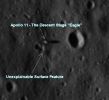
LRO-0003b-369440main_lroc_apollo11_lrg.jpgThe Apollo 11 Descent Stage and the "Mistery Cloud" (edm; credits: Lunar Explorer Italia)95 visiteA nostro parere non serve questionare - stupidamente - la realtà o meno delle Missioni Apollo per cercare "Mistero" (o "Complotto"...): guardate questo edm derivato dal frame precedente. Le ombre ci dicono tutto: altezze ipotetiche degli oggetti ripresi, inclinazioni, albedo etc.
L'ombra del Descent Stage dell'Apollo 11 è spettacolarmente chiara e va anche a dimostrare la correttezza della nostra ricostruzione (vecchia di 5 anni ormai) in ordine al motivo per cui alcuni frames Apollo 11 SEMBRAVANO presentare un orizzonte "tagliato".
E allora? Dov'è il "Mistero"?
Semplice: osservate il rilievo indicato dalla freccia e capirete. Visivamente si presenta come un piccolo "mound" - simile a quello prossimo all'area di Landing dell'Apollo 12 e fotografato più volte da Bean e Conrad - ma, in realtà, la sua texture lo rende simile ad una sorta di nuvola. Inoltre, se guardate con attenzione, noterete un'ombra incongrua fra il rilievo misterioso ed il cratere latistante.
Insomma: la Luna è vicina...Ma ancora ben lungi dall'essere pienamente compresa in tutte le sue sfaccettature e fenomenologie.MareKromium
(1 voti)
|
|

DarkNebulae.jpgDark Nebulae62 visite"...La pluralità (di fonti informative e, quindi, di informazioni) ha generato talmente tanto da rendere - paradossalmente - vacua l’informazione, saziando ed alienando il consumatore al punto che, oggi, egli si ferma davanti alla “informazione” (molto tra virgolette e di qualunque natura essa sia) solo se questa riesce a tenerlo con la bocca aperta e lo sguardo vitreo; qualche minuto in più, se essa riesce anche a toccargli lo stato emotivo attraverso immagini forti e spettacolari (non a caso, le tragedie sono il Santo Graal dei media).
Quindi se “sensazionalismo” è il dictat, qualunque prodotto dovrà essere confezionato ed offerto con questo criterio: perché è l’unico in grado di garantire una platea abbastanza numerosa da assicurare un rientro economico (all'investitore)..."
Giuseppe Spina - "Lettere"
"...Il Dolore, le Lacrime e, più in generale, la Miseria Umana (in tutte le sue forme), sono le Pietre Angolari dell'informazione (televisiva e non solo)..."
P.C. FloegersMareKromium
(1 voti)
|
|
| 25332 immagini su 2111 pagina(e) |
 |
|
|
|
|
1899 | |
|
|
|
|





