| Piú votate |
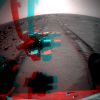
OPP-SOL2165-MF-3DR.jpgLooking Forward... - Sol 2165 (High-Def-3D; credits: Dr M. Faccin - Lunexit Team)57 visitenessun commentoMareKromium
(1 voti)
|
|

LRO-2501-Oceanus_Procellarum.jpgLunar Landslide in an Unnamed Crater of Oceanus Procellarum67 visiteA key part of the LROC science investigation is the imaging and analysis of fresh, Copernican-aged Craters (such as Craters younger than 1,1 Billion Years), like this small (6-Km diameter) example at the edge of Oceanus Procellarum, West of Balboa Crater.
The LROC team has seen a variety of landforms related to these important lunar features. For example, a Landslide on the Crater wall partially covers the solidified impact melts on the floor. The Landslide clearly happened after the Crater initially formed; the materials were likely dislodged by seismic shaking from nearby smaller impacts.
These young, fresh craters preserve an vital record of the impact process.
Where does ejecta come from? How much impact melt is produced? How thick is ejecta? What is the importance of self-secondary impacts?
These are only some of the important scientific questions that lunar scientists can address by studying these craters.
As geologic time progresses, the pristine features in fresh craters are worn down by impacts of all sizes. Understanding young craters help geologists piece together the history of ancient degraded craters, an understanding particularly useful for planning future human missions to the Moon. The best way to explore fresh craters like this one, of course, would be with Astronauts.
However, until humans return to the Moon, lunar geologists will analyze images like this for clues, as well as comparing the landforms like the one visible here with other craters on the Moon, Mars, and impact structures on Earth.MareKromium
(1 voti)
|
|

Kessler_Syndrome.jpgBeware of the Kessler Syndrome...73 visite"...le Esperienze più profonde hanno, in sè, un che di vitale.
Esse, simili a macchie di muffa, si attaccano alle mura di casa, o ai cardini di una porta, magari sull'anta di un armadio o, chissà, nell'angolo - illuminato - di un solaio.
Esse restano lì, aggrappate - anzi, appiccicate - alle cose terrene e, nel contempo, si dibattono furiosamente nel turbinìo del Tempo che passa, ma senza perdere forza, anzi: acquistandone sempre più.
Giorno dopo giorno.
Anno dopo anno.
Secolo dopo secolo.
Un millennio dopo l'altro...
Queste Esperienze possono essere osservate, anzi: vanno osservate, si.
Ma MAI troppo da vicino..."
Paolo C. FiengaMareKromium
(1 voti)
|
|

Mimas-EB1.jpgYou look at Me, I look at You... (Image-mosaic; credits: Elisabetta Bonora)58 visitenessun commentoMareKromium
(1 voti)
|
|
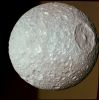
Mimas-EB3.jpgCosmic Clash: Mimas and Saturn (Natural Colors; credits: Elisabetta Bonora - Lunexit Team)62 visitenessun commentoMareKromium
(1 voti)
|
|
Mimas-Titan-Rhea-W00062956-58-EB-LXTT.jpgBrothers in the Night... (Natural Colors; credits: Elisabetta Bonora - Lunexit Team)65 visitenessun commentoMareKromium
(1 voti)
|
|

OPP-SOL2147-MF2.jpgErratic Boulder with highly degraded Blueish "Coating" - Sol 2147 (credits: Dr M. Faccin - Lunexit Team)66 visitenessun commentoMareKromium
(1 voti)
|
|

Prometheus-4312264140_cd64e12a23_o.jpgPrometheus adrift... (possible Natural Colors; credits: Dr M. Faccin - Lunexit Team)61 visitenessun commentoMareKromium
(1 voti)
|
|
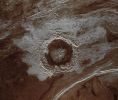
Craters-Dickinson_Crater-PIA00479.jpgDickinson Crater (possible Natural Colors; credits: Dr Paolo C. Fienga - Lunexit Team)67 visiteThis Magellan image is centered at 74,6° North Latitude and 177,3° East Longitude, in the North/Eastern Atalanta Region of Venus.
The image is approximately 185 Km (about 115 miles) wide at the base, and shows Dickinson, an Impact Crater of about 69 Km (approx. 43 miles) in diameter. The Crater is complex, characterized by a partial Central Ring and a Floor flooded by radar-dark and radar-bright materials.
Hummocky, rough-textured ejecta extend all around the Crater, except to the West. The lack of ejecta to the West may indicate that the Impactor that produced the Crater reached the Surface on an oblique angle, and from the West.
Extensive radar-bright flows that emanate from the Crater's Eastern Walls may represent large volumes of impact melt, or they may be the result of volcanic material released from the Subsurface during the cratering event.MareKromium
(1 voti)
|
|
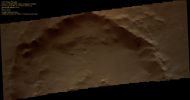
Slope_Streaks-Terra_Sabaea-PIA12430.jpgUnnamed Crater in Terra Sabaea (Natural Colors; credits: Dr Paolo C. Fienga - Lunexit Team)82 visitenessun commentoMareKromium
(1 voti)
|
|

FIGURA_16.jpgSpace-Traffic Control84 visiteUna delle "Parabole" - usate (anche) per il tracking dei satelliti -, presente nella nostra Base Keniota di Malindi.MareKromium
(1 voti)
|
|
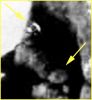
SOL485-IT-2P169421624EFFAAB2P2419L2M1_v2.jpgSmall-Face and a Snake-like Surface Feature near Spirit - Sol 485 (EDM n.1 - credits: Ivana Tognoloni - Lunexit Team)66 visitenessun commentoMareKromium
(1 voti)
|
|
| 25332 immagini su 2111 pagina(e) |
 |
|
|
|
|
1895 | |
|
|
|
|





