| Piú votate |
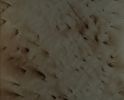
PSP_003180_0945_RED_abrowse-01.jpgSouth Polar Dust Fans (EDM n.1 - Natural Colors; credits for the additional process. and color.: Dr Paolo C. Fienga - Lunexit Team)67 visitenessun commentoMareKromium
(1 voti)
|
|
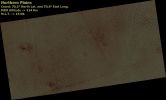
Psp_001490_2505_red.jpgThe Northern Plains (Natural Colors; credits for the additional process. and color.: Dr Paolo C. Fienga - Lunexit Team)59 visiteM.L.T.: 15:06 (early afternoon)
Latitude (centered): 70,5° North
Longitude: 70,6° East
Range to target site: 314 Km (about 194,8 miles)
Original image scale range: 31,4 cm/pixel (with 1 x 1 binning) so objects ~94 cm across are resolved
Map Projected Scale: 25 cm/pixel
Map Projection: POLAR STEREOGRAPHIC
Emission Angle: 5,1°
Phase Angle (Sun-Mars-MRO): 56,5 °
Solar Incidence Angle: 61° (meaning that the Sun is about 29° above the Local Horizon)
Solar Longitude: 138,3° (Northern Summer)MareKromium
(1 voti)
|
|
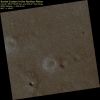
Psp_001484_2455_red.jpgThe Northern Plains (Natural Colors; credits for the additional process. and color.: Dr Paolo C. Fienga - Lunexit Team)81 visiteM.L.T.: 15:07 (early afternoon)
Latitude (centered): 65,5° North
Longitude: 235,1° East
Range to target site: 310,3 Km (about 194,8 miles)
Original image scale range: 31 cm/pixel (with 1 x 1 binning) so objects ~93 cm across are resolved
Map Projected Scale: 25 cm/pixel
Map Projection: POLAR STEREOGRAPHIC
Emission Angle: 0,3°
Phase Angle (Sun-Mars-MRO): 58,1 °
Solar Incidence Angle: 58° (meaning that the Sun is about 32° above the Local Horizon)
Solar Longitude: 138,0° (Northern Summer)MareKromium
(1 voti)
|
|

Lutetia-02.jpgAsteroid "Lutetia"68 visiteThough the first look of the giant asteroid, through nearly 400 images, has revealed a lot about the primitive survivor's cratered surface, a lot more needs to be unlocked.
The data collected by Rosetta Spacecraft, with the help of multi-wavelength cameras, spectrometers etc., will unravel the mysteries surrounding the composition of Lutetia. Some asteroids are a broken part of iron-rich cores of proto-planets or they may just be composed of Carbon.MareKromium
(1 voti)
|
|
Saturnian_Space-N00156094-N00156177.gifCosmic Shower (GIF-Movie; credits: Dr Gianluigi Barca - Lunexit Team)61 visitenessun commentoMareKromium
(1 voti)
|
|

LRO-M102215743LC-3-MF-LXTT.jpgOrbital View (2 - Natural Colors; credits for the additionaol process. and color.: Dr Paolo C. Fienga - Lunexit Team)) 225 visitenessun commentoMareKromium
(1 voti)
|
|

Titan-Clouds-MF-LXTT.gifExtremely Bright Clouds Formation over Aztlan and Senkyo (a GIF-Movie by Marco Faccin - Lunexit Team)59 visitenessun commentoMareKromium
(1 voti)
|
|
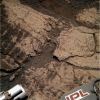
OPP-SOL2252-GB-LXTT.jpgThe Beautiful "Martian Paving" - Sol 2252 (Natural Colors; credits for the additional process. and color.: Dr Gianluigi Barca - Lunexit Team)89 visitenessun commentoMareKromium
(1 voti)
|
|

SOL1420-23-EB-PCF-LXTT.jpgVarious High-Albedo Surface Features - Soles 1420 until 1423 (an Image-Mosaic in Absolute Natural Colors by Elisabetta Bonora & Paolo C. Fienga - Lunexit Team)145 visiteNota: le aree superficiali ad Albedo elevata sono TUTTE sulla "linea di transito" del Rover.
Non riteniamo che via sia alcuna implicazione "scientifically-uncorrect" nel suggerire che, forse, da Pasadena il Rover lo guidano davvero "chirurgicamente", ma non solo (e forse non tanto) per evitare i Surface Hazards ma piuttosto per andare a visionare da quanto più vicino sia possibile dei rilievi - chiamiamoli così... - "intriganti e curiosi".
E' pure plausibile ritenere che l'Albedo elevata di alcuni rilievi sia il frutto di attività meccaniche svolte dal Rover sui medesimi (non parliamo, ovviamente, di "lucidatura", quanto di sfregamento e rullamento dei e sui rilievi in questione).
Certo è, se questa seconda ipotesi fosse corretta, che dovremmo allora supporre una incredibile luminosità dell'intera Superficie (o buona parte di essa), la quale rimane scura ed opaca SOLAMENTE a causa del manto di polvere rossiccia che sembra ricoprire tutto o quasi.
Le Vostre idee ed opinioni al riguardo saranno apprezzate.MareKromium
(1 voti)
|
|

APOLLO_15_AS_15-86-11570_-_MF-LXTT.jpgAS 15-86-11570 - Heavy Metal Tears... (Natural Colors; credits for the additional process. and color.: Dr M. Faccin - Lunexit Team)334 visitenessun commentoMareKromium
(1 voti)
|
|

APOLLO_16_-_AS_16-116-18574-79-MF-LXTT.jpgAS 16-116-18574 until 18579 - The Landing Site (an Image-Mosaic in Natural Colors by Dr M. Faccin - Lunexit Team)265 visitenessun commentoMareKromium
(1 voti)
|
|

Pandora-N00154611-17-23-EB-LXTT.jpgApproaching Pandora (an Image-Mosaic by Elisabetta Bonora - Lunexit Team)82 visitenessun commentoMareKromium
(1 voti)
|
|
| 25332 immagini su 2111 pagina(e) |
 |
|
|
|
|
1891 | |
|
|
|
|





