| Piú votate |

SOL0813-2P198554476EFFAR00P2408R1M1.jpgPanorama - Sol 813 (Natural Colors; credits for the additional process. and color.: Dr Paolo C. Fienga - Lunexit Team)63 visitenessun commentoMareKromium
(1 voti)
|
|

SOL0813-2P198554525EFFAR00P2408R1M1.jpgPanorama - Sol 813 (Natural Colors; credits for the additional process. and color.: Dr Paolo C. Fienga - Lunexit Team)66 visitenessun commentoMareKromium
(1 voti)
|
|
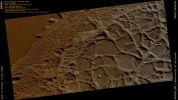
ESP_018469_1630_RED_abrowse.jpgRocky Features in Mangala Valles (Natural Colors; credits for the additional process. and color.: Dr Paolo C. Fienga - Lunexit Team)57 visitenessun commentoMareKromium
(1 voti)
|
|

ESP_018464_2040_RED_abrowse-1~0.jpgMawrth Vallis (Natural Colors; credits for the additional process. and color.: Dr Paolo C. Fienga - Lunexit Team)64 visitenessun commentoMareKromium
(1 voti)
|
|

PSP_001507_1400_RED_browse.jpgMantling Material (Natural Colors; credits for the additional process. and color.: Dr Paolo C. Fienga - Lunexit Team)63 visitenessun commentoMareKromium
(1 voti)
|
|

ESP_018485_1765_RED_abrowse.jpgPeri-Equatorial Scarp and Fans (Natural Colors; credits for the additional process. and color.: Dr Paolo C. Fienga - Lunexit Team)65 visitenessun commentoMareKromium
(1 voti)
|
|
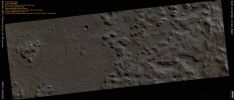
ESP_018496_1510_RED_abrowse.jpgColumbus Crater (Natural Colors; credits for the additional process. and color.: Dr Paolo C. Fienga - Lunexit Team)86 visitenessun commentoMareKromium
(1 voti)
|
|
ESP_018482_2790_RED_abrowse-01.jpgNorth Polar Layered Deposits (EDM - Natural Colors; credits for the additional process. and color.: Dr Paolo C. Fienga - Lunexit Team)79 visiteMareKromium
(1 voti)
|
|

Pandora-PIA12690.jpgPandora58 visiteCaption NASA:"The Cassini Spacecraft captured this close view of Saturn's moon Pandora during the Fly-By on June, 3, 2010.
Pandora is approx. 81 Km (a little mora than 50 miles) across and orbits beyond Saturn's thin F-Ring, which is shepherded by Pandora and Prometheus.
This view looks toward the Saturn-facing side Pandora. North on Pandora is up and rotated 20° to the left.
The image was taken in Visible Light with the Cassini Spacecraft narrow-angle camera. The view was obtained at a distance of approx. 101.000 Km (about 63.000 miles) from Pandora and at a Sun-Pandora-Spacecraft, or Phase, Angle of 28°.
Image scale is 603 meters (1980 feet) per pixel".MareKromium
(1 voti)
|
|
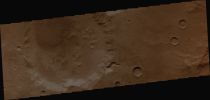
Craters-Unnamed_Crater-PIA13309.jpgUnnamed Crater in Utopia Planitia (Natural Colors; credits for the additional process. and color.: Dr Paolo C. Fienga - Lunexit Team)64 visiteA small Channel enters this Unnamed Crater in Arabia Terra. There appears to be a small Fan - or Delta - formed where the Channel meets the Crater Floor.
Orbit Number: 37714
Latitude: 34,823° North
Longitude: 356,522° East
Instrument: VIS
Captured: 2010, June, 15thMareKromium
(1 voti)
|
|
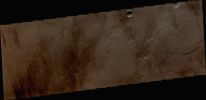
Windstreaks-PIA13292.jpgWindstreaks in Tharsis (Natural Colors; credits: Dr Paolo C. Fienga - Lunexit Team)65 visiteThis VIS image shows are region of lava covered plains east of Olympus Mons. Winds are common in the area and have created Windstreaks downwind of Craters in the Region and on the Lava Flows.
Orbit Number: 37693
Latitude: 22,596° North
Longitude: 240,567° East
Instrument: VIS
Captured: 2010, June, 13thMareKromium
(1 voti)
|
|

PSP_003180_0945_RED_abrowse-00.jpgSouth Polar Dust Fans (CTX Frame - Natural Colors; credits for the additional process. and color.: Dr Paolo C. Fienga - Lunexit Team)62 visiteDuring the long and dark night of Martian Winter at the South Pole, CO2 in its solid form ("dry ice") accumulates and forms the so-called "Seasonal South Polar Cap". Afterwards, as the Sun comes up in the Spring, the ice evaporates in a complex way.
This observation shows Dark Dust being blown across the Seasonal South Polar Cap. The dust comes from the Surface beneath the ice: it either starts at spots bare of ice, or it's possible that it's lofted from below the ice in geyser-like plumes.
Local winds blow the dust from its source, forming a long Fan. When the wind changes direction, a new Fan is formed pointing in the new direction In this image we can see that the wind has blown in a number of directions.
These data will be used to study - among other things - the Weather Patterns near the South Pole.MareKromium
(1 voti)
|
|
| 25332 immagini su 2111 pagina(e) |
 |
|
|
|
|
1890 | |
|
|
|
|





