| Piú votate |
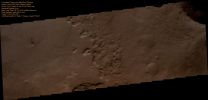
Craters-Unnamed_Crater_near_Meridiani_Planum-PIA13408.jpgUnnamed Crater near Meridiani Panum (Natural Colors; credits for the additional process. and color.: Dr Paolo C. Fienga - Lunexit Team)131 visitenessun commentoMareKromium
(1 voti)
|
|

Titan-Clouds-PIA13400.jpgTitanian Clouds (False Colors; credits: NASA/JPL/University of Arizona/University of Nantes/University of Paris Diderot)96 visiteCaption NASA:"This pair of false-color images, made from data obtained by NASA's Cassini Spacecraft, shows clouds covering parts of Saturn's moon Titan in yellow. Based on the way Near-InfraRed channels of light were color-coded, cloud cover appears yellow, while Titan's hazy Atmosphere appears magenta. The images show cloud cover dissolving from Titan's North Polar Region between May 12, 2008 (left), and Dec. 12, 2009 (right). The clouds in the second image appear around 40° South Latitude, still active late after Titan's Equinox.
Cassini's first observations of clouds near this Latitude occurred during Summer in the Southern Hemisphere. Equinox, when the Sun shone directly over the Equator, occurred in August 2009. It brought a changing of the seasons, as Titan moved out of Southern Summer into Northern Spring.
For the past 6 years, Cassini has observed clouds clustered in three distinct Latitude Regions of Titan: large clouds at the North Pole, patchy cloud at the South Pole and a narrow belt around 40° South. Now scientists are seeing evidence of seasonal circulation turnover at Titan. Clouds at the South Pole disappeared just before Equinox and the clouds in the North are thinning out. This activity agrees with models that predict cloud activity reversing from one Hemisphere to another.
During Winter in the Northern Hemisphere, Northern Polar Clouds of Ethane formed in Titan's Troposphere, the lowest part of the Atmosphere, from a constant influx of Ethane and Aerosols from a higher part of the Atmosphere known as the Stratosphere.
In the Southern Hemisphere, atmospheric gases enriched with Methane welled up from the Surface to produce Mid and High-Latitude Clouds.
The data for the images was detected by Cassini's Visual and InfraRed Mapping Spectrometer in Near-IR wavelengths. Scientists focused on three wavelengths of IR radiation that were particularly good for observing cloud signatures and assigned them red, green and blue channels.
Emissions in the 2 micron wavelength of light, colored red, detect the Titan Surface.
Emissions in the 2,11 micron wavelength, colored green, detect the lowest part of the Titan Atmosphere, or Troposphere.
Emissions at the 2,21 micron wavelength, colored blue, detect the hazy Stratosphere, a higher part of the Atmosphere.
The clouds appear yellowish because they lit up the channels designated red and green, but not the blue channel".MareKromium
(1 voti)
|
|

PSP_001784_001454___2030_anaglyph-MF-LXTT1.jpgMartian Crossway (Hi-Def-3D; credits for the additional process.: Dr Marco Faccin - Lunexit Team)134 visitenessun commentoMareKromium
(1 voti)
|
|

PSP_001784_001454___2030_anaglyph-MF-LXTT2.jpgMartian Crossway (Hi-Def-3D; credits for the additional process.: Dr Marco Faccin - Lunexit Team)123 visitenessun commentoMareKromium
(1 voti)
|
|

ESP_018857_2225_RED_abrowse.jpgPseudo-Glacier (Natural Colors; credits for the additional process. and color.: Dr Paolo C. Fienga - Lunexit Team)75 visitenessun commentoMareKromium
(1 voti)
|
|
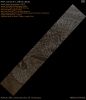
PSP_003193_0850_RED_abrowse-00.jpgThe South Polar Spring of AD 2007 (Absolute Natural Colors; credits for the additional process. and color.: Dr Paolo C. Fienga - Lunexit Team)80 visitenessun commentoMareKromium
(1 voti)
|
|
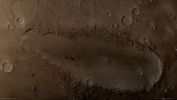
Orcus_Patera-472-20103007-2216-2238-6-co-01-PCF-LXTT2.jpgOrcus Patera (Absolute Natural Colors; credits: Dr Paolo C. Fienga - Lunexit Team)167 visiteCaption ESA:"The High-Resolution Stereo Camera (HRSC), on ESA Mars Express Spacecraft obtained image data in the Orcus Patera Region on 5 and 11 October 2005. The data were acquired during orbits 2216 and 2238 and this image was derived from the HRSC nadir channel, which provides the highest detail of all the channels".MareKromium
(1 voti)
|
|
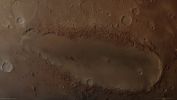
Orcus_Patera-472-20103007-2216-2238-6-co-01-PCF-LXTT1.jpgOrcus Patera (Natural Colors; credits: Dr Paolo C. Fienga - Lunexit Team)137 visiteCaption ESA:"Orcus Patera is an enigmatic elliptical depression located between Elysium and Olympus Mons.
This well-defined depression extends approximately 380 by 140 Km in a N/NE–S/SW direction. It has a Rim that rises up to 1800 mt above the surrounding Plains, while its Floor lies 400–600 mt below the surroundings. The term ‘Patera’ is used for deep, complex or irregularly shaped Volcanic Craters such as the Hadriaca Patera and Tyrrhena Patera at the N/E margin of the Hellas Impact Basin.
However, despite its name and the fact that it is positioned near Volcanoes, the actual origin of Orcus Patera still remains unclear".MareKromium
(1 voti)
|
|

Enceladus-PIA12713-PCF-LXTT.jpgThe "Fountains" of Enceladus at "High Phase" (Absolute Natural Colors; credits for the additional process. and color.: Dr Paolo C. Fienga - Lunexit Team)91 visiteCaption NASA:"Saturn's moon Enceladus, imaged at High Phase, shows off its spectacular Water Ice Plumes emanating from its South Polar Region.
This image was captured at a Phase, or Sun-Enceladus-Spacecraft, Angle of 159° so that Sunlight would reveal the backlit plumes.
Sunlight brightly illuminates Terrain on the left. Light reflected off Saturn illuminates the rest of the moon more dimly. This view looks toward the Trailing Hemisphere of Enceladus. North is down. Background stars, elongated by the movement of the Spacecraft during the exposure, are also visible.
The image was taken in Visible Light with the Cassini Spacecraft narrow-angle camera on Oct. 13, 2009. The view was obtained at a distance of approx. 431.000 Km (about 268.000 miles) from Enceladus.
Image scale is roughly 3 Km (about 1,9 miles) per pixel".MareKromium
(1 voti)
|
|

Channel-Terra_Sabaea-PIA13354.jpgChannel in Terra Sabaea (Natural Colors; credits for the additional process. and color.: Dr Paolo C. Fienga - Lunexit Team)90 visitenessun commentoMareKromium
(1 voti)
|
|

Channel-Terra_Sabaea-PIA13354-1.jpgChannel in Terra Sabaea (Absolute Natural Colors; credits for the additional process. and color.: Dr Paolo C. Fienga - Lunexit Team)77 visitenessun commentoMareKromium
(1 voti)
|
|
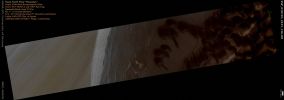
ESP_018720_2655-PCF-LXTT.jpgSteep North Polar "Boundary" (Absolute Natural Colors; credits for the additional process. and color.: Dr Paolo C. Fienga - Lunexit Team)157 visitenessun commentoMareKromium
(1 voti)
|
|
| 25332 immagini su 2111 pagina(e) |
 |
|
|
|
|
1888 | |
|
|
|
|





