| Piú votate |
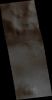
Gullies-ArgyrePlanitia-PIA12408.jpgDeep Gullies on the Western Rim of Argyre Basin (Natural Colors; credits: Dr Paolo C. Fienga - Lunexit Team)60 visiteThe Gullies seen in this VIS image are located on the Western Rim of the Argyre Basin.
Coord.: 47,6 ° South Latitude and 305,2° East Longitude
Resolution: approx. 40 meter/pixel.MareKromium
(8 voti)
|
|

M-042-99.jpgM 42 - Proplyds in the Great Orion Nebula59 visite"...Gli estremismi del cosiddetto "Tifo Sportivo" sono l'equivalente pagano dell'integralismo e dell'intolleranza Religiosa..."
Paolo C. FiengaMareKromium
(8 voti)
|
|
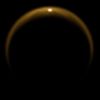
Titan-Lakes-Unnamed_North_Polar_Lake-PIA12481.jpgReflection of Sunlight off a Titanian Northern Lake (Natural Colors; credits: NASA/JPL/University of Arizona/DLR)176 visiteThis image shows the first flash of sunlight reflected off a lake on Saturn's moon Titan. The glint off a mirror-like surface is known as a specular reflection. This kind of glint was detected by the visual and infrared mapping spectrometer (VIMS) on NASA's Cassini spacecraft on July 8, 2009. It confirmed the presence of liquid in the moon's northern hemisphere, where lakes are more numerous and larger than those in the southern hemisphere. Scientists using VIMS had confirmed the presence of liquid in Ontario Lacus, the largest lake in the southern hemisphere, in 2008.
The northern hemisphere was shrouded in darkness for nearly 15 years, but the sun began to illuminate the area again as it approached its spring equinox in August 2009. VIMS was able to detect the glint as the viewing geometry changed. Titan's hazy atmosphere also scatters and absorbs many wavelengths of light, including most of the visible light spectrum. But the VIMS instrument enabled scientists to look for the glint in infrared wavelengths that were able to penetrate through the moon's atmosphere. This image was created using wavelengths of light in the 5 micron range.
By comparing the new image to radar and near-infrared light images acquired from 2006 to 2008, Cassini scientists were able to correlate the reflection to the southern shoreline of a Titan lake called Kraken Mare. The sprawling Kraken Mare covers about 400,000 square kilometers (150,000 square miles). The reflection appeared to come from a part of the lake around 71 degrees north latitude and 337 degrees west latitude.
It was taken on Cassini's 59th flyby of Titan on July 8, 2009, at a distance of about 200,000 kilometers (120,000 miles). The image resolution was about 100 kilometers (60 miles) per pixel. Image processing was done at the German Aerospace Center in Berlin and the University of Arizona in Tucson.
MareKromium
(8 voti)
|
|

OPP-SOL080-MF-MicroscopicImager.jpgSpherules - Sol 80 (Superdefinition; credits: Dr M. Faccin)57 visiteCi sono volute ore di Lavoro per arrivare a questo tipo di immagine, caratterizzata da una qualità visiva, in termini di definizione e colorazione, largamente superiore a quella che la NASA mette a disposizione del Pubblico.
Vi preghiamo di tenerne conto, mentre la guardate e studiate.
Per quanto attiene il Dr Marco Faccin, non possiamo fare altro che ringraziarlo per quello che ha fatto, che fa e che farà per Lunar Explorer Italia e per tutti i suoi Lettori.MareKromium
(8 voti)
|
|

Enceladus-N00146707_8.jpgTiger Stripes (Natural Colors; credits: Dr M. Faccin)86 visiteIn attesa che la NASA faccia di meglio (se non altro pubblicamente)...MareKromium
(8 voti)
|
|

Earth.pngMother Earth60 visiteDalla Rubrica "NASA - Picture of the Day", del giorno 23 Novembre 2009:"Goodbye Earth!
Earlier this month, ESA's interplanetary Rosetta Spacecraft zoomed past the Earth on its way back across the Solar System.
Pictured above, Earth showed a bright crescent phase featuring the South Pole to the passing rocket ship. Launched from Earth in 2004, Rosetta used the gravity of the Earth to help propel it out past Mars and toward a 2014 rendezvous with Comet Churyumov-Gerasimenko.
Last year, the Robot Spacecraft passed asteroid 2867 Steins, and next year it is scheduled to pass enigmatic asteroid 21 Lutetia. If all goes well, Rosetta will release a probe that will land on the 15-Km diameter comet in 2014". MareKromium
(8 voti)
|
|

M-083-6.jpgIn the heart of M 83 (additional color process. by Lunexit)62 visite"...Il Mondo può benissimo fare a meno della Letteratura. Ma ancor di più può fare a meno dell'uomo..."
J.P. SartreMareKromium
(8 voti)
|
|
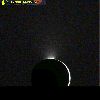
Enceladus-N00145354-N00145358.gifFountains of Light (GIF-Movie; credits: Dr G. Barca)57 visiteNota Lunexit: l'improvviso bagliore che esalta le Fontane di Encelado dovrebbe essere stato provocato, a nostro parere, da un particolare momentum di CASSINI, durante il suo passaggio attraverso un Angolo di Fase davvero ottimale (ricordiamo che è "Angolo di Fase" quell'angolo ottenuto ponendo in semplice correlazione geometrica il Sole, lOggetto Ripreso (o Target) e l'Osservatore (o Subject).MareKromium
(8 voti)
|
|

Enceladus-N00145388-N00145409.gifFountains of Light (GIF-Movie; credits: Dr G. Barca)59 visitenessun commentoMareKromium
(8 voti)
|
|

PSP_005609_1470_RED_abrowse-02.jpgInside Hale Crater (EDM n.2 - processing by: Dr M. Faccin; Natural Color credits: Lunexit)57 visitenessun commentoMareKromium
(8 voti)
|
|

ESP_014330_1960_RED_abrowse.jpgIsland-like Features on the Floor of Grjota Valles (Natural Colors; credits: Lunexit)59 visitenessun commentoMareKromium
(8 voti)
|
|

ESP_014404_1275-GB-LXT-04.jpgExtremely Unusual Surface Feature in Argyre Planitia (Natural Colors - SuperEDM n.3 - credits: Dr G. Barca & Lunexit)60 visiteA nostro parere, grazie a quest'ultimo EDM (ottenuto dal nostro grande Amico e Partner, Dr G. Barca), la natura della Surface Feature può essere accertata con un elevatissimo margine di sicurezza: si tratta della traccia di un impatto (sui generis).
Un impatto recentissimo, il quale ha visto la disintegrazione (probabilmente l'esplosione) del bolide negli immediati pressi del suolo (il che significa, in altre parole, che l'impatto, si, c'è stato, ma solo fra i detriti derivati dall'esplosione - con traccia della fiammata al suolo - ma SENZA una collisione vera e propria tra il bolide - che doveva essere piccolo e leggero - e la superficie).
Secondo noi, il "mistero" è risolto. Ma se Voi aveste opinioni in merito...scrivete!MareKromium
(8 voti)
|
|
| 25332 immagini su 2111 pagina(e) |
 |
|
|
|
|
182 | |
|
|
|
|





