| Piú votate |
DEM L 106-2.jpgN30B inside DEM L 106 Nebula73 visite"...Fallacia alia aliam trudit..."
(Terenzio)
"...Una menzogna (o "una cattiva azione") tira l'altra..."
(9 voti)
|
|

MS 1054-0321-2.jpgDistant Galaxy Cluster MS 1054-0321 (HST view)57 visite"...Ira et Spes, fallaces auctores sunt..."
(Livio)
"...La rabbia e la speranza sono entrambe guide infedeli..."
(9 voti)
|
|

Image056-Mercury.jpgThe secret of Hun-Kal230 visiteRELAZIONE TECNICA
1) L'immagine ci prova che di Mercurio esistono foto molto più dettagliate di quanto abitualmente diffuso su Internet e altri media;
2) Il posizionamento del cratere principale nella foto è "casualmente" coincidente con la posizione in cui si concentra abitualmente l'attenzione dell'occhio umano (cioè nell'area compresa tra il centro e i 2/3 dell'immagine), in modo che eventuali commenti dei profani si indirizzino verso l'imponente struttura verticale laminare che emerge dall'ombra e di cui è impossibile decifrare l'esatta natura.
3) Negli anni '70 gli scienziati ancora pensavano e speravano che il cover-up fosse temporaneo, per cui ai margini delle foto lasciavano sempre qualche indizio. In questo caso basta guardare all'estremità superiore dell'immagine, di cui possiamo vedere un dettaglio: Le strutture reticolari sinaptiche sono veramente splendide e l'origine biogenica è inequivocabile anche per l'osservatore più disattento.
CONCLUSIONI
L'immagine è autentica, in quanto le strutture sinaptiche radiali sono perfettamente identiche a quelle già riscontrate in altre circostanze nei vari corpi del sistema solare. Da altre foto di Mercurio si evince poi una presenza molto importante di reti sinaptiche su tutto il pianeta, a mio parere in parte dovuta alle forti escursioni termiche.
(9 voti)
|
|

Flash-PIA02108.jpgFlash!!!106 visiteThis image shows a flash produced in a laboratory by a high-velocity bead slamming into dust. Though the flash itself can't be resolved, its brilliant effects can be seen in this three-second time exposure. Scientists say that the collision between Deep Impact's Impactor and comet Tempel 1 may produce a similar flash.
This flash occurred when a quarter-inch sphere smashed into powdered dust at a speed of 6,4 Km-per-second (about 4 miles-per-second).
Even though the actual flash lasted less than 50 millionths of a second, the camera recorded the hot debris in the impact crater (center) and the streaking ejecta.
This experiment was performed at NASA's Ames Research Center, Moffett Field, Ca.
(9 voti)
|
|

Hyperion-N00040382.jpgHyperion (23)58 visiteSono solo 2555 i Km che dividono Cassini da questa zona di Hyperion la quale sembra stendersi fra un rilievo montuoso a Nord, due grandi crateri (da impatto, probabilmente) ad Est e, a Sud, un'area che sembra essere ricoperta da abbondantissimi depositi di questo materiale di colore scuro.
E' un vero peccato che Cassini non riesca a scrutare proprio "dentro" al grande cratere il cui bordo copre il lato Sud del frame...
(9 voti)
|
|

Image053-Ukert-6.jpgUkert: the "pseudo-triangular" Lunar Crater215 visite"...la NASA ha tentato molto debolmente di attribuire le perforazioni sulle lastre a non ben precisate piogge di meteore ma poi qualcuno ha pensato bene di non scivolare nel ridicolo e tutto è caduto nel dimenticatoio, laddove è rimasto da circa 40 anni...
Ma, se la tesi avanzata dai Thunderbolts - e basata sugli effetti delle correnti 'Birkeland' al suolo - fosse corretta al 100% e queste formazioni avessero un'origine elettromagnetica del tutto naturale, perchè allora affannarsi a truccare le foto? Certo non perchè c'è chi ha paura che, prima o poi, verremo tutti "cotti a microonde"...
Ma no, è impossibile: in fondo, sulla Terra, un'evenienza del genere dovrebbe essere preceduta e preannunciata da perforazioni dello strato di ozono ai poli e da anormali recrudescenze degli uragani tropicali.
Tutti eventi assurdi..."
(9 voti)
|
|
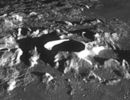
Image052-Ukert-5.jpgUkert: the "pseudo-triangular" Lunar Crater232 visite"...La censura che appare nel punto identificato come 'A' e le strane lastre che appaiono in 'B' (si tratta del frame precedente) sono elementi i quali vengono confermati da questa immagine Apollo 17, in cui la solita ombra - che vogliamo definire "provvidenziale" e che, come si vede benissimo, è stata estesa ad hoc ma in modo alquanto approssimativo... - corrisponde ai "puntini censori" di cui si è parlato e che si sono visti benissimo in uno dei frames precedenti.
Vogliamo fare dell'ironia? Sarò malizioso, ma il Lunar Orbiter risale agli anni '60 e, proprio in quel periodo, i "puntini censori" erano molto usati negli USA - e non solo - per coprire le "zone critiche" e perciò più "interessanti"... delle spogliarelliste!
E poi, in fondo, le stranezze (anche) nei dintorni di Ukert non mancano davvero...il LO 3, infatti, aveva già individuato nell'area di Ukert un evidente intreccio a maglia quadrangolare (o intreccio 'sinaptico') ben visibile al centro dell'ingrandimento di cui al frame che segue...".
(9 voti)
|
|

Volcanoes-Arsia_Mons-03-PIA04294.jpgArsia Mons and its "clouds" (3) - 25 February 2005 (Extremely Saturated Natural Colors; credits NASA/JPL/MSSS)102 visiteOriginal caption:"The spiral dust cloud over Arsia Mons repeats each year, but observations and computer calculations indicate it can only form during a short period of time each year. Similar spiral clouds have not been seen over the other large Tharsis volcanoes, but other types of clouds have been seen. The spiral dust cloud over Arsia Mons can tower 15 to 30 Km (9 to 19 miles) above the volcano. The white and bluish areas in the images are thin clouds of water ice. In the 2005 case, more water ice was present than in the previous years at the time the pictures were obtained. For scale, the caldera of Arsia Mons is about 110 Km (about 68 miles) across, and the summit of the volcano stands about 10 Km (6 miles) above its surrounding plains"
(9 voti)
|
|

Volcanoes-Arsia_Mons-02-PIA04294_fig2.jpgArsia Mons and its "clouds" (2) - 24 April 2003, Ls 173° (Extremely Saturated Natural Colors; credits NASA/JPL/MSSS)61 visiteOriginal caption:"This image was taken on April 24, 2003, such as in late Southern Autumn on Mars. These pictures prove that some parts of Mars experience weather phenomena that repeat each year, at about the same time. In some Regions, the repeated event may be a dust storm that appears every year, like clockwork, in such a way that we can only wish the weather were so predictable on Earth. One of the repeated weather phenomena occurs each year near the start of Southern Winter over Arsia Mons, which is located near 9° South Latitude, 121° West Longitude. Just before Southern Winter begins, sunlight warms the air on the slopes of the volcano. This air rises, bringing small amounts of dust with it. Eventually, the rising air converges over the volcano's caldera, the large, circular depression at its summit. The fine sediment blown up from the volcano's slopes coalesces into a spiraling cloud of dust that is thick enough to actually observe from orbit".
(9 voti)
|
|

Itokawa.gifAsteroid "Itokawa": a new "shooting" against a Celestial Body62 visiteJapan's JAXA Space Agency launched the Hayabusa Mission to rendezvous with asteroid Itokawa. Last week, the small robotic Hayabusa spacecraft arrived at asteroid Itokawa and stationed only 20 Km away. Although a long term goal is to find out how much ice, rock and trace elements reside on the asteroid's surface, a shorter term goal is to determine the mass of the asteroid by measuring the attraction of the drifting Hayabusa spacecraft. During the next few months, Hayabusa will also image and map asteroid Itokawa. The above time-lapse image sequence was taken by Hayabusa upon final approach, showing the general oblong shape of the asteroid. In November, a small coffee-can sized robot dubbed MINERVA is scheduled for release and is expected to hop around the asteroid taking pictures. Also in November, Hayabusa will fire pellets into asteroid Itokawa and collect some of the debris in a return capsule. In December, Hayabusa will fire its rockets toward Earth and drop the return capsule in June 2007.
(9 voti)
|
|

KeelerMoon-PIA07584.jpgS/2005 S1: the "Keeler-Gap" Moon59 visiteCassini's cameras were retargeted to capture the tiny Keeler Gap Moon S/2005 S1, visible at the center and first discovered by Cassini a few months ago. Waves raised in the gap edges by the Keeler moonlet's gravity are clearly visible here. Scientists can use the height of the waves to determine the little moon's mass.
The Keeler moon is 7 Km (about 4,3 miles) across and orbits within its 42-km (about 26-mile) wide gap. The much larger Encke Gap (325 Km, or 200 miles wide) is seen here at the upper right (...). This image was taken in visible light with the Cassini spacecraft narrow-angle camera on Aug. 1, 2005, at a distance of approx. 853.000 Km (or about 530.000 miles) from Saturn. The image scale is 5 Km (3 miles) per pixel. The image has been contrast-enhanced and magnified by a factor of 3 to aid visibility.
(9 voti)
|
|

Jupiter&Comet Shoemaker.jpgComet Shoemaker impacting Jupiter63 visiteQuesta spettacolare ripresa - ottenuta dall'HST - ci mostra alcuni dettagli relativi ai momenti successivi alla sequenza di impatti che, nel Luglio 1994, interessarono gli strati superiori dell'atmosfera di Giove.
Per quelli che non ricordano tutta la storia diciamo che queste immagini ci raccontano della fine (spettacolare, comunque) incontrata dai residui della cometa Shoemaker-Levy la quale, durante la sua corsa verso l'interno del Sistema Solare - ivi, lo Spazio di Giove -, venne "fatta a pezzi" (letteralmente) dalle onde gravitazionali provenienti dal Re dei Giganti Gassosi.
(9 voti)
|
|
| 25332 immagini su 2111 pagina(e) |
 |
|
|
|
|
161 | |
|
|
|
|





