| Piú votate |
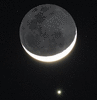
ZZ-ZZ-ZZ-FN-Earthshine.gifCoronal Mass Ejection and Earthsine116 visiteThis photograph was taken by Devgun Chander of Sohna, Haryana, of India. It shows a striking clarity to the earthshine region of the Moon. When I first look at the photograph I was impressed that Aristarchus was standing out so bright even though it very close to the sunset terminator. I sent the photograph to Dr. Anthony Cook the senior recorder for the L.T.P. sections of BAA and ALPO. He sent me the measured brightness of specific lunar formations and of the Lunar Maria.
(...) The Maria across the face of the Moon is uniformly bright except for the formations Mare Humorum, Mare Frigoris and Maria located near Aristarchus. Dr. Anthony Cook believes they are brighter due to the glare from the nearby sunset terminator. (...) The fact that we had a significant coronal mass ejections into space or CME take place on November 8-9,2004 causing aurora reports all over the World. If Solar Excitation is a factor for the extreme brightness of the Earthshine this would be the event to cause it.

(9 voti)
|
|

NGC-4438-2.jpgNGC 4438 - Active Galaxy with possible Black-Hole96 visite"...Quicumque turpi fraude semel innotuit, etiam si verum dicit, amittit fidem..."
(Fedro)
"Chiunque si fece conoscere (anche per) una volta sola come bugiardo, anche se dice la verità non viene creduto"
(9 voti)
|
|

65-Vitello Crater 02 - GW.JPGRolling Rock... - detail mgnf (2)169 visite3) Sisma Lunare: ipotesi "esotica", secondo i Ricercatori più pragmatici, ma accettabilissima dal nostro punto di vista (ed anche alla luce degli interessanti appunti sui rilevamenti di "Moon-Quakes" - PSE – di cui siamo venuti in possesso grazie anche alla collaborazione di Amici che lavorano presso la University of Texas);
4) Sonda (aliena?) in movimento: altra ipotesi esotica che comunque, ad oggi, (sempre a nostro modesto parere) vale più o meno quanto le altre tre;
5) Ejecta: ossìa un frammento della superficie Lunare scaraventato via dal suo luogo di origine a seguito di un impatto occorso nelle vicinanze di Vitello Crater. Ipotesi plausibile...ma improbabile;
6) Frammento di un bolide: ossìa un frammento di qualcosa che ha colpito la Luna e che non si è totalmente disintegrato al momento dell'impatto. Plausibile...ma improbabile.
La nostra opinione?
Grazie a questo bellissimo detail mgnf (sempre realizzato da Fabio Italiano), diremmo che le tracce lasciate dall'oggetto (tutte di diversa forma e profondità e diremmo mai ripetitive) ci fanno escludere – con ogni probabilità – una sua origine artificiale.
Ed infatti, se quello che “leggiamo” sulla superficie della Luna corrisponde a verità, questa “Rolling Thing” dovrebbe essere totalmente irregolare (come un boulder, appunto).
Fra le ipotesi esplicative del movimento, la più interessante e plausibile, a nostro avviso, è quella che fa riferimento ad un possibile Sisma Lunare.
Ma in fondo, sia le ipotesi che abbiamo elencato, sia tutte le altre che potrebbero venirci in mente, sinchè non andremo a verificare “in loco”, sono e resteranno – ahinoi... – soltanto delle (più o meno credibili e sostanziabili) speculazioni.
(9 voti)
|
|
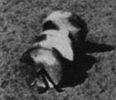
59-Luna 13 - Q-Detail 2.JPGLunik 13: Oceanus Procellarum (5)260 visiteNon abbiamo elementi decisivi che supportano questa conclusione: si tratta solo di una nostra sensazione, basata sull'esperienza (nell'analisi di oggetti similari) e confortata, in parte, dal fatto che abbiamo già visto in passato dei macigni simili (ma l'immagine, sebbene qualitativamente buona, è comunque poco chiara nel caso specifico). In realtà il problema è tutt'altro che risolto, ma la vera - ed inspiegabile - Anomalìa appare in questo secondo detail mgnf. La forma di questo oggetto ci ricorda la cosiddetta "vite senza fine" e, a ben guardare, un corpo simile - laddove naturale - verrebbe a costituire una Singolarità enorme.
Di che si tratta?
Diremmo che non è un oggetto metallico (e ce lo rivelano la sua albedo e tessitura) e che non è un "pezzo" del Lander (troppo grande, decisamente sproporzionato rispetto al Lander ed è pure troppo irregolare - sebbene lineare - per essere man-made).
Che cos'è dunque? Se fossimo su Marte, potremmo azzardarci a dire "è un fossile"; ma sulla Luna...
(9 voti)
|
|

ZZ-SOL660.jpgEvolution of a Martian "Rock" (2) - Sol 660340 visitenessun commento
(9 voti)
|
|

M-042-91_from_orbit.jpgM 42 from the Space Shuttle81 visite"...Sus Minervam docet..."
(Cicerone - Epistolae ad Familiam)
"...Il maiale fa da maestro a Minerva..."
(9 voti)
|
|

SOL653-02-PIA03233.jpgEast Basin (2) - Sol 65371 visiteOriginal caption:"Dark features on the far side of the basin, just left of center in this view, are basaltic sand deposits that were emplaced on the lee sides of hills by northwesterly winds. Haskin Ridge is visible along the right margin of the image, capped by a light-toned layer of rock.
Spirit investigated the light-toned rock unit after taking this image.
The basaltic plains located east of the Columbia Hills can be seen in the distance beyond East Basin. The rim of Thira Crater is just visible on the distant horizon some 15 Km (about 9,3 miles) away".
(9 voti)
|
|

SOL653-01-PIA03233.jpgEast Basin (1) - Sol 65375 visiteOriginal caption:"NASA's MER Spirit used its PanCam to obtain this view of the impact feature called "East Basin" to the North-East of Husband Hill. The images combined into this mosaic were taken during Spirit's 653rd Sol (Nov. 3, 2005), just before Spirit descended eastward onto Haskin Ridge. The view is about 150° wide. It is an approximately true-color rendering generated using the camera's 750-, 530-, and 480-nnmts filters".
(9 voti)
|
|

Itokawa-09.jpgSurface details (2)60 visiteA) Morphological and geological discoveries about Itokawa: the a-priori theoretical assumption that small near-Earth asteroids should have geologically homogeneous features was completely overturned by the observation of a wide variety of surface features and types at Itokawa. The surface is covered with huge boulders and, for the first time, naked surfaces not covered with regolith have been exposed. Previously visited asteroidswere covered with thick regolith, thus Itokawa’s surface is like nothing that has seen before, which is quite fortunate for the Hayabusa Mission. The opportunity to observe the true asteroid surface, which isusually concealed from view, advancesour understanding of spectroscopic observations of asteroids taken from Earth, and allows us to expand our knowledge of near Earth asteroids.
(9 voti)
|
|

Itokawa-04.jpgOrbiting around Itokawa (1)62 visiteHayabusa arrived at its exploration target, near Earth asteroid Itokawa, on Sept., 12th, 2005 after having been propelled there via ion engines and an Earth swing-by. Since then, it has successfully performed orbital maneuvers, precisely keeping its position relative to Itokawa. The Hayabusa Project Team has made many discoveries while carrying out their ambitious scientific observations of Itokawa. This release summarizes and reports the major scientific and engineering achievements in advance of Hayabusa’s unprecedented and historic descent to the surfaceof Itokawa for sample collection middle to later this month (November 2005).
(9 voti)
|
|

NGC-2359-0.jpgNGC 2359 - The "Thor's Helmet" (Emission Nebula)93 visite"...Per quanto possiamo immaginarci evoluti e consapevoli rispetto alla piccola Lucy, in realtà la nostra natura, nella sua fragile essenza, è rimasta pressocché immutata: dietro all’Homo adorante, che cantilena con movimenti ipnotici davanti al Muro del Pianto il suo timor di Dio, c’è ancora lei: Lucy.
Hai ragione: Questo Dio, ci hanno insegnato a temerlo prima che ad amarlo...Questo è un Dio costruito con la logica dell’utilità, che diventa uno strumento al servizio di un qualche bisogno; un Dio oggettivato, come tutte le cose di questo mondo, così da poterlo “trattare”.
Che questo Dio sia un "prodotto umano" lo dimostra anche l’estrema contraddittorietà con cui lo abbiamo accreditato al culto: un Dio che sta in ogni dove, ma al quale abbiamo costruito delle case dove poterlo incontrare (a volte con tanto di orari esposti sul portone); un Dio di estrema bontà, ma che necessita di Legioni di Beati e Santi che intercedano per noi, alla stregua di quanto farebbe un conoscente ben introdotto in un qualunque Ministero; un Dio che sa e vede tutto, ma al quale bisogna spesso ricordare la nostra condizione perché intervenga; un Dio che è il motore di ogni cosa e che, all’occorrenza, lo si può far diventare responsabile dei nostri guai..."
Giuseppe Spina
(9 voti)
|
|

Calypso-PIA07633.jpgCalypso (in false colors)57 visiteThis color image provides the best look yet at Saturn's moon Calypso, a Trojan of the larger moon Tethys. Calypso trails Tethys in its orbit by 60°. Telesto is the other Tethys Trojan, orbiting Saturn 60°ahead of Tethys. Calypso is only 22 Km (about 14 miles) across. Calypso, like many other small Saturnian moons and small asteroids, is irregularly shaped by overlapping large craters. Although the resolution here is not as high as in Cassini's best images of Pandora and Telesto, this moon appears to also have loose surface material capable of smoothing the appearance of craters. (...) The images were taken with the Cassini spacecraft narrow-angle camera on Sept. 23, 2005, at a distance of approx. 101.000 Km (about 63.000 mi) from Calypso and at a phase angle of 61°. Resolution in the original image was 602 mt per pixel (...) ".
Nota: notiamo un'incredibile somiglianza fra Calypso e l'asteroide 433-Eros. Coincidenza, o c'è una sorta di "marchio di fabbrica" che unisce le piccole lune agli asteroidi?
(9 voti)
|
|
| 25332 immagini su 2111 pagina(e) |
 |
|
|
|
|
159 | |
|
|
|
|





