| Piú votate |

SOU-SOL039-2.jpgPre-dawn clouds (2) - Sol 3972 visiteCaption NASA originale:"These are more wispy blue clouds from Sol 39 as seen by the Imager for Mars Pathfinder. The bright clouds near the bottom are about 30° above the horizon. The clouds are believed to be at an altitude of 10 to 15 Km, and are thought to be made of small water ice particles. The picture was taken about 35 minutes before Sunrise".
ATTENZIONE: nel prossimo frame, una (modesta, ma significativa, almeno a nostro parere)"rivelazione"...
(9 voti)
|
|

GRB-060218.jpgA "Transient" Gamma Ray Burst (GRB-060218)88 visiteSomething is happening in a small portion of the sky toward the constellation of Aries and telescopes around the globe are tracking an unusual Transient there as it changes day by day. No one is sure what it will do next. The entire space mystery began on Feb. 18 when the Earth-orbiting Swift Satellite noticed an unusual Transient began to glow dimly in Gamma Rays. Dubbed GRB-060218, the object is a type of GRB but the way its brightness changes is very unusual. Since detection, GRB-060218 has been found to emit light across the whole electromagnetic spectrum, including radio waves and visible light. Above: Sx -> the Sloan Digital Sky Survey image of the field of GRB-060218 well prior to its Swift trigger and Dx -> the same field, taken by the orbiting Swift Satellites' UV-Telescope after the Swift trigger.
The oddball GRB is visible in the center of the right image. Subsequent observations found a redshift for the transient of z=0.033, showing it to be only about 440 MLY away, relatively nearby, compared to typical GRBs. Whether GRB 060218 represents a new type of gamma ray burst, a new type of supernova, or an unusual link between the GRBs and supernovas has become an instant topic of research.
(9 voti)
|
|

NGC-4579-PIA08007.jpgNGC 4579 - Spiral Galaxy65 visite"...Omnia Mors aequat..."
(Claudiano)
"...La Morte riconduce tutto a zero..."
(9 voti)
|
|

ZZ-ZZ-ZZ-ZZ-APOLLO 14 AS 14-13-3b~0.jpgA very old - but ORIGINAL - Apollo frame: LM and possible Surface Anomaly (2)174 visiteCerchiatura Rossa di Dx: il LM
Cerchiatura Rossa di Sx: corpo reale ad elevatissima albedo
(9 voti)
|
|

NGC-2237_and_NGC-2244-3.jpgNGC 2237 - The "Rosette Nebula", and Globular Star Cluster NGC 224459 visite"...Omnia leviora accident expectantibus..."
(Seneca)
"...Tutte le digrazie che sopraggiungono allorchè già attese, feriscono in maniera minore..."
"...Chè saetta previsa vien più lenta..."
(Dante - Paradiso 17, 27)
(9 voti)
|
|

Cartwheel_5panel.jpgThe "Cartwheel Galaxy"64 visite"...La frase più ricorrente è “I virus non sono né forme di vita né materia inanimata”. Non è proprio ortodosso definire un’entità dicendo ciò che non è… Cosa se ne ricava? Non sono organismi biologici, non si riproducono e non si evolvono autonomamente, ma sono composti di materia, che però è dotata di mobilità. In parole povere, i virus sono delle macchine..."
Alessio Feltri
(9 voti)
|
|
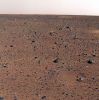
SOL002-PIA04995Det.jpgThe "True Colors" of Mars: a new interpretation - Sol 265 visitenessun commento
(9 voti)
|
|
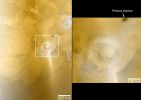
Volcanoes-Arsia_Mons.jpgArsia Mons with Water-Ice Clouds and the shadow of Phobos (credits NASA/JPL/MSSS)102 visiteCaption originale:"This pair of MGS-MOC color images shows early Autumn Clouds over the Arsia Mons Volcano, plus the shadow of the innermost of the Martain Moon Phobos. The picture on the left is taken from the MOC daily global map acquired at 7,5 km (~4,7 mi) per pixel on 28 January 2006, about a week after the start of Southern Autumn.
The picture on the right was taken at the same time, but at a higher resolution of 489 mt (~1604 ft) per pixel.
Both pictures are composites of MOC red and blue wide angle images, and both are oriented such that North is up and East is to the right. Arsia Mons and the other large Tharsis volcanoes commonly develop afternoon orographic (i.e., topographically-controlled) water ice clouds at this time of year. The equatorial Tharsis volcano, Pavonis Mons, is also under a deck of Water-Ice Clouds; it is located toward the upper right corner of the left, lower-resolution image.
Sunlight glints off the dusty Surface and the Clouds and Aerosols in the Atmosphere, producing the bright diagonal Streak located just South/East (lower right) of Arsia Mons. A Water-Ice Haze is seen on the left side of the lower-resolution image. The dark oval to the North-East of Arsia Mons, as noted above, is the shadow of Phobos".
(9 voti)
|
|

M 42 - HST-1.jpgOrion's Nebula an LL Orionis (the "Bow-Shock" effect)65 visiteThis close-up of cosmic clouds and stellar winds features LL Orionis interacting with the Orion Nebula flow. Adrift in Orion's stellar nursery and still in its formative years, variable star LL Orionis produces a wind more energetic than the wind from our own middle-aged Sun.
As the fast stellar wind runs into slow moving gas, a shock front is formed, analogous to the bow wave of a boat moving through water or a plane traveling at supersonic speed.
The small and graceful structure just above and left of center, is LL Ori's "Cosmic Bow Shock", measuring about 1/2 a LY across.
The slower gas is flowing away from the Orion Nebula's hot central star cluster, the Trapezium, located off the upper left corner of the picture.
In 3D, LL Ori's wrap-around shock front is shaped like a bowl that appears brightest when viewed along the bottom edge.
The beautiful picture is part of a large mosaic view of the complex stellar nursery in Orion, filled with a myriad of fluid shapes associated with star formation.
(9 voti)
|
|

APOLLO 11 AS 11-37-5437 HR-2.jpgAS 11-37-5437 - US Highway Number "ONE"355 visiteOriginal caption:"Crater Maskelyne (bottom right), Rima Hypatia (or "US Highway Number One") and Moltke (left of center), "Boot Hill" and "Duke Island" (bottom center)".
Nota: nella Cerchiatura Blu, un possibile TLP (il punto luminoso NON pare essere un photoartifact)
(9 voti)
|
|

Jupiter-PIA01384.jpgThe Great Red Spot, from Voyager 161 visiteOriginal caption:"This view of Jupiter was taken by Voyager 1. This image was taken through color filters and recombined to produce the color image.
This photo was assembled from three black and white negatives by the Image Processing Lab at Jet Propulsion Laboratory".
(9 voti)
|
|
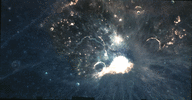
ZZ-ZZ-ZZ-FP-Clem-BrightAristarchus.gifAristarchus: the TLPs "Hottest Spot" (1)155 visiteA mosaic of more than 250 images showing the complex and diverse Aristarchus Region of the Moon in approximately "natural" colors (blue = 415 nanometers, green = 750 nanometers, red = 950 nanometers). The plateau is an uplifted block of complex, highland terrain, partly flooded by later mare basalt lavas. Dark, pyroclastic glasses partly cover the uplifted terrain. The crater Aristarchus (47 Km in diameter) has formed in the South-Western corner of the Plateau, excavating both highlands and mare rocks."
(9 voti)
|
|
| 25332 immagini su 2111 pagina(e) |
 |
|
|
|
|
158 | |
|
|
|
|





