| Piú votate |

Jupiter-2006-19-d-xlarge_web.jpgFather and Son: Jupiter's Red Spots65 visitenessun commento
(9 voti)
|
|

NGC-2207-PIA08098.jpgNGC 2207 and IC 2163 (Colliding Galaxies)62 visite"...I'm your Eyes in the Sky,
Looking at you,
I can see your mind..."
Alan Parsons Project - "Eyes in the Sky"
(9 voti)
|
|

NGC-0253-0.jpgNGC 253 - "Dusty" Spiral Galaxy68 visite"...Non convalescit planta quae saepius transfertur..."
(Seneca)
"...La pianta che viene spesso spostata non attecchisce bene..."
(9 voti)
|
|

Melas_Chasma-MO-20031114a.jpgMelas Chasma89 visiteThis spectacular view of the sunlit cliffs and basaltic sand dunes in Southern Melas Chasma shows Mars in a way rarely seen: in full, realistic color. The colorization is the result of a collaboration between THEMIS Team Members at Cornell University and Space Artist Don Davis, who is an expert on true-color renderings of planetary and astronomical objects. Davis began with calibrated and co-registered THEMIS VIS multi-band radiance files produced by the Cornell group. Using as a guide true-color imaging from the HST and his own personal experience at Mt. Wilson and other observatories, he performed a manual color balance to match more closely the colors of previous visual Mars observations. He also did some manual smoothing and other image processing to mimimize the effects of residual scattered light in the images. The result is a view of Mars that invites comparisons to Earth; a scene that one might observe out the window on a flight over the southwest USA, but not quite. The basaltic dunes are commonplace on Mars but a rare feature on Earth. The rounded knobs and elongated mesas on the canyon floor show an erosional style as exotic as Utah's Bryce Canyon but wholly familiar on Mars. Although the inhospitable Martian atmosphere cannot be seen, the magnificent Martian landscape on display in this image beckons space-suited human explorers and the sightseers who will follow.
(9 voti)
|
|

SOL813-Happy Easter.jpgHappy Easter!87 visitenessun commento
(9 voti)
|
|

M-081-1.jpgM 81 & M 82 - Spiral Galaxies61 visite"...Molto spesso le Religioni, che di norma dovrebbero inchiodare l’individuo a responsabilità non contrattabili con la sua coscienza, prevedono sanatorie e condoni che lasciano ampio margine di redenzione anche all'anima più nera qualora, questa, sentendo avvicinarsi l'ora della chiamata in giudizio si decidesse per un opportuno quanto tempestivo ravvedimento...
Si potrebbe dire che, in fondo, certi adattamenti normativi che alcuni Governi adottano nei confronti dei Cittadini meno morigerati, più che opportuni sono sacrosanti, essendo ispirati e perfettamente accordati a quanto le stesse leggi di Dio suggeriscono e prevedono. Chissà quale strana idea di giustizia ispirò gli egizi quando, al cospetto del Dio, guai a quell'uomo il cui cuore fosse stato più pesante di una piuma.
Giuseppe Spina - "Il Passato"
(9 voti)
|
|
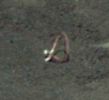
IMAGE060-APOLLO 17 AS 17-145-22201 detail mgnf.jpgBloody Moon... (2)337 visite1.) I frames AS 17-145, da 22201 a 22203, sono stati ripresi dall'interno del Lunar Module ed inquadrano un'area della superficie lunare la quale, ovviamente, è stata molto disturbata dal passaggio degli Astronauti.
Un'area su cui, guardando attentamente, ci sono diversi oggetti anomali, come questo ad esempio (estratto dal frame AS 17-145-22201).
Oggetti - aggiungiamo noi alle parole del Dr Feltri - che non è davvero semplice spiegare e giustificare, anzi...Diremmo che è praticamente impossibile farlo.
(9 voti)
|
|

Corona Australis-2.jpgCorona Australis (2)60 visite"...Fortuna sola utramque paginam facit..."
(Plinio)
"...E' il solo Destino (Fortuna) a scrivere le pagine della nostra esistenza (l'una e l'altra, e cioè sia la buona - vista nella Prosperità -, sia la cattiva - vista nella Miseria)..."
(9 voti)
|
|

Redshift-PIA02038.jpgIn the midst of Time...58 visiteLike great friends, galaxies stick together. Astronomers using NASA's SST have spotted a handful of great galactic "pals" bonding back when the universe was a mere 4,6 BY old (note: the universe is believed to be 13,7 BY old!).
Collectively, these great galactic buddies are called "Galaxy Clusters".
A typical galaxy cluster can contain hundreds of galaxies and trillions of stars. In this false-color composite, some of the oldest galaxy clusters in the universe pose for SST's infrared array camera. The individual galaxies that make up the distant clusters are shown as red dots in all images.
The green blobs are Milky Way stars along the line of sight, and the blue specks are faint galaxies at various distances along the line of sight. The green and blue data are from a visible-light, ground-based telescope.
The cluster at 9,1 BLY away (lower right panel) is currently the most distant galaxy cluster ever detected.
These images are three-color composites, in which blue represents visible light with a wavelength of 0.4 microns, and green indicates visible light of 0.8 microns. The visible data were captured by the ground-based Mosaic I camera at the Kitt Peak National Observatory in Tucson, Ariz. Red represents infrared light of 4.5 microns, captured by Spitzer's infrared array camera.
(9 voti)
|
|

Jupiter_s SouthPole-PIA07784.jpgThe South Pole of Jupiter59 visiteThe South Polar Regions shown here are less clearly visible because Cassini viewed them at an angle and through thicker atmospheric haze.
The round maps are polar stereographic projections that show the North or South Pole in the center of the map and the Equator at the edge.
(9 voti)
|
|

Eta Carinae - HST-1.jpgEta Carinae (HR-HST)65 visite"...Si charta cadit, tota scientia vadit..."
(anonimo medioevale)
"...Se la carta cade, la scienza evade..."
Frase fortemente ironica usata per indicare coloro che non sono capaci nè di improvvisare, nè di "spiccicare quattro parole" su un qualsiasi tema senza essere dotati di note, cartelle ed appunti vari, per lo più preparati da altri.
(9 voti)
|
|

SOU-SOL039-1~0.jpgPre-dawn clouds (1) - Sol 39112 visiteCaption NASA originale:"These are more wispy blue clouds from Sol 39 as seen by the Imager for Mars Pathfinder. The bright clouds near the bottom are about 10° above the horizon. The clouds are believed to be at an altitude of 10 to 15 Km and are thought to be made of small water ice particles. The picture was taken about 40 minutes before Sunrise".
(9 voti)
|
|
| 25332 immagini su 2111 pagina(e) |
 |
|
|
|
|
157 | |
|
|
|
|





