| Piú votate |

R-Hydrae-PIA09070.jpgR-Hydrae60 visite"...Un Paese che si reputa Democratico e che fa della "Democrazia" il vessillo dietro al quale - o sotto il quale... - nascondere tutte le proprie inefficienze e manchevolezze, non è un Paese Democratico..."
P.C. Floegers
(9 voti)
|
|

Northern_Plains-Psp_001380_2520_red-00.jpgAnother "Frozen Lake" in the Northern Plains? (1 - CTX Frame - False Colors; credits for the additional process. and color.: Dr Paolo C. Fienga - Lunexit Team)62 visitenessun commentoMareKromium
(9 voti)
|
|
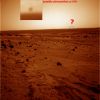
SOL1052-2N219755824EFFASAFP1562L0M1-00.jpgHovering UFO or just an image-artifact? - Sol 1052181 visiteMolto interessante, specie rivedendola e riesaminandola a distanza di 15 anni... Forse non è proprio un Image-Artifact, come da noi originariamente supposto. Tutt'altro...
(9 voti)
|
|

Aurora_Borealis_-_00.jpgOn the shoulder of Giants...60 visitenessun commentoMareKromium
(9 voti)
|
|

IC-2118.jpgRigel and the Witch-Head Nebula114 visite"...Multa experiendo fiunt, (res) quae segnibus ardua videntur..."
(Tacito)
"...Tentando, molte cose che appaiono impossibili, possono essere compiute..."
Caption NASA:"(...) This suggestively shaped reflection nebula is associated with the bright star Rigel in the constellation Orion. More formally known as IC 2118, the Witch Head Nebula glows primarily by light reflected from Rigel, the brightest star in the upper right of the full image. Fine dust in the nebula reflects the light. The blue color is caused not only by Rigel's blue color but because the dust grains reflect blue light more efficiently than red. The same physical process causes Earth's daytime sky to appear blue, although the scatterers in Earth's atmosphere are molecules of Nitrogen and Oxygen. The nebula lies about 1000 LY away".
(9 voti)
|
|

OPP-SOL1016-1N218384221EFF7700P0635L0M1.jpgFantasy: green-algae all over Meridiani?108 visiteFrame a colori elaborati fantasiosamente, sulla base di un suggerimento del nostro Caro Amico e Socio, Lorenzo Leone: e se fosse proprio questo lo spettacolo che vedremmo realmente, oggi, "while walking on Mars"?!?...MareKromium
(9 voti)
|
|

as08-14-2485.jpgAS 08-14-2485 - What a Moon!75 visitenessun commentoMareKromium
(9 voti)
|
|

093-SOL1029-2N217727159EDNAS20P1585L0M1-00.jpgSetting Sun... - Sol 102979 visitenessun commentoMareKromium
(9 voti)
|
|

Phobos.jpgPhobos, in natural colors61 visiteCaption NASA originale:"Color pictures of the two Martian moons have confirmed Earth-based spectra by also showing both satellites to be gray. The Viking imaging data showed the surfaces to be uniformly gray over the complete surface to a resolution of a few hundred meters. No significant color differences were seen on either surface, including areas around craters and those within the bright albedo features on Deimos. The color indicates composition is of a carbonaceous chondritic material. Phobos, here, is at a range of 4200 Km from the Viking 1 Orbiter.
In this picture, color differences have be en exaggerated.
Most of the color differences are due to noise or are artifacts of the processing, especially around craters and the limb".
(9 voti)
|
|

MarsColors03-Viking.jpgThe Colors of Mars (3)61 visiteColor is of considerable geologic interest because it allows remote detection of chemical and mineralogical differences. Only the upper few millimeters of the surface contribute to the color and on Mars this layer may be mostly wind blown debris. The bright materials that dominate the north equatorial zone are apparently aeolian deposits. Two units have been recognized. The upper unit is discontinuous, very red, and among the brightest of materials exposed at the planet's surface. The lower unit is darker and less red. The boundary between the two is generally serrated and has no relief. In the southern e equatorial belt, the color variations are apparently related to local bedrock and not to randomly dispersed aeolian debris. The dark highland region (0° to 40° S and 60° W to 30° E) is divided into (a) dark red ancient crater rims, rugged plateaus, mostly riddled with small channels , and graben; and (b) dark "blue" volcanic flows intermediate in age, and show very few channel networks. The large volcanic constructs in the Tharsis region and volcanic centers in the southern highlands northeast of Hellas are both very dark and very red.
In this image, all three color components have received the same contrast e enhancement, which approaches saturation in the brightest areas. Because Mars is by a factor of two to three more reflective in the red than in the violet, the red component is predominant-giving the planet its classic rusty appearance. Some artifacts of the processing remain in the image, for example, diagonal streaks running from upper left to lower right.
(9 voti)
|
|

MarsColors04-Viking.jpgThe Colors of Mars (4)59 visiteAtmospheric phenomena and surface frost affect the Planet's appearance. South of approximately 40° Lat., the scene is dominated by the annual South Polar CO2 fee cap. Near-surface condensate clouds arc abundant in this Region, especially in Hellas. Because some of the data in the bright areas were saturated, the color balance is distorted; no attempt was made to correct this problem. North of about 20° Lat., condensate clouds are especially noticeable along the northernmost edge where emission angles were extreme. Other clouds are scattered locally throughout the Equatorial Region South and South-West of Valles Marineris.
This image dramatically enhances subtle color variations The violet/green ratio is used as the blue component of the final image, the albedo at the are en wavelength as the green component, and the red/green n ratio as the red component. Hence, the amount of red or blue is controlled primarily by the slope of the spectral reflectance curve: areas with high albedo are also green. Thus, high albedo blue areas (ice, fog, clouds) are blue-green in color, and high albedo red areas are orange and yellow; bright areas of average color are green. Green is absent in dark areas, so the colors represent the slope from violet to red; red areas have a steeper slope, increasing from violet to blue; blue areas have a shallower slope.
(9 voti)
|
|

Comets-Comet_Machholtz.jpgComet Machholtz, from SST60 visitenessun commentoMareKromium
(9 voti)
|
|
| 25332 immagini su 2111 pagina(e) |
 |
|
|
|
|
151 | |
|
|
|
|





