| Piú votate |

PSP_005571_0950_RED_abrowse-01.jpgSouth Polar Residual Cap Margin (extra-detail mgnf; MULTISPECTRUM - elab. Lunexit)58 visiteIn this extra-detail mgnf one can see fractures in the Residual Cap ice near the margin and, farther in, circular depressions that, in some places, appear to have coalesced.
These depressions constitute what is called "Swiss Cheese Terrain" and it's fairly easy to see why. The Swiss cheese terrain is created when the CO2 goes directly from the solid state (ice) to a gaseous state (the more familiar CO2 gas) as temperatures warm during South Polar Summer.
Swiss Cheese Formation may also be linked in a complicated way to the behavior of major Martian Dust Storms.
Images like these, taken before and after dust storm events, can aid our understanding of that complicated relationship.MareKromium
(9 voti)
|
|
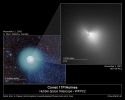
Comets-Comet_Holmes-UZ-1.jpgComet 17-P-Holmes, from Earth and from HST60 visiteNASA's HST has probed the bright core of Comet 17P/Holmes, which, to the delight of sky watchers, mysteriously brightened by nearly a millionfold in a 24-hour period beginning Oct. 23, 2007.
Astronomers used Hubble's powerful resolution to study Comet Holmes' core for clues about how the comet brightened. The orbiting observatory's Wide Field Planetary Camera 2 (WFPC2) monitored the comet for several days, snapping images on Oct. 29, Oct. 31, and Nov. 4. Hubble's crisp "eye" can see objects as small as 33 miles (54 Km) across, providing the sharpest view yet of the source of the spectacular brightening.
The Hubble image at right, taken Nov. 4, shows the heart of the comet. The central portion of the image has been specially processed to highlight variations in the dust distribution near the nucleus. About twice as much dust lies along the east-west direction (the horizontal direction) as along the north-south direction (the vertical direction), giving the comet a "bow tie" appearance.
The composite color image at left, taken Nov. 1 by an amateur astronomer, shows the complex structure of the entire coma, consisting of concentric shells of dust and a faint tail emanating from the comet's right side.
The nucleus-the small solid body that is the ultimate source of all the comet's activity- is still swaddled in bright dust, even 12 days after the spectacular outburst. "Most of what Hubble sees is sunlight scattered from microscopic particles," explained Hal Weaver of The Johns Hopkins University Applied Physics Laboratory in Laurel, Md., who led the Hubble investigation. "But we may finally be starting to detect the emergence of the nucleus itself in this final Hubble image."
Hubble first observed Comet 17P/Holmes on June 15, 1999, when there was virtually no dusty shroud around the nucleus. Although Hubble cannot resolve the nucleus, astronomers inferred its size by measuring its brightness. Astronomers deduced that the nucleus' diameter was approximately 2.1 miles (3.4 kilometers), about the length of New York City's Central Park. They hope to use the new Hubble images to determine the size of the comet's nucleus to see how much of it was blasted away during the outburst.
Hubble's two earlier snapshots of Comet Holmes also showed some interesting features. On Oct. 29, the telescope spied three "spurs" of dust emanating from the nucleus, while the Hubble images taken on Oct. 31 revealed an outburst of dust just west of the nucleus.
The Hubble images, however, do not show any large fragments near the nucleus of Comet Holmes, unlike the case of Comet 73P/Schwassmann-Wachmann 3 (SW3). In the spring of 2006 Hubble observations revealed a multitude of "mini-comets" ejected by SW3 after the comet increased dramatically in brightness.
Ground-based images of Comet Holmes show a large, spherically symmetrical cloud of dust that is offset from the nucleus, suggesting that a large fragment broke off and subsequently disintegrated into tiny dust particles after moving away from the main nucleus.
Unfortunately, the huge amount of dust near the comet's nucleus and the comet's relatively large distance from Earth (149 million miles, or 1.6 astronomical units, for Holmes versus 9 million, or 0.1 astronomical unit for SW3), make detecting fragments near Holmes nearly impossible right now, unless the fragments are nearly as large as the nucleus itself.
The Hubble Comet Holmes observing team comprises H. Weaver and C. Lisse (The Johns Hopkins University Applied Physics Laboratory); P. Lamy (Laboratoire d'Astrophysique de Marseille, France); I. Toth (Konkoly Observatory, Hungary); M. Mutchler (Space Telescope Science Institute); W. Reach (California Institute of Technology); and J. Vaubaillon (California Institute of Technology).
MareKromium
(9 voti)
|
|

NGC-7331-Hager.jpgInside Pegasus (Stephan's Quintet and NGC 7331)59 visite"... Vita sine Litteris mors est, et hominis vivi sepultura..."
(Seneca)
"...La Vita senza studio è la morte ed il sepolcro dell'uomo - comunque - vivo..."MareKromium
(9 voti)
|
|

Abell_21.jpgAbell 21 - The "Medusa Nebula"82 visite"Vale. - Valete Omnes. - Vive Valeque."
"Stà bene. - State bene tutti. - Vivete e state bene."
(forme usuali di saluto, comuni in chiusura di lettere)MareKromium
(9 voti)
|
|

M-042-97.jpgM 42 - The "Great Orion Nebula" and the "Orion's Belt"61 visite"...Necessitas quod poscit nisi des, eripit..."
(P. Siro)
"...Se non si concede alla Necessità ciò che essa chiede, allora essa ce lo porta via di forza..." (trad. libera)MareKromium
(9 voti)
|
|
OPP-SOL1354-1P248384257ESF8788P2538L7M1.jpgObservations... (natural colors; elab. Lunexit)67 visitenessun commentoMareKromium
(9 voti)
|
|

EyesintheSky-W00037024.jpgLike "Eyes", in the Space of Saturn...61 visite"...Nec te quaesiveris extra..."
(Persio)
"...Non cercarti fuori da te stesso..."MareKromium
(9 voti)
|
|

OPP-SOL086-1NN085ILF14CYP07P1983R000M1-B086R1_br2.jpgFram Crater (natural colors; elab. Lunexit)58 visitenessun commentoMareKromium
(9 voti)
|
|
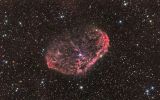
NGC-6888.jpgNGC 6888 - The "Crescent Nebula"63 visite"...Il Male è sol quello che ride
D'un lugubre riso di folle;
Il Male è sol quello che uccide,
Che tempra di sangue le zolle..."
G. Pascoli - "Nuovi Poemetti" (pag. 25)MareKromium
(9 voti)
|
|

Comets-Comet_Holmes-UZ.jpgComet 17-P-Holmes, from Italy69 visiteRecent development from 17-P-Holmes: this picture is a deep image from L'Aquila, Italy on November 8, 2007.
It shows the ion tail disconnecting from the comet (just like it happened to the Encke Comet).
MareKromium
(9 voti)
|
|
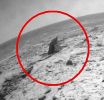
SOL1362-2R247280003EFFAW38P1301L0M1-3.jpgThe "Martian Tepee" (extra-detail mgnf) - Sol 136283 visiteCha altro aggiungere? Abbiamo davanti - come questo extra-detail mgnf dimostra chiaramente - un rilievo semplicemente incredibile il quale sembra davvero essere costituito da una struttura laminare, piatta e (apparentemente) "lavorata" sui lati, la quale si appoggia ad un'altra struttura laminare che giace - riteniamo - parzialmente sepolta.
Sarà un (ennesimo) "Scherzo della Natura"? O una nuova "Svista"? O forse è davvero una sorta di Manufatto?...
Noi diciamo solo - per ora - "Complimenti al Dr Barca per il fantastico ritrovamento"!
Ed ora aspettiamo le mosse degli Amici di Pasadena e vediamo se daranno modo al Rover di avvicinarsi a questo rilievo che ci sentiamo di eleggere al rango di "Anomalìa di Superficie".
Solo avvicinandoci, infatti, forse riusciremo a capire "che cosa" stiamo realmente guardando...MareKromium
(9 voti)
|
|

Comets-Comet_Holmes-TView.jpgTelescopic View of the Comet Holmes60 visiteCaption NASA, da "NASA - Picture of the Day" del 29 Ottobre 2007:"What's happened to Comet Holmes? A normally docile comet discovered over 100 years ago, Comet 17P/Holmes suddenly became nearly one million times brighter last week, possibly over just a few hours. In astronomical terms, the comet brightened from magnitude 17, only visible through a good telescope, to magnitude 3, becoming visible with the unaided eye. Comet Holmes had already passed its closest to the Sun in 2007 May outside the orbit of Mars and was heading back out near Jupiter's orbit when the outburst occurred. The comet's sudden brightening is likely due to some sort of sunlight-reflecting outgassing event, possibly related to ice melting over a gas-filled cavern, or possibly even a partial breakup of the comet's nucleus. Pictured above through a small telescope, Comet Holmes appeared as a fuzzy yellow spot, significantly larger in angular size than Earth-atmosphere blurred distant stars. Although Comet Holmes' orbit will place it in northern hemisphere skies for the next two years, whether it will best be viewed through a telescope or sunglasses remains unknown".MareKromium
(9 voti)
|
|
| 25332 immagini su 2111 pagina(e) |
 |
|
|
|
|
146 | |
|
|
|
|





