| |
| Piú votate |
SOL067-2P132275558EFF1700P2735L1M1.jpgA Martian Starry Night (1)405 visiteUn'altra serie di 4 immagini ancora più enigmatiche. Un rapido scatto (forse 3 o 4 secondi di posa) del Cielo Marziano effttuato alle 4 di notte circa, ora locale. L'area dello spazio fotografata da Spirit è facile da identificare infatti, in basso, si vede distintamente la "Cintura di Orione". Le stelle non disegnano ancora "piccoli segmenti" ed è questo il motivo che ci induce a calcolare il tempo di posa in pochissimi secondi. Il sistema di ripresa fotografica della Sonda non possiede, che si sappia...
(10 voti)
|
|

APOLLO 17 AS17-134-20403.jpgAS 17-134-20403 - A strange-looking Moon rock194 visiteNoi crediamo che questo fatto, nella Storia dell'Umanità e dell'Esplorazione in generale, costituisca un evento assolutamente unico e, a ben vedere, completamente inspiegabile.
Probabilmente esso è l'espressione di un Controsenso Storico della cui portata ci renderanno conto gli Studiosi in un futuro, crediamo, molto lontano.
La Luna fu fermamente voluta, venne conquistata e poi, repentinamente, fu lasciata andare. Noi non abbiamo spiegazioni e quindi chiediamo aiuto ad uno degli Astronauti che...
(10 voti)
|
|

APOLLO 13 AS 13-61-8830 ANOMALY.jpgAS 13-61-8830 - Something "blue" is out there... (5)602 visiteEd invece ecco che appare qualcosa dal buio: si tratta di un corpo complesso, costituito - almeno per quanto riusciamo a vedere - da una serie di sfere di diverso colore, poste una accanto all'altra. Siamo in possesso della versione originale uncompressed di questo frame e possiamo solo invitarVi a prenderne visione Voi stessi. L'oggetto che appare librarsi nell'oscurità, forse ad una distanza non particolarmente elevata dall'astronave terrestre, è lì e non occorrono occhi "speciali" o software per analisi avanzate delle immagini, per capire che quello che si vede non è il riflesso di qualcosa che si trova all'interno dell'Apollo 13, ma è qualcosa di vero e di reale che sta all'esterno della navicella spaziale americana.
Provate a guardare attentamente il prossimo frame che contiene il bellissimo detail mgnf realizzato da OldGrey per avere maggiori elementi di valutazione!
(10 voti)
|
|

APOLLO 13 AS 13-60-8633.jpgAS 13-60-8633 - Moon from orbit289 visiteLe eccezioni che si potrebbero sollevare dicendo che lo Space Programme (ancorchè NON Human) è andato comunque avanti con il lancio di decine di sonde verso i Pianeti del nostro Sistema Solare (da Marte a Giove e Saturno) e con il raggiungimento, talvolta, di grandi traguardi, non valgono a demolire i nostri dubbi di partenza. Certo, gli occhi artificiali di queste Sonde vedono bene, ma noi non crediamo che essi possano davvero vedere meglio degli occhi dell'Uomo. Ci spieghiamo meglio: questi "occhi elettronici" vedono le cose in maniera diversa, sicuramente più precisa e dettagliata di quanto un occhio umano, per eccellente che sia, potrebbe mai riuscire a vedere, ma essi "vedono" senza discernimento e noi, quando guardiamo le immagini che essi hanno "visto" e ripreso per noi, perdiamo un elemento fondamentale che si chiama "immediatezza della percezione". Insomma: attraverso gli occhi elettronici noi vediamo tutto "filtrato" ed in "play-back".
E' ovvio che vedere le cose in questo modo è vantaggioso da...
(10 voti)
|
|

APOLLO 11 AS 11-37-5444.jpgAS 11-37-5444 - Undocking (2)379 visiteUna piccolissima nota per i Lettori: questa immagine, al pari (forse) di tante altre, sembra dire poco o nulla. Però pensate a questo: la fase di docking/undocking (e, dopo l'undocking, la fase di discesa e di allunaggio) è "critica".
Ma in un viaggio interplanetario, si dirà, ogni istante è critico!
Vero, ma ci sono istanti "più critici" di altri. Questi frames, queste immagini, riprendono uno di questi "istanti" in cui il margine di errore concesso agli Astronauti, era pari a ZERO.
Pensateci: la benchè minima imprecisione significava la fine.
Senza appelli e senza scuse.
Ora a quanti di noi è capitato (e, se è capitato, quante volte è capitato) di trovarsi, nella Vita, a compiere un'attività con margine di errore uguale a 0?
Pensateci, ogni qual volta Vi capiterà di guardare un frame (anche il più insignificante) che mostra - magari - i "Pionieri dello Spazio", da Gagarin a Lowell e dalla Vostok al Challanger...Pensateci, prima di liquidare tutto con un "nulla di speciale" e poi pensare ad altro.
(10 voti)
|
|

Possible_UFO_-_Mars-Rover-Curiosity.jpgWow!91 visitenessun commentoMareKromium
(9 voti)
|
|

Mars_Explorer.jpgFunny...123 visiteNiente rover rigidi e pesanti: la chiave per l'esplorazione marziana è tutta in questa ingegnosa "lucertola cibernetica". La tecnologia ci ha dato nuove opportunità per esplorare lo spazio, specialmente con i robot che sono risultati essere strumenti particolarmente efficaci per l'esplorazione di altri pianeti.
Escludendo l'imminente ritorno sulla Luna, il traguardo spaziale umano più prossimo è l'esplorazione di Marte. Avventura emozionante, che potrebbe svelare tracce risorse, o di vita extraterrestre passata o presente: e se la affrontassimo con una lucertola robotica?
A quattro zampe sul pianeta rosso
Gli scienziati della Nanjing University of Aeronautics and Astronautics hanno realizzato un robot a quattro zampe ispirato alla lucertola che potrebbe essere utile per esplorare Marte. Questo robot, descritto nella rivista Biomimetics di MDPI, possiede una struttura flessibile che imita i movimenti e lo stile di cammino delle lucertole del deserto.MareKromium
(9 voti)
|
|

Oumuamua_3.jpgOumuamua92 visitenessun commentoMareKromium
(9 voti)
|
|
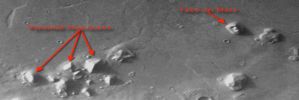
z-The_Face_on_Mars.jpgThe Face on Mars120 visiteIn the AD 1976, many Astronomers were astounded by a (Viking Orbiter) satellite image resembling a Face on the Surface of Mars. What really is that “Face”? Read on to learn more about the face on Mars.
We have already discussed in the past the term "pareidolia". It causes people to see patterns (such as faces and other familiar images) in everyday objects. Many people think that the “Face” on Mars is merely a case of Pareidolia. However, some people believe that the Face exists as a structure created by intelligent design.
But: what exactly do we see when looking at the images of Mars? Mountains? Ancient ruins like the Sphinx or the Pyramids? It seems that everyone has an opinion. And what started this obsession with the face on Mars? In 1976, the Mars Orbiter Viking 1, took a series of pictures of the Martian Region known as Cydonia Mensae. The pictures showed several mountains over a large area. In addition to the hills, and one, in particular, looked like a face. NASA thought it would gain publicity by promoting it to the public. As a consequence, people believed that aliens built this structure on Mars. Located in the Northern Hemisphere of Mars, Cydonia’s Geological Formations suggest the existence of standing water, lakes or even an ocean here for an extended period.
There are several "Mesa-like" structures and smaller flat-topped mountains in the Region. Planetary Researchers believe that parts of these Northern Lowland Plains were once the bed of an ocean or many, and extremely large lakes. Incidentally, they were covered by many layers of various materials (such as, maybe, lava), airborne particles (such as Volcanic Ashes or Atmospheric Particulate), or even Sedimentary Deposits whose depth was of many hundreds of meters. After a long period, erosion removed (some of) these layers. This is just a theory. You may like it or not, but that is it. And it has not been either confirmed or denied. So...
But what about the "Face"? The Martians (accepting the idea that the feature is NOT natural!) thought that another Civilization, in a given period of Time, would have seen and photographed a "Face"? The Mountaintop looks like a three-kilometer-long Face. Why? Because, many Scientists said, the "Terrain features and the angle of shadows led to the creation of the Face". All of the Mars Researchers at the time believed it was an optical illusion. In addition, the HRSC camera captured the Face on Orbit 3253, and the images were published in September 2006. Based on the new photos, the Mountain in question no longer contained a "Face". The angle and lighting removed the “Face” from the image. As a matter of fact, the Mountain now resembles the other Mountains in the area.
This High-Resolution (HR) Images from the Mars Orbiter Camera located on the Mars Global Surveyor Spacecraft showed the famous “Face on Mars” in detail, clearly "demonstarting" that it was a "Natural Geological Formation".
Suspicions of Aliens? The internet has various articles full of ideas and speculation with regards to the Face on Mars. However, it seems everyone wants to believe that Ancient Cvilizations (BUT NOT NECESSARILY INDIGENOUS OF MARS!) once inhabited the Red Planet. Some pictures taken from other man-made satellites seem to suggest the existance of "Pyramidal Structures" near the Face. Furthermore, they think the PyramidS exist nearly (and only) 5 km away from the Face. Dr. John Brandenburg, who worked for NASA, has been speaking about this for years. Brandenburg has worked on Space Plasma Technologies, Nuclear Fusion, and advanced Space Propulsion (and so we think that he's not exactly an "idiot" or just an "incompetent").
“We have found, in a nutshell, that Mars used to seem Earth-like, in the past, and became, eventually, the home not only to life, but a Humanoid Civilization, and that Civilization was apparently destroyed by a Nuclear (?) attack from Space. We have to send our (human) Astronauts there to find out what exactly happened. Did the people on Mars know who did this to them? And how can we make sure that this doesn’t (or won't) happen to us as well?”
Think about this, Ladies and Gentlemen...MareKromium
(9 voti)
|
|

SOL3423-PIA25176-8192x2276.jpg"(Alli)Gator Back" Rocks on "Greenheugh" - Sol 3423159 visiteNASA’s Curiosity Mars rover used its Mast Camera, or MastCam, to take this 360° panorama on March 23, 2022, the 3.423th Martian Day, or Sol, of the Mission. The team has informally described the wind-sharpened rocks seen here as “gator-back” rocks because of their scaly appearance.
Wind-sharpened rocks like these are called ventifacts, and are responsible for chewing up Curiosity’s wheels earlier in the mission. Since then, rover engineers have found ways to slow wheel wear, including a traction control algorithm. They also plan rover routes that avoid driving over such rocks, including these latest ventifacts, which are made of sandstone – the hardest type of rock Curiosity has encountered on Mars.
These rocks form the Surface of the “Greenheugh Pediment,” a broad, sloping plain in the foothills of Mount Sharp. The floor of Gale Crater is visible along the edges of the mosaic. When Curiosity’s team saw the gator-back rocks, they ultimately decided to turn the rover around and take an alternative path to continue climbing Mount Sharp, a 3,4-mile-tall (approx. 5,5-Km-tall) mountain that Curiosity has been ascending since 2014. As it climbs, Curiosity is able to study different sedimentary layers shaped by water billions of years ago. These layers help scientists understand whether microscopic life could have survived in the ancient Martian Environment.MareKromium
(9 voti)
|
|

SOL3563-1-PIA25413-DeepZoom.jpgPanorama - Sol 3563105 visitenessun commentoMareKromium
(9 voti)
|
|

Mars-sphere1.jpgThe fools' mother is always pregnant! (La madre degli stupidi è sempre incinta)136 visiteMa io mi chiedo: come si fa? Come si fa a scambiare due rocce e due ombre per una "Sfera in Levitazione"?
Si fa, a quanto vedo. Potete trovare questa immagine in decine di Siti Ufologici e riguardanti le Anomalie Marziane. Ovviamente, gli "Analisti" del frame non hanno notato che quella cosa che SEMBRA una sfera è solo una roccia rotondeggiante e semi-interrata che proietta un'ombra (così otticamente "completando" l'illusione di una sfera altamente irregolare e bi-colore), e che l'ombra che appare sotto di essa è, in realtà, l'ombra di una roccia posta in posizione inferiore rispetto alla prima (siamo quindi su una superficie in declivio).
Certo: è più bello immaginare e vendere agli illusi una "Sfera in Levitazione" su Marte (ed a quota prossima allo 0 - zero) piuttosto che dire: c'è una roccia che proietta ombra e, in vero (dipende dall'angolo visuale e dall'altezza del Sole sull'Orizzonte Locale al momento della ripresa - dati pure facilissimi da trovare...), i nostri occhi ci fanno vedere (pareidolia) qualcosa che non esiste.
Troppo facile.
E poi ci si meraviglia se i Ricercatori VERI (come NOI!) vengano costantemente ignorati o presi in giro. Che altro aggiungere? Vergogna a chi/coloro che ha/hanno pubblicato questa bufalazza. E se fossero stati in Buona Fede (cosa che comunque dubito), li bollerei pure come TOTALI INCOMPETENTI! Ma per favore: fate fare il Lavoro di Ricercatore a chi/coloro che lo sa/sanno fare. PLEASE!
Dr Paolo C. Fienga (PhD)MareKromium
(9 voti)
|
|
| 25332 immagini su 2111 pagina(e) |
 |
|
|
|
|
133 | |
|
|
|
|
|
|





