| Piú votate |
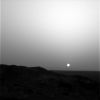
SOL489-2P169794170EDNAAE0P2690L2M1.jpgSunset on Gusev Crater (2)66 visitenessun commento
(10 voti)
|
|
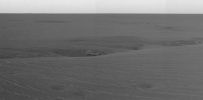
OPP-SOL072-2-xpe_pubeng_approved_040504_pan_crack-B072R1.jpgAnatolia: a big crack in the ground or a small trough? Sol 7292 visiteAnatolia: si potrebbe trattare di un "cedimento" vero e proprio del terreno (ed è quello che a noi sembra), la cui età ed origine sono probabilmente destinate a rimanere un autentico mistero; oppure di una crepa avente origine sismica (dunque molto antica, se siamo d'accordo con la Teoria che definisce Marte come un pianeta geologicamente 'morto') o magari ancora del letto ormai prosciugato di un antico fiumicello Marziano (trough). Queste le ipotesi. La NASA disse (era il 6 Aprile 2004):"...The Science Team is currently focused on the sinuous crack, which consists of a series of deep dimples (dimple---->increspatura, piccolo fosso) sprinkled with rocks that resemble, from a distance, those in the Eagle Crater outcrop...".
Niente altro: il Rover si dirigeva spedito verso Endurance Crater e l'Anatolia Trough veniva dimenticato (ma solo ufficialmente, come ovvio).
(10 voti)
|
|

NGC-5128-PIA07912_modest.jpgNGC 5128 - Centaurus "A"69 visite"...interpretation is nothing but the possibility of error..."
Paul de Man (1919 - 1983) - "Blindness and Insight"
(10 voti)
|
|

CMBR.jpgThe "Cosmic Microwave Background Radiation" - CMBR71 visiteSiamo seduti, davanti al nostro pc, ma siamo fermi? Certamente no, poichè la Terra non è affatto ferma: essa si muove, ruotando su se stessa e percorrendo la sua orbita attorno al Sole. Il Sole, a sua volta, orbita intorno al centro della Via Lattea la quale non è ferma! Essa infatti si muove insieme al cd. "Gruppo Locale" il quale, compatto, si sta dirigendo verso il Grande Ammasso della Vergine (Virgo Galaxy Cluster). La Mappa che Vi presentiamo - e che rappresenta la diffusione della Cosmic Microwave Background Radiation (o Radiazione di Fondo tout-court - RF) nell'intero cielo - ci dimostra, inter alia, che anche la RF si "muove" (ma attenti: la RF NON proviene da una direzione precisa del cosmo!) e che, muovendosi, si raffredda ("...radiation in the Earth's direction of motion appears blueshifted and hence hotter, while radiation on the opposite side of the sky is redshifted and colder...").
Ed ora la domanda, inevitabile: premesso che ci muoviamo, DOVE stiamo andando?!
(10 voti)
|
|

Titan-Atmosphere-PIA06236.jpgThe Atmosphere of Titan61 visiteCaption NASA originale:"This natural color image shows Titan's upper atmosphere: an active place where methane molecules are being broken apart by solar ultraviolet light and the byproducts combine to form compounds like ethane and acetylene. The haze preferentially scatters blue and ultraviolet wavelengths of light, making its complex layered structure more easily visible at the shorter wavelengths used in this image. Lower down in the atmosphere, the haze turns into a globe-enshrouding smog of complex organic molecules. This thick, orange-colored haze absorbs visible sunlight, allowing only perhaps 10% of the light to reach the surface. The thick haze is also inefficient at holding in and then re-radiating infrared (thermal) energy back down to the surface. Thus, despite the fact that Titan has a thicker atmosphere than Earth, the thick global haze causes the greenhouse effect there to be somewhat weaker than it is on Earth".
(10 voti)
|
|

ZD-VikingLander1-landscape-2-12d08x.jpgFrom the "Viking Archive" - Viking 1: full panorama (2)189 visiteprosecuzione del panorama iniziato con il frame precedente.
(10 voti)
|
|

ZH-Viking2-vlfmos21.jpgFrom the "Viking Archive" - Viking 2: full panorama151 visiteCaption NASA originale:"The Viking Lander 2 site in Utopia Planitia has more and larger blocks of stone than does the Viking Lander 1 site in Chryse Planitia. The stones are probably ejecta from impact craters near the Lander 2 site. Many of the rocks are angular and are thought to be only slightly altered by the action of wind and other forms of erosion. Drifts of sand and dust are smaller and less noticeable at the Lander 2 site. The overall red/orange coloring of the Martian terrain is due to the presence of oxidized iron in the regolith. The pink color of the sky is caused by extremely fine dust that is suspended in Mars' thin atmosphere".
Nota: 1) il cielo, in questa immagine in "almost true colors", noi lo vediamo verdastro e non rosa; 2) se l'atmosfera Marziana fosse davvero sottilissima, il cielo dovrebbe apparire MOLTO più SCURO di quanto invece non appare nelle immagini (rosso/arancio scuro nelle ore del giorno pieno - e cioè fra le 10 e le 15 MLT -, azzurro scuro con il "dimming").
(10 voti)
|
|

ZE-I-Viking2-21d049.jpgFrom the "Viking Archive" - Viking 2: surroundings208 visite...e Scienziati si sono concentrati?
Se l'atmosfera Marziana fosse davvero così sottile come ci dicono (anzi: come i rilievi effettuati da Sonde e Landers suggeriscono), il cielo di Marte dovrebbe apparire, semplicemente, quasi NERO!!!
Certo NON rosa, NON giallo (rectius: "butterscotch"), NON celeste e NON rosso, come invece appare in innumerevoli frames Viking, Soujourner/Pathfinder, Spirit ed Opportunity.
Allora, che cosa ne dite? La NASA si è 'incartata' da sola o - forse - siamo riusciti, con il prezioso aiuto del Dr Hamilton, a trovare una crepa nel muro compatto delle certezze scientifiche ufficiali?!?
(10 voti)
|
|

ZE-I-Viking1-vl1_12a240.jpgFrom the "Viking Archive" - Viking 1: Sunrise137 visiteCiascuno dei Viking Landers era equipaggiato con una corposa serie di "science packages" la quale includeva un kit per l'effettuazione di rilevamenti meteo, un sismometro, un kit per analisi chimiche del suolo e dell'aria, due macchine fotografiche ed un kit per l'effettuazione di (non meglio precisati) esperimenti biologici. La prima immagine del suolo di Marte venne ripresa e trasmessa a Terra immediatamente dopo il landing (caso mai accadesse qualcosa come era accaduta ai Russi...). L'immagine in questione mostrava un suolo sabbioso e polveroso, ricoperto di rocce di varie dimensioni, ma complessivamente piuttosto piccole (sino a circa 10 cm di diametro). Le 2 macchine fotografiche erano state installate su versanti opposti della Sonda, in maniera tale da ottenere sia una visione a 360° del panorama circostante, sia per scattare delle immagini stereo da usarsi per calcolare (approssimativamente) le distanze fra il Lander ed i rilievi individuati in ciascun frame.
(10 voti)
|
|

008-Mars_South_West.jpgThe South-Western Region of Mars103 visitenessun commento
(10 voti)
|
|

008-Mars_South_East.jpgThe South-Eastern Region of Mars110 visitenessun commento
(10 voti)
|
|

005-Surface_Ages.jpgMars Global Map: Age of Main Surface Features101 visitenessun commento
(10 voti)
|
|
| 25332 immagini su 2111 pagina(e) |
 |
|
|
|
|
126 | |
|
|
|
|





