| Piú votate |

M-042-4.jpgProplyds inside M 4291 visite"...Quando qualcuno ci chiede di Amare il Prossimo egli non intende dirci di 'Amare Chiunque': sarebbe una richiesta assurda, improbabile e, in ultima analisi, costituirebbe l'invito a seguire una strada impercorribile.
E così, a volte, mi domando, mentre cammino sulle Strade dell'Estate, che cosa significhi davvero "Amare" e subito mi rendo conto di quanto questo insegnamento sia lontano dal nostro modo di pensare, di operare e, in fondo, di vivere.
Amare il Prossimo.
Un giorno vidi dei ragazzi che stavano bastonando un cane: gridai, mi avvicinai a loro, gli parlai. Poi presi in braccio il cane e comprai un pezzo di pane che diedi ad uno di loro: era - credo - il ragazzo più grande.
Orbo di un occhio e con i denti rotti.
Lui ringraziò e poi mi chiese se non avessi preferito un altro cane da portare via: più bello, più giovane e più forte.
Io me ne andai.
Oggi, dopo anni, ancora mi chiedo chi fu davvero il mio 'prossimo': se il ragazzo, o il cane..."
P.C. Floegers - "Cronache di Viaggio"
(10 voti)
|
|
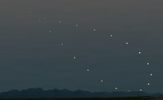
ZZ-ZZ-ZZ-ZZ-LunarAnalemma_richins_f.jpgMoon's analemma (New Mexico)168 visiteDa "NASA - Picture of the Day" del 13 Luglio 2005:"An analemma is an 8-like curve that is gotten when you mark the position of the Sun at the same time each day for 1 year. To imaging an analemma of the Moon it is necessary to understand that, on average, the Moon returns to the same position in the sky about 51' later each day. So, photographing the Moon 51' later on successive days, over one lunation (or Lunar month) it will trace out an analemma-like curve as the actual position of the Moon wanders compared to the average - due to the Moon's tilted and elliptical orbit. (...) Multiple exposure image required some digital manipulation, particularly to include thin crescent phases in daytime skies".
(10 voti)
|
|

Tempel1-U-HST.jpgDeep-impact from HST58 visiteCaption NASA originale:"These 2 pictures of comet Tempel-1 were taken by NASA's HST. They show the comet before and after it ran over NASA's Deep Impact probe".
(10 voti)
|
|

ZZ-ZZ-ZZ-Venus_Co_.jpgVenus, Mercury and Saturn from Brighton (Australia)89 visiteDa "NASA - Picture of the Day" del 2 Luglio 2005:"On Tuesday, June 28th, the setting Sun flooded the horizon with a beautiful warm light in this view from the beach beside the pier at Brighton in Adelaide, South Australia. The Sun also illuminated 3 planets gathered in the Western Sky, such as Mercury, Venus and Saturn. From this perspective Mercury is at the highest point in the celestial triangle, brilliant Venus is just below, and Saturn stands farther to the left and below the close pair. Of course, the Planets only appear close together on the sky but are actually quite far apart in space. The orbits of Mercury and Venus are both interior to Earth's orbit, while gas giant Saturn lies in the outer Solar System, over 9 AU from the Sun. Late next week, Venus and Mercury will share Western Skies with the young crescent Moon".
(10 voti)
|
|

Noachis_Terra-M0705535-03.jpgBizarre-looking Features of Southern Noachis Terra: the "Dark (pseudo) Lake" (EDM n.2, taken from the Original NASA/MGS/MSSS b/w M0705535 Frame)87 visiteUn'immagine davvero eccezionale e, come altre volte ci è successo, molto difficile da commentare. Dentro questo grande cratere, perso nella Terra di Noachis, c'è sicuramente qualcosa e le ipotesi più accreditate - anche a dispetto di quanto sembra apparire nel frame - parlano di accumuli di polveri sottilissime, diventate nere a seguito del verificarsi di fenomeni di ossidazione (p.e.: si potrebbe trattare di semplice ghiaccio secco (carbon dioxide - CO2 - anche noto come "dry ice") il quale è stato superficialmente 'sporcato' dal deposito di polveri ferrose che sono normalmente presenti, peraltro in abbondanti quantitativi, nell'atmosfera Marziana).
Ma chi si sente, oggi come oggi, di escludere altre possibilità?!? E se si trattasse di veri e propri idrocarburi affioranti, parzialmente ghiacciati ed altamente viscosi? A quando la prima Stazione di Servizio Marziana?
(10 voti)
|
|

Terra_Meridiani-The_Sentinels-M0001661-01.gifUnusually-looking Features in Terra Meridiani (Original NASA/MGS/MSSS b/w Frame - EDM)188 visitenessun commento
(10 voti)
|
|

APOLLO 15 AS 15-M-R44-1850.jpgAPOLLO 15 AS 15-M-R44-1850 - Highly reflective "peaks"? (2)173 visitenessun commento
(10 voti)
|
|
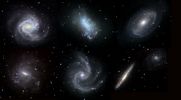
Galaxies.jpgGalaxies... (M 61 - NGC 4449-4725-5068-5247-5775-5774)132 visite"...Dii pedes lanatos habent..."
(Petronio)
"Gli Dei hanno i piedi coperti di lana"
(dal "Satyricon" ---> detto per significare che gli Dei, sebbene a volte intervengano tardivamente ad irrogare le loro punizioni ai malfattori, lo fanno sempre e comunque in maniera inaspettata e...muovendosi silenziosamente, come se avessero i 'piedi rivestiti di lana'!)
(10 voti)
|
|

UFO-2-PIA07250.jpgFar distant galaxies and a UFO in front of the GALEX telescope! (2)92 visite"...Hoc volo, sic iubeo, sit pro ratione voluntas..."
(Giovenale)
"...Questo voglio, così giudico e che la mia volontà sia legge..."
(nota: questo motto venne espresso davanti a Luigi XI - un autentico cultore di questo 'Trittico della Volontà' - da parte di Carlo il Temerario il quale, a sua volta, anteponeva ad ogni ragione o decenza il suo volere, quale che fosse - De Barante "Histoire des Ducs de Bourgogne")
(10 voti)
|
|
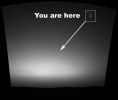
SOL063-11-ml-02-earth-A067R1.jpgNever forget the place you came from: Earth, from Mars! - Sol 6378 visiteNon bisogna mai dimenticare il luogo dal quale si proviene: giusto. Spirit non lo ha dimenticato e, a modo suo, ci ricorda qualcosa che dovremmo mantenere sempre in mente e che invece dimentichiamo molto spesso. Che cosa?
Che siamo "piccoli" e, in questo Grande Universo, probabilmente del tutto insignificanti...
Caption NASA originale:"This is the first image ever taken of Earth from the surface of a planet beyond the Moon. It was taken by the Mars Exploration Rover Spirit one hour before sunrise on the 63rd Sol of its mission. The image is a mosaic of images taken by the Rover's NavCam showing a broad view of the sky, and an image taken by the Rover's PanCam of Earth. The contrast in the PanCam image was increased 2 times to make Earth easier to see.
The inset shows a combination of 4 PanCam images zoomed in on Earth. The arrow points to Earth. Earth was too faint to be detected in images taken with the PanCam's color filters".
(10 voti)
|
|
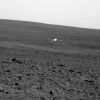
SOL067-3-2P132305493ESF1700P2537L6M1.jpgWhat is that "Silver Sphere"? - Sol 6783 visiteAnche di questa Anomalia si è già sommariamente detto qualcosa nella Sezione "Mars Spirit Anomalies".
Che cos'è? Non lo sappiamo.
Che cosa NON è? Non è l'Heat-Shield (il quale, a detta della NASA, è caduto sul ciglio del Cratere Bonneville) e non è la Back-Shell (che, assieme al paracadute, si troverebbe da tutt'altra parte).
Cosa rimane?
(10 voti)
|
|

033-Mars_Rotation.jpgMars' Rotation and Orbit Dynamics134 visiteMars rotation around its pole causes a signature in the data with a daily minimum, when the Lander is closest to the Earth. Changes in such a daily signature may reveal information about the interior of Mars, through its effect on Mars' precession and nutation.
The signature is also sensitive to variations in Mars' Rotation Rate, as the mass of the atmosphere increases and decreases along with the Polar Caps increase and decrease (obviously the Polar Caps increase during the Martian Fall and Winter and then, due to the higher heating of the Planet - and subsequent evaporation phoenomena - they decrease in Spring and Summer).
Long term signatures in the range to the Lander are caused by asteroids perturbing Mars' orbit; an analysis of these perturbations may allow us to also determinate the masses of these asteroids.
(10 voti)
|
|
| 25332 immagini su 2111 pagina(e) |
 |
|
|
|
|
125 | |
|
|
|
|





