| Piú votate |

Mars-Earth.jpgAn old Sunset over the Alps... (Natural Colors - Credits: Dr Paolo C. Fienga/LXTT/IPF) 12090 visiteUna fotografia ingannevole: si tratta di un tramonto terrestre; non sono stati usati filtri di sorta: i colori sono assolutamente genuini. In origine questa immagine era stata rubricata con un seriale NASA "anomalo" il quale faceva pensare a frames Spirit e/o Opportunity "pirata".
La verità è che si tratta di una (semplice) interpretazione della realtà: a volte Marte sembra la Terra ed a volte la Terra sembra Marte: nessun trucco e nessun inganno. Solo la Natura...
(172 voti)
|
|
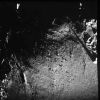
APOLLO 15 AS 15-98-13302 MONOLITH.jpgAS 15-98-13302 - A long - unexplainable - shadow on the Moon (2)2734 visiteL'immagine migliore che abbiamo di questa ombra così spettacolare è quella del frame AS 15-98-13302 di cui, grazie alla preziosa collaborazione di uno dei Curatori dell'Apollo Space Catalog, possiamo fornirVi anche i dati tecnici: "Mission Activity : Revolution 2; Lens focal length: 250 mm; Approximate Altitude: 300 km; Principal Point: Latitude 16 North / Longitude 3.5 East; Camera Tilt: 40 Degrees / Camera Azimuth 180 Degrees; Description/Location: Terminator, Sea of Vapors". C'è una connessione fra questa "cuspide" e le Blair Cuspids?
(149 voti)
|
|
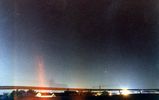
TAURUS.jpgTaurus (Natural Colors - Credits: Dr Paolo C. Fienga/LXTT/IPF)12208 visite"...Aequa tellus
Pauperi recluditur
Regumque pueris..."
(Orazio)
"...The impartial Earth is opened alike for the pauper and the children of kings..."
(146 voti)
|
|
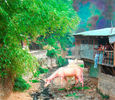
TayTayCanal_unicorn_345kb.jpgThe Year of the Unicorn (by Michael Wirtz)1638 visiteAncora un'Opera Digitale (anche se sarebbe meglio dire una 'visione') dell'Amico Michael Wirtz: si tratta di una splendida veduta pomeridiana - con Unicorno e "Cielo Alieno" - del Tay-Tay Canal (nei pressi di Manila - Filippine).
(143 voti)
|
|
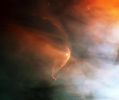
Bow-Shock on M42-HST-PIA04227_modest.jpgBow-shock in Orionis - HST1546 visiteNamed for the crescent-shaped wave a ship makes as it moves through water, a "bow-shock" can form in space when two gas streams collide. In this case, the young star, LL Orionis, emits a vigorous wind, a stream of charged particles moving rapidly outward from the star. Our own Sun has a less energetic version of this wind that is responsible for auroral displays on the Earth. The material spewed from LL Ori collides with slow-moving gas evaporating away from the center of the Orion nebula, located to the lower right of the image. The surface where the two winds collide is seen as the crescent-shaped bow shock. Unlike a water wave from a ship, this interstellar bow shock is three-dimensional. The filamentary emission has a distinct boundary on the side facing away from LL Ori, but is diffuse on the side closest to the star, a trait common to many bow shocks.
(131 voti)
|
|
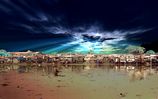
The_Floodway_2005.jpgThe Flood-Way (by Michael Wirtz)2929 visiteIncontro fra paesaggio reale (Filippine) e fantasia (il Cielo)
(128 voti)
|
|
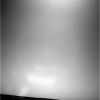
SOL085-ANOMALY-2N133908969EFF2232P1954L0M1.jpgA cloud or something else?2585 visiteQuesta è un'immagine importantissima: a Dx dell'Osservatore, piuttosto in basso, si vede distintamente una piccola scia bianca nel cielo, del tutto simile a quelle che lasciano i nostri jet quando passano. NON è una nuvola (avremo occasione di mostrarVi foto di nuvole Marziane scattate dalla superficie) e NON è un difetto dell'immagine. Si tratta di un qualcosa di reale, fotografato mentre "volava" su Marte, intorno alle 10 di mattina, ora locale. Ancora una Sonda Terrestre?!? Non scherziamo, per favore...
(111 voti)
|
|
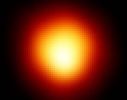
Alpha Orionis (alias Betelgeuse).jpgAlpha Orionis (alias Betelgeuse) - HST1464 visite"...Non omnis moriar, multaque pars mei vitabit Libitinam..."
(Orazio)
"...Non credo che morirò completamente: una (grande) parte di me riuscirà a sopravvivere..."
(103 voti)
|
|
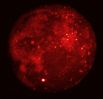
ZZ-ZZ-ZZ-InfraredMoon_msx_big.jpgEclipsed Moon in Infrared: what's inside Tycho Crater?1332 visiteDa "NASA - Picture of the Day" del 23 Aprile 2005:"In September of 1996, the Midcourse Space Experiment (MSX) satellite had a spectacular view of a total lunar eclipse from Earth orbit. SPIRIT III, an on board infrared telescope, was used to repeatedly image the moon during the eclipse. Above is 1 of the images taken during the 70 minutes of totality (...). Infrared light has wavelengths longer than visible light - humans can not see it but feel it as heat. So, the bright spots correspond to the warm areas on the lunar surface and dark areas are cooler. The brightest spot below and left of center is the crater Tycho, while the dark region at the upper right is the Mare Crisium".
La spiegazione fornitaci dalla NASA circa il contenuto e la chiave di lettura dell'immagine è davvero perfetta ed inequivocabile. Ciò che ci lascia perplessi, tuttavia, è l'assoluta non-chalance con cui ci viene detto che il Cratere Tycho "è caldo", mentre quasi tutto il resto della Luna non lo è.
Cosa c'è "dentro" Tycho?!?
(100 voti)
|
|

M-017-2.jpgAn X-Ray emission from M 17 (Chandra X-Ray Telescope)1111 visite"...Il piano (consapevole o no) delle oligarchie capitalistiche è tutto sommato semplice nella sua evidenza sempre più scoperta: trasformare l’Umanità in una massa omogenea ed amorfa di macchine biologiche la cui funzione primaria sia il consenso: consenso politico (in questo caso l’uomo mutante viene definito "elettore"), consenso economico (e si ha il "consumatore"), consenso religioso (ottenendo il "fedele").
Una umanità di semideficienti, privi di ogni facoltà critica, senza l’autentica dimensione esistenziale che può dare solo una cultura liberamente elaborata; una folla di cervelli opacizzati da luoghi comuni, falsità, banalità..."
Paolo Cortesi - "Umanità Mutante"
(78 voti)
|
|
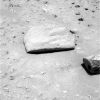
SOL014-2P127604483EFF0309P2543L4M1.jpgSlot-Rock and "The Shell" (10)1460 visitePerò sappiamo pure che la temperatura di alcune zone all'interno dei Crateri Bonneville (Area Gusev Crater) ed Endurance (Area Meridiani Planum) sfiora, di giorno, gli 8/9 gradi Celsius.
E se l'interno di Marte fosse ancora "caldo"?
Siamo davvero certi che non vi sia traccia di attività sismica e vulcanica sul pianeta?
Perchè, se Marte è davvero gelido come dicono i nostri maggiori Scienziati, c'è un'elevata speranza di trovare acqua allo stato liquido sotto la sua superficie?
(78 voti)
|
|
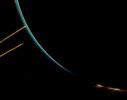
Jupiter_s Rings-PIA01529_modest.jpgColorful Jupiter's Rings830 visiteCaption NASA originale:"Jupiter's faint ring system is shown in this color composite as two light orange lines protruding from the left toward Jupiter's limb. This picture was taken in Jupiter's shadow through orange and violet filters. The colorful images of Jupiter's bright limb are evidence of the spacecraft motion during these long exposures. The Voyager 2 spacecraft was at a range of 1.450.000 kilometers about two degrees below the plane of the ring. The lower ring image was cut short by Jupiter's shadow on the ring itself".
(70 voti)
|
|
| 25332 immagini su 2111 pagina(e) |
1 |
 |
|
|
|
|
|
|
|
|
|





