| Piú votate - Asteroids and Comets |

EROS-G-TouchDown.jpg433 Eros: 4 years after the "touch-down"!59 visiteCaption da "NASA - Picture of the Day" del 12.02.2005:"On 12 February, 2001, the NEAR-Shoemaker spacecraft gently touched-down on the the surface of Eros - the first ever landing on an asteroid. During the descent, the spacecraft's camera recorded successive images of the diminutive world's surface, revealing fractured boulders, dust filled craters, and a mysterious collapsed channel. The last frame, seen in the above montage at the far left, was taken at a range of 128 meters. Expanded in the inset, it shows surface features a few centimeters across. Stereo experimenter Patrick Vantuyne, constructed this montage from the final images in the landing sequence, carefully identifying the overlapping areas in successive frames. Frames which overlap were taken by the spacecraft from slightly different viewpoints, allowing Vantuyne to construct close-up stereo images of the surface of asteroid 433 Eros".
(7 voti)
|
|

Comets-Wild_2-01.jpgApproaching Wild 2 (2)60 visiteCaption NASA originale:"On January 2, 2004 NASA's Stardust spacecraft made a close flyby of comet Wild 2.
Among the equipment the spacecraft carried on board was a navigation camera.
This is the 34th of the 72 images taken by Stardust's navigation camera during close encounter. The exposure time was just 10 milliseconds".
(7 voti)
|
|

EROS-PIA02492.jpgEros in true colors87 visiteAs the NEAR Shoemaker spacecraft descends into lower orbits around Eros, it continually returns higher spatial resolution images of the asteroid. The true color image at left was taken February 12, 2000, from a range of 1.748 Km and shows details only as small as 180 meters (590 feet) across. It was taken two days before orbit insertion, as part of an image sequence designed to provide moderate-resolution color mapping of Eros at a near-constant viewing geometry. The true color image inset at right was taken February 29 from a range of 283 Km and shows much smaller details only 27 meters (89 feet) across.
(7 voti)
|
|
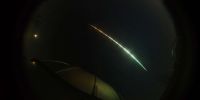
Asteroid-2022_WJ1.jpgAsteroid 2022 WJ1104 visiteDi solito riusciamo a studiare gli Asteroidi quando passano a milioni di Km o quando sono ormai caduti da qualche parte sulla Terra. Non è semplice osservare uno di questi oggetti poco prima dell'impatto e, nella storia, ci siamo riusciti solo 6 volte; questa è l'ultima, fino ad oggi. Si tratta di 2022 WJ1, un Asteroide scoperto in traiettoria di entrata il 19 novembre 2022, quasi 4 ore prima dell'impatto. L'oggetto era troppo piccolo per essere preoccupante o pericoloso, ma quello che importa è che i nostri sistemi di rilevamento stanno diventando sempre più sofisticati e veloci.
In questo caso la scoperta è stata fatta dal Catalina Sky Survey (un insieme di telescopi) in Arizona, il quale ha immediatamente allertato una rete di altri osservatori che hanno calcolato in poco tempo dove sarebbe caduto. La roccia aveva circa il 20% di possibilità di cadere da qualche parte nel continente Nord-Americano e le osservazioni di follow-up hanno permesso agli scienziati di perfezionare le loro misurazioni fino a ottenere precisamente l'ora e il luogo di impatto.
Un bolide infuocato infatti ha illuminato il cielo sopra la regione del Golden Horseshoe nel sud dell'Ontario, in Canada. Misurava circa un metro di diametro quando è entrato nell'atmosfera terrestre, rendendolo l'asteroide più piccolo mai osservato prima dell'ingresso nell'atmosfera fino ad oggi.
"Questa palla di fuoco è particolarmente significativa in quanto il meteoroide genitore è stato osservato telescopicamente prima che colpisse l'Atmosfera. Ciò rende una rara opportunità di collegare i dati telescopici di un asteroide con il suo comportamento di rottura nell'Atmosfera per poi poter raccogliere informazioni sulla sua struttura interna", ha affermato l'astronomo e fisico Peter Brown della University of Western Ontario.
Nota: ora Vi sentite più tranquilli? Io no. Stiamo "tessendo" troppe lodi circa la nostra capacità di intercettare la rotta di Asteroidi "alla svelta" e calcolarne la traiettoria, le dimensioni ed il possibile luogo di impatto. Secondo me questi Fenomeni solo cercando "fondi" (soldi, USD, insomma) e nulla di più... Scusate il cinismo.MareKromium
(6 voti)
|
|
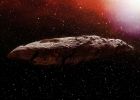
Comet_Oumuamua-3.jpgMore questions...94 visiteDopo 5 anni dalla sua comparsa nel nostro sistema solare Oumuamua rimane uno degli argomenti che più accendono la fantasia di ricercatori e appassionati di vita extraterrestre. Avi Loeb, celebre astrofisico di Harvard, continua a senza demordere ad affermare che quello strano asteroide interstellare non è altro che un oggetto costruito da qualche civiltà aliena. In lingua hawaiana Oumuamua significa "messaggero che arriva da lontano" e in effetti stiamo ancora capendo da dove provenga, tentando di analizzarne la natura grazie ai dati registrati dai nostri telescopi, prima che scomparisse di nuovo nella galassia.
L'idea di Loeb su questo oggetto è stata subito radicale e non in linea con il tipo di ricerca fatta dalla comunità scientifica: secondo lui era una vela a propulsione leggera prodotta dagli alieni. "Gli scienziati del mainstream dovrebbero stanziare fondi per trovare il prossimo oggetto simile a Oumuamua e identificare oltre ogni ragionevole dubbio la sua natura", ha scritto Loeb.
L'astrofisico da circa un anno ha fondato il Progetto Galileo che utilizzerà i dati per elevare la ricerca di tecnologia extraterrestre da osservazioni aneddotiche e leggende a ricerca scientifica sistematica.
MareKromium
(6 voti)
|
|

Comets-Comet_ISON-4-10-2013-HST.jpgComet ISON (Hubble Space Telescope's View)60 visiteCaption originale:"Comet C/ISON was imaged with the Hubble Space telescope on April 10, 2013, using the Wide Field Camera 3, when the Comet was 394 million miles from Earth. View larger. Image via NASA, ESA, J.-Y. Li (Planetary Science Institute), and the Hubble Comet ISON Imaging Science Team".
MareKromium
(6 voti)
|
|

Comets-Comet_Hartley_2-MF-LXTT4.jpgComet "Hartley 2" (Absolute Natural Colors; credits for the additional process. and color.: Dr Paolo C. Fienga - Lunexit Team)171 visite...Come da richiesta del nostro Amico e Socio, "AndreaGG"...MareKromium
(6 voti)
|
|

Comets-Halley-nucleus.jpgThe Nucleus of Halley58 visiteWhat does a Comet Nucleus look like?
Formed from the primordial stuff of the Solar System, Comet Nuclei were thought to resemble to very dirty icebergs. But ground-based telescopes revealed only the surrounding cloud of gas and dust of Active Comets nearing the Sun, clearly resolving only the Comet's Coma, and the characteristic cometary tails.
In 1986, however, the European Spacecraft "Giotto" became one of the first group of spacecrafts which encountered and photographed the Nucleus of a Comet, when it passed and imaged Halley's Nucleus as it approached the Sun.
Data from Giotto's camera were used to generate this enhanced image of the potato shaped Nucleus that measures roughly 15 Km across. Some Surface Features on the dark Nucleus are on the right, while gas and dust flowing into Halley's Coma are on the left.
Every 76 years Comet Halley returns to the Inner Solar System and each time the Nucleus sheds about a 6-meter deep layer of its ice and rock into space. This debris shed from Halley's Nucleus eventually disperses into an orbiting trail responsible for the Orionids Meteor Shower, which occurs in October of every year, and the Eta Aquariids Meteor Shower, that occurs in May.MareKromium
(6 voti)
|
|

Haumea-1.jpgHaumea: an "Egg" in the Outer Solar System...80 visitenessun commentoMareKromium
(6 voti)
|
|

Steins-1.JPG2867 Šteins (3D)58 visitenessun commentoMareKromium
(6 voti)
|
|

Comets-Comet_Holmes-UZ-2.jpgComet 17-P-Holmes, from Hungary56 visiteCaption NASA:"Comet Holmes refuses to fade. The unusual comet that surprisingly brightened nearly a million-fold in late October continues to remain visible to the unaided eye from dark locations. Night to night, Comet 17P/Holmes is slowly gliding through the constellation Perseus, remaining visible to northern observers during much of the night right from sunset. Pictured above, Comet Holmes was captured from Hungary last week. The remarkable snowball continues to retain a huge coma, but now shows very little of a tail. To the far right is the open cluster of stars NGC 1245.
How much longer Comet Holmes will remain visible to the unaided eye is unknown".MareKromium
(6 voti)
|
|

MATHILDE_FLY-BY.gifMathilde (NEAR Probe Fly-By)58 visiteGuardate bene: osservate il "main crater" di Mathilde, così (enorme-mente) simile allo Stickney Crater di Phobos e poi, se volete, provate a pensare...Crateri troppo grandi, per mondi troppo piccoli!
Che ne dite?MareKromium
(6 voti)
|
|
| 282 immagini su 24 pagina(e) |
 |
|
|
|
|
9 | |
|
|
|
|





