| Piú votate - The Moon from JAXA - The "Kaguya" Lunar Probe |

Kaguya-038-_Rupes_Recta.jpgRupes Recta213 visitenessun commentoMareKromium
(3 voti)
|
|

Kaguya-044-20090619.jpgThe "hidden colors" of the Moon (by Dr M. Faccin)61 visiteNote di Marco Faccin:"...stavo guardando queste immagini e, se ci fate caso, presentano una sorta di "disturbo a scalino"; ho quindi pensato di deinterlacciarle e poi ho scoperto che avevano dei "colori nascosti".
Provate anche Voi, con un qualsiasi programma di colorizzazione: aumentate la saturazione colore e vedrete!
Perchè sono state decolorate? Non ne ho idea.
Il problema è che sembra che si sia usato uno standard video diverso dal PAL. E' quindi difficile ricostruire l'esatta matrice del colore originale ripreso però possiamo accontentarci di quel poco che è rimasto...".
Note di Paolo C. Fienga:"La Luna ha dei colori suoi propri, del tutto specifici e peculiari? Si, certo: ovviamente: come TUTTO nell'Universo.
Perchè non li vediamo? Perchè i nostri occhi - ergo la nostra "vista" - per meravigliosi/a che sìano/sia, sono/è limitati/a. E perchè le Agenzie Spaziali "nascondono" i colori?
Ma è ovvio: perchè, come Vi abbiamo dimostrato più e più volte, l'informazione "colore" ci permette l'acquisizione di conoscenze ulteriori e profonde in ordine a quanto osservato (pensate al Cielo ed alla Superficie di Marte, come esempi più eclatanti).
Ed è evidente che l'acquisizione di dette conoscenze "ulteriori" e "profonde", nell'ottica di NASA, ESA, JAXA etc., non deve (ancora?) diventare/essere un "Patrimonio Comune".
E questo è quanto.MareKromium
(3 voti)
|
|

Kaguya-046-20090619_kaguya_hdtv_L6.jpgThe very final images taken by the HDTV (6)59 visitePicture taken at 03:16 a.m.
Coord.: about 86° South Lat. and approx. 262° East Long.
Spacecraft altitude: 16,2 Km
Relative Position: South of Drygalski CraterMareKromium
(3 voti)
|
|

Kaguya-049-20090619_kaguya_hdtv_L7.jpgThe very final images taken by the HDTV (7)61 visitePicture taken at 03:17 a.m.
Coord.: about 89° South Lat. and approx. 266° East Long.
Spacecraft altitude: 14,1 Km
Relative Position: near De Gerlache Crater (about 32 Km dia.)
NASA said:"Japan's Kaguya Spacecraft crashed into the Moon last week (June, 11th, 2009), as planned.
Officially named the Selenological and Engineering Explorer (SELENE), the spacecraft was given the nickname "Kaguya" after the princess in the Japanese folklore story "The Tale of the Bamboo Cutter".
Pictured above is the last frame taken by Kaguya during the last orbit of its 20-month Lunar Mission.
A desolate, hilly and cratered terrain passed underneath the Spacecraft as it barely cleared a few peaks. At the end of the descent, the Spacecraft disappeared into darkness near Gill Crater.
Robotic SELENE carried thirteen scientific instruments and two HDTV cameras. The groundbreaking mission took data on Lunar Topology and composition that are being used to better understand the origin and history of Earth's unique and ancient companion.
Data and images from Kaguya and the recently launched Lunar Reconnaissance Orbiter could be used to choose good locations to land future Moon-exploring Astronauts".MareKromium
(3 voti)
|
|

Kaguya-044-20090619_kaguya_hdtv_L4.jpgThe very final images taken by the HDTV (4)56 visitePicture taken at 03:14 a.m.
Coord.: about 81° South Lat. and approx. 261° East Long.
Spacecraft altitude: 20,7 Km
Relative Position: near Drygalski CraterMareKromium
(3 voti)
|
|

Kaguya-045-20090619_kaguya_hdtv_L5.jpgThe very final images taken by the HDTV (5)56 visitePicture taken at 03:15 a.m.
Coord.: about 83° South Lat. and approx. 261° East Long.
Spacecraft altitude: 18,4 Km
Relative Position: South of Drygalski CraterMareKromium
(3 voti)
|
|

Kaguya-050-20090611_kaguya_2_e.jpgKaguya crashes near Gill Crater60 visiteCaption JAXA:"JAXA maneuvered the Lunar Explorer “KAGUYA” (SELENE) main orbiter to drop it onto the following location on the Moon Surface to complete its Moon observation mission.
The KAGUYA conducted nominal operations for about 10 months then an extended operational phase for about seven and a half months after being launched on September 14, 2007.
Date and time: at 03:25 a.m. on June 11, 2009 (Japan Standard Time)
Location: 65,5° South Latitude and 80,4° East Longitude, near GILL Crater.
The KAGUYA’s impact location was in the shaded area of the Moon, thus we expect a slight possibility of witnessing the impact flash generated when the KAGUYA hit the Moon. We are now asking people all over the world to provide us with images of the impact flash if someone successfully captured this feat.
Concerning the sub satellite of the KAGUYA, the VRAD (Ouna) satellite, its observation operation has already been completed. We will further carry out necessary observations for calibration, then will terminate operations. The KAGUYA's observation data will be released through the Internet from Nov. 1.".MareKromium
(3 voti)
|
|

Kaguya-029-Tycho-tc_012_a_l.jpgTycho: the Central Peak (perspective view - natural colors; credits: Lunexit)56 visiteCaption JAXA:"Tycho Crater, located on the Lunar Nearside in the Highlands of the Southern Hemisphere at about 43° South Lat. and 7° West Long. is a young crater formed by an impact about 100 Million Years ago. On nights when the Moon is fully lighted, you can see bright rays coming out from Tycho Crater.
The study of Tycho Crater contributed to the development of Lunar Science. The first data on the chemical composition of the Lunar Highlands were obtained by the analytical instrument onboard Surveyor 7, which soft-landed about 20 Km North of the Rim of Tycho, in 1968 (see Note n. 1).
Dr. J. A. Wood of the Smithsonian Astrophysical Laboratory discovered some tiny fragment of Anorthosite in the regolith (soil) samples collected by the Apollo 11 Astronauts. Because of the observation that the chemical composition of the fragments was similar to that of Tycho taken by the Surveyor, Dr. Wood inferred that these fragment were ejected from Tycho by the impact. He proposed the "Lunar Magma Ocean Hypothesis" (see Note n. 2) in order to account for his finding that the Lunar Highlands are composed of Anorthosite.
One of the major objectives of the subsequent Apollo Missions was to find a pristine Anorthosite rock in the Highlands.
The impact that created Tycho Crater ejected highland anorthositic crust all over the Near Side of the Moon. This impact by a small asteroidal body took place, as we said, about 100 MY ago, when the dinosaurs inhabited the Earth. It was, however, still a relatively recent event in Lunar History, and the effects of the impact event can still be seen.
Note 1) In preparation for the manned Lunar Missions of the Apollo Program, NASA developed soft-landing techniques with the Surveyor Program. Surveyor 7 was the final spacecraft of the series and landed near the north rim of Tycho Crater on 10 January 1968 (UT). During this mission, many photographs of the Lunar Highland landscape were taken and a geological survey was performed.
Note 2) “Lunar magma ocean hypothesis”: To explain the formation of Anorthosite that the Lunar Surface was once completely molten to a depth of about 200 Km, thus forming a “lunar magma ocean”. This hypothesis has contributed not only to Lunar Science but also to ideas about the formation of the Earth. MareKromium
(3 voti)
|
|

Kaguya-030-Tycho-tc_012_c_l.jpgTycho: the Inner Rim (perspective view - natural colors; credits: Lunexit)55 visitenessun commentoMareKromium
(3 voti)
|
|
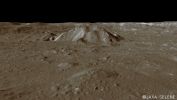
Kaguya-032-tc_012_e_l.jpgTycho: the Central Peak (perspective view - natural colors; credits: Lunexit)56 visitenessun commentoMareKromium
(3 voti)
|
|
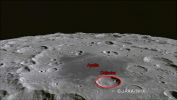
Kaguya-025-hdtv_002_6c.jpgSome Lunar Geography from Kaguya: the Apollo "Plain" and Onizuka Crater (FarSide)55 visiteApollo Plain - Coord.: 36,1° South Lat. and 151,8° West Long.; Diam.: about 537 Km
Onizuka Crater - Coord.: 36,2° South Lat. and 148,9° West Long.; Diam.: about 29 Km
Note: Ellison Onizuka (1946-1986) was an American Astronaut. He actually was the 1st Asian-American who flew into space and he died in the tragic explosion of the Space Shuttle Challenger, in 1986 (that would have been his second flight mission).MareKromium
(3 voti)
|
|
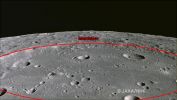
Kaguya-023-hdtv_004_4c.jpgSome Lunar Geography from Kaguya: Mendeleev Crater (FarSide)53 visiteCoord.: about 5,7° North Lat and 140,9° East Long.
Diam.: about 313 KmMareKromium
(3 voti)
|
|
| 55 immagini su 5 pagina(e) |
2 |  |
|
|





