| Piú votate - A Tribute To Mars Global Surveyor |
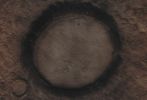
Craters-Unnamed_Impact_Crater-PIA07836-PCF-LXTT.jpgUnnamed Impact Crater wth "Black Rim" in Vastitas Borealis (Absolute Natural Colors; credits for the additional process. and color.: Dr Paolo C. Fienga - Lunexit Team)228 visiteCaption NASA originale:"This MGS-MOC image shows a nearly-filled (and very old) impact crater on the Northern Plains".
Location near: 47,3° North Lat. and 294,0° West Long.
Image width: ~3 Km (~1,9 mi)
Illumination from: lower left
Season: Northern Summer MareKromium
(4 voti)
|
|

Chasmas-Melas_Chasma-08.jpgSample scarp edge in layered unit in Melas Chasma or... Frozen Waterfalls on Mars? (7 - Natural Colors; credits for the additional process. and color.: Dr Paolo C. Fienga - Lunexit Team)234 visitenessun commentoMareKromium
(4 voti)
|
|

Craters-Lau_Crater-M07_4748_4749-PCF-LXTT-01.jpgBizarre-looking "Dark Spot" near Lau Crater (EDM - Absolute Natural Colors; credits for the additional process. and color: Dr Paolo C. Fienga - Lunexit Team)210 visiteLa chiazza scura e senza nome che la NASA stessa definisce di "natura sconosciuta" potrebbe essere l'evidenza, secondo alcuni Ricercatori Americani ed Europei, di una minuscola area di Marte con "vegetazione". Si, avete letto bene: vegetazione, di un qualche tipo. In un'altra immagine della stessa zona, la macchia scura appare di colore verdastro e non nero. E' del tutto evidente che i sostenitori dell'idea che si tratti di vegetazione (si, ma che tipo?) ritengono che l'immagine NASA sia manipolata, mentre la NASA sostiene che i colori che vedete sono "almost real" e quindi la macchia scura, comunque, non è (nè potrebbe comunque essere) vegetazione.
Questi sono i dati e le informazioni disponibili: come vedete, c'è materiale su cui riflettere...MareKromium
(4 voti)
|
|

Craters-Lau_Crater-M07_4748_4749-PCF-LXTT-00.jpgFeatures and Proximities of Lau Crater (CTX Frame - Absolute Natural Colors; credits for the additional process. and color.: Dr Paolo C. Fienga - Lunexit Team) 204 visiteCaption NASA:"The Martian Southern Hemisphere was nearly 2 months into its Spring Season when this picture was taken by the Mars Global Surveyor (MGS) Mars Orbiter Camera (MOC) on September 25, 1999. The scene covers a vast, Frost-coated Plain located South of the martian Antarctic Circle. The icy Terrain in the image has an almost pastel-like character, owing to the mixture of reddish Dust both on, in, and under the white Frost. The Frost - mostly frozen water at this time of year - is left over from Winter, which ended on August 2, 1999. One Martian Year is about 687 Earth days long, thus each of the Planet's 4 seasons are nearly twice as long as seasons on Earth.
The largest Crater visible in the upper left of the frame is Lau Crater, named for the Danish Astronomer, Hans E. Lau (1879-1918). The Dark Spot near the center of the image has no name, and its origin is unknown. The picture covers an area about 1.020 Km across by approximately 1.240 Km down.
The center is located near 76° South Lat. and 97° West Long.; North is toward the upper right. Sunlight illuminates the scene from the upper left".MareKromium
(4 voti)
|
|

North_Polar_Regions-The_Erg-M2300963-PCF-LXTT.jpgFeatures of the North Polar Erg (Absolute Natural Colors; credits for the additional process. and color.: Dr Paolo C. Fienga - Lunexit Team) 202 visitenessun commentoMareKromium
(4 voti)
|
|

Argyre_Planitia-Dust_Devil-MGS-PCF-LXTT.jpgDust Devil in Argyre Planitia (Absolute Natural Colors; credits for the additional process. and color.: Dr Paolo C. Fienga - Lunexit Team)167 visitenessun commentoMareKromium
(4 voti)
|
|

Buttes-Argyre_Planitia-MGS-PCF-LXTT.jpgUnusually-looking Butte in Argyre Planitia (Absolute Natural Colors; credits for the additional process. and color.: Dr Paolo C. Fienga - Lunexit Team) 193 visitenessun commentoMareKromium
(4 voti)
|
|

Hills_with_Snow-MGS-PCF-LXTT.jpgWould you like to ski on Mars? (Natural Colors; credits for the additional process. and color.: Dr Paolo C. Fienga - Lunexit Team)198 visiteUna fantastica ripresa effettuata dalla Sonda MGS ci permette di vedere degli abbondanti depositi di neve (o di qualcosa che alla neve assomiglia davvero moltissimo) sui fianchi di alcune colline Marziane. Non c'è nulla di scientifico nel desiderio di dare un'occhiata da vicino a questi pendii innevati: Scienza è anche Curiosità e, come già dicemmo in passato, Bellezza. L'idea di passeggiare (o anche di sciare, perchè no?...) alle pendici di una montagna di Marte che giace, parzialmente ricoperta di neve, in uno spesso ed inviolabile silenzio, la troviamo splendidamente affascinante. Chissà se, un giorno, una simile passeggiata potrà essere davvero possibile e chissà chi sarà il primo Uomo (o la prima Donna) a farla...MareKromium
(4 voti)
|
|

North_Polar_Features-Polygons-PIA07354-1.jpgNorth Polar "Polygons" (Absolute Natural Colors; credits for the additional process. and color.: Dr Paolo C. Fienga - Lunexit Team)249 visitenessun commentoMareKromium
(4 voti)
|
|

Craters-Exhumed_CFrater_in_Vastitas_Borealis-PIA03926-01.jpgA very unusually-looking Exhumed Crater (Absolute Natural Colors; credits for the additional process. and color.: Dr Paolo C. Fienga - Lunexit Team)151 visiteCaption NASA originale:"This MGS-MOC image shows a circular feature on the Martian Northern Plains. It was once a crater formed by meteoritic impact. It was completely filled and buried by and within layered material. Later, the layered materials have begun to be eroded away, re-exposing the old crater rims in the process".
Location near: 44,9° North Lat. and 264,7° West Long.
Image width: ~3 Km (~1,9) mi
Illumination from: lower left
Season: Northern Autumn
Nota: a giudicare dalle fattezze emergenti dalle sabbie, più che un antico cratere sepolto ed ora in corso di 'riesumazione', diremmo che potrebbe trattarsi di un modesto rilievo vulcanico (un "camino" infossato), caratterizzato da un discreto numero di caldere. Certo, non si è mai sentito parlare di un 'vulcano sepolto' e poi riportato alla luce dal concorso degli agenti geologici ed atmosferici ma, in fondo, anche le ipotesi più 'sfrontate', alle volte, possono rivelarsi esatte. MareKromium
(4 voti)
|
|

South_Polar_Features-Defrosting_Dunes-A-M0702775-PCF-LXTT.jpgSouth Polar Features: Defrosting Dunes (Absolute Natural Colors; credits for the additional process. and color.: Dr Paolo C. Fienga - Lunexit Team)226 visitenessun commentoMareKromium
(4 voti)
|
|

Acidalia_Planitia-Unusual_Landforms-M0300102-PCF-LXTT-00.jpgUnusual Landforms in Acidalia Planitia (CTX Frame - Absolute Natural Colors; credits for the additional process. and color.: Dr Paolo C. Fienga - Lunexit Team)161 visitenessun commentoMareKromium
(4 voti)
|
|
| 512 immagini su 43 pagina(e) |
 |
|
|
|
|
33 | |
|
|
|
|








