| Piú votate - A Tribute To Mars Global Surveyor |

Troughs-Tharsis_Region-PIA04103-002.jpgWhat's inside the Trough? (EDM n.2 - Enhanced Natural Colors; credits for the additional process. and color.: Dr Paolo C. Fienga - Lunexit Team)64 visitenessun commento
(7 voti)
|
|
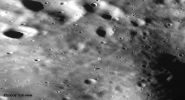
Phobos_from_Mgs-008.jpgPhobos, from MGS (Original NASA/MGS/MSSS Full Frame n. 2)63 visiteLett. D: il famoso "Monolito di Phobos"MareKromium
(7 voti)
|
|

Landslides-Tithonium_Chasma-MGS-00.jpgLandslide in Tithonium Chasma (1 - Original NASA/MGS/MSSS b/w Frame)63 visiteCaption NASA originale:"This MGS-MOC image shows a landslide that occurred off of a steep slope in Tithonium Chasma, part of the vast Valles Marineris Trough System".
Location near: 4,8° South Lat. and 84,6° West Long.
Image width: ~3 Km (~1,9 mi)
Illumination from: upper left
Season: Southern Autumn
(7 voti)
|
|

Volcanic_Features-Pits-A.jpgUnusually-looking Collapse Pits (Original NASA/MGS/MSSS b/w CTX Frame)64 visiteLocation near: 22,1° North Lat. and 53,2° East Long.
Image width: ~3 Km (~1,9 mi)
Season: Northern Spring
Resolution: 18 mt/pixel
(7 voti)
|
|

North_Polar_Features-Dunes-MGS-10.jpgDefrosting North Polar Dunes (Original NASA/MGS/MSSS b/w Frame)64 visiteCaption NASA originale:"This MGS-MOC image shows a portion of a sand dune field in the North Polar Region of Mars. The dunes are covered with frozen CO2, which accumulated over the Autumn and Winter months in the Northern Hemisphere.
During the Spring, the time at which this image was acquired, the CO2 begins to sublime away, going directly from solid to gas, just as dry ice does here on Earth.
The dark spots, streaked by blowing winds, may be places where the frost has been removed (exposing underlying dark sand), places where the grain size or roughness of the frost has increased (increasing shadowing due to the change in texture), or both".
Location near: 79,7° North Lat. and 148,3° West Long.
Image width: ~3 Km (~1,9 mi)
Illumination from: lower left
Season: Northern Spring
(7 voti)
|
|

Controversial_Features-The_Bridges_of_Meroe_Patera-MGS-2.jpgThe "White Bridges" of Meroe Patera (Original NASA/MGS/MSSS b/w Frame - EDM)67 visiteLi abbiamo chiamati "ponti", ma ovviamente si tratta di qualcosa di molto diverso da una serie di "ponti ad arco". Per il Dr Feltri si potrebbe trattare di enormi bio-strutture; per il Dr Skipper si tratta di ciclopici manufatti in parte sepolti.
La nostra posizione al riguardo di questi "Bianchi Ponti" i quali si vedono anche in altre Regioni Marziane è interlocutoria: sappiamo che si tratta di caratterizzazioni superficiali talmente peculiari da potersi definire, in tutta tranquillità, cime Anomalìe di Superficie (Anomalìe che la NASA e l'ESA, ovviamente, non vedono e non commentano...); sappiamo che non sono dune e che la loro morfologia NON sposa la morfologia dell'ambiente a cui esse accedono (e dunque sono rilievi - tecnicamente - "alieni") e che, con ogni probabilità, si tratta di rilievi (effettivamente) di dimensioni enormi i quali non hanno riscontri similari nè sulla Terra, nè su nessun altro Corpo del Sistema Solare.
Questi, a nostro parere, sono i fatti.
(7 voti)
|
|

Volcanic_Regions-Rocky_Outcrops-MGS-00.JPGStreamlined Rocky Outcrops near Olympus Mons (Original NASA/MGS/MSSS b/w Frame)65 visiteCaption NASA originale:"This MGS-MOC image shows wind-eroded Outcrops overlying Lava Flow Surfaces located to the West of Olympus Mons. Outcrops with this appearance are also called Yardangs.
Yardangs typically form in Sedimentary Rock or Volcanic Ash that contains some amount of Sand.
The weathering of the Rock due to the Aeolian action cause the release of sand-sized particles from the Outcrops and, in time, such a form of erosion slowly shape the rock into the classic, inverted boat hull-like shapes of Yardangs".
Location near: 13,2° North Lat. and 160,1° West Long.
Image width: ~3 Km (~1,9 mi)
Illumination from: lower left
Season: Northern Spring
(7 voti)
|
|

Craters-Unnamed_Crater_in_Chrise_Planitia-MGS.JPGCrater with bright Windstreak in Chrise Planitia (Original NASA/MGS/MSSS b/w Frame)64 visiteCaption NASA originale:"This MGS-MOC image shows a (bright) wind streak created in the lee — such as the "downwind" side (ossìa il "lato sottovento") — of a crater in far eastern Chryse Planitia.
The winds responsible for the formation of the streak blew from the North-East to the South-West".
Location near: 21,5° North; 27,4° West
Image width: ~3 km (~1,9 mi)
Illumination from: lower left
Season: Northern Winter
(7 voti)
|
|

Craters-Unnamed_Crater-Terra_Cimmeria.JPGUnnamed Crater with Gullies in Terra Cimmeria (Original NASA/MGS/MSSS b/w Frame)66 visiteCaption NASA originale:"This MGS-MOC image shows an array of gullies in the North-NorthWest wall of a crater in Terra Cimmeria. These features may have been formed through the interaction of several processes including, but not limited to, mass wasting and/or seepage and runoff of groundwater".
Location near: 33,5° South Lat. and 207,2° West Long.
Image width: ~3 Km (~1,9 mi)
Illumination from: upper left
Season: Southern Summer
(7 voti)
|
|

Craters-Unnamed_Crater-Layered_Outcrop-Thaumasia_Region-00.jpgLayered Rocky Outcrops (Original NASA/MGS/MSSS b/w Frame)68 visiteCaption NASA originale:"This MGS-MOC image shows light-toned, layered rock outcrops in the central pit of an impact crater in the Thaumasia Planum Region of Mars. The outcrops were tilted and broken-up by the extreme energy of the impact that formed the crater in which they occur. These are layers of rock that were brought up by the impact from horizontal beds that lie below the floor of the crater".
Location near: 21,7° South Lat. and 69,4° West Long.
Image width: ~3 Km (~1,9 mi)
Illumination from: upper left
Season: Southern Summer
Nota: difficile pensare, per spiegare i rilievi catturati in questo frame, ad una costruzione logica più improbabile di quella proposta dalla NASA...
(7 voti)
|
|

Craters-Unnamed_South_Polar_Crater-2.jpgBuried and frozen (2)63 visitenessun commento
(7 voti)
|
|

Craters-Unnamed_Crater_in_Terra_Tyrrhena-MGS-03.jpgUnnamed Crater and Dunes in Terra Tyrrhena (Original NASA/MGS/MSSS b/w Frame)70 visitenessun commento
(7 voti)
|
|
| 512 immagini su 43 pagina(e) |
 |
|
|
|
|
14 | |
|
|
|
|








