| Piú votate - A Tribute To Mars Global Surveyor |
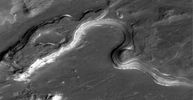
Craters-Holden_Crater-5-M0302733Det.jpgThe "White Cliffs of Holden Crater"76 visiteEd a chiusura della panoramica sul fondo del Cratere Holden, ecco un detail mgnf (courtesy of MU) che ci mostra, sia pure rovesciate di 180° rispetto all'angolo visuale della Sonda MGS (rovesciamento effettuato solo per consentirVi una visione migliore dello spettacolo), le "Bianche Scogliere del Cratere Holden" - Marte.
(8 voti)
|
|
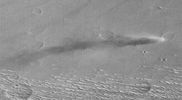
Aeolian_Features-Dust_Devil-Daedalia_Planum-M0803122Det~0.jpgDust Devil in Daedalia Planum (EDM - Original NASA/MGS/MSSS b/w Frame)100 visitenessun commento
(8 voti)
|
|

Craters-Becquerel_Crater-_The_Bridges-M0400572-01.jpgThe "Bridges" of Becquerel Crater: The Bridges (Original NASA/MGS/MSSS b/w Frame - EDM)85 visiteAllora, che cosa ne pensate?
Che cosa stiamo guardando questa volta?
Dei 'ponti' realizzati con tecniche a noi sconosciute (notate il fatto che alcuni 'ponti' sono perfettamente dritti ed altri leggermente arcuati...)?
O forse dei "tunnel a cielo aperto" che collegano insediamenti sotterranei realizzati nei rilievi situati ad Ovest di Becquerel Crater con le pareti esterne del Cratere?
O Vi fa 'stare meglio' il fatto di pensare che si tratti di qualche incredibile ed inspiegabile 'Opera della Natura'?
Rispondere, oggi, è impossibile. Ma MostrarVi queste Anomalie e invitarVi a studiarle ci sembra doveroso...
(8 voti)
|
|

Terra_Meridiani-E0200373-02.jpgBizarre-looking Features in Terra Meridiani (Original NASA/MGS/MSSS b/w M0705535 - EDM n.2)117 visitevedi i commenti svolti in precedenza
(8 voti)
|
|

Terra_Meridiani-The_Sentinels-M0001661-00.jpgUnusually-looking Features in Terra Meridiani (Original NASA/MGS/MSSS b/w CTX Frame)78 visitenessun commento
(8 voti)
|
|

Chasmas-Eos_Chasma-M1200712-01.jpgDustfalls in Eos Chasma (2 - Original NASA/MGS/MSSS b/w - EDM n.1)141 visitenessun commento
(8 voti)
|
|

Thaumasia_Region-The_Electric_Dunes-01.jpgThaumasia Dunes: the brightest dunes of Mars (EDM n.1)112 visitenessun commento
(8 voti)
|
|

Chasmas-Melas_Chasma-06.jpgSample scarp edge in layered unit in Melas Chasma or... Frozen Waterfalls on Mars? (6)113 visitenessun commento
(8 voti)
|
|

Chasmas-Melas_Chasma-05.jpgSample scarp edge in layered unit in Melas Chasma or... Frozen Waterfalls on Mars? (5)65 visiteNo, come dicevamo precedentemente questi rilievi NON SONO - a nostro umile parere - l'evidenza di "cascate congelate".
Il congelamento di una massa d'acqua quale può essere quella di un sistema di ciclopiche cascate (cascate dinanzi alle quali le 'Niagara Falls' farebbero la figura dei 'ruscelletti'...) verrebbe a generare, a nostro parere, un rilievo sostanzialmente diverso rispetto a quello che vediamo in questi frames.
E allora?
E allora quello che abbiamo davanti potrebbe davvero essere, sia pure in versione macro, quello che appare nelle Grotte che citavamo in sede di commento al frame precedente: colonne di minerali, originariamente disciolti (in percentuali elevatissime) nell'acqua corrente i quali, nelle ere, si sono solidificati ed hanno generato queste incredibili strutture le quali, dopo essere state viste ed esaminate, hanno lasciato di sasso quasi tutti i Ricercatori del Mondo.
Diciamo 'quasi', perchè gli Scienziati ed i Ricercatori NASA non hanno MAI dato peso a queste immagini ed a ciò che esse sembrano rappresentare: un'Opera della Natura ancora più enigmatica dei Canyons che caratterizzano la Valles Marineris, delle 'Black Dunes' delle aree polari, sub-polari e presso-polari, dei crateri 'squadrati', dei cosiddetti 'Sun-Bathers', della Sfinge e delle Piramidi (o presunte tali) di Cydonia Mensae e di tantissimi altri rilievi Marziani che affascinano ed impressionano l'immaginario di milioni di Appassionati.
Si, queste strutture indecifrabili, che fanno rabbrividire al solo pensiero (pensate alle loro dimensioni ed a quello che proveremmo osservandole da distanza ravvicinata...), hanno affascinato proprio tutti, ad eccezione della NASA e dei suoi 'Scienziati' i quali, semplicemente, hanno ignorato questi frames e li hanno 'asetticamente' rubricati come semplici 'esempi di bordi di scarpate accedenti a complessi stratiformi' nella Regione di Melas Chasma.
Marte.
(8 voti)
|
|

Chasmas-Melas_Chasma-04.jpgSample scarp edge in layered unit in Melas Chasma or... Frozen Waterfalls on Mars? (4)87 visiteAvete mai visitato le Grotte di Postumia o le Carlsbad Caverns?
Se non ci siete mai stati, Vi suggeriamo di andarne a vedere almeno una (le Grotte di Postumia sono vicine, in Slovenia, a poco più di un'ora di macchina dal confine); se la risposta è 'si', invece, allora siamo certi che non Vi sarà sfuggita la somiglianza fra queste enormi strutture che vengono riprese dalla Sonda MGS (e che Vi proponiamo - debitamente ingrandite - in questo frame e nei due successivi) e le grandi 'colonne' che ricoprono una buona parte delle pareti delle due splendide grotte che abbiamo prima menzionato. Il lento sgocciolare di un'acqua ricchissima di minerali ed il tempo, nel caso di Postumia e di Carlsbad, ha creato una versione 'in miniatura' di quello che vediamo in questi frames MGS.
Si tratta, come suggerisce il Dr Skipper, di 'cascate ghiacciate'? Noi ne dubitiamo, sinceramente, ma che si tratti di rilievi i quali meritano una grandissima attenzione, a noi sembra un dato evidente.
(8 voti)
|
|

North_Polar_Regions-Chasma_Boreale-MGS-00.jpgBrown Dunes in Chasma Boreale (Original NASA-MSSS-MGS b/w frame)107 visiteCaption NASA originale:"This Mars Global Surveyor (MGS) Mars Orbiter Camera (MOC) image shows layers and dunes in Chasma Boreale, a large depression in the North Polar Region".
Location near: 85,2°N; 10,4°W
Image width: ~3 Km (~1.9 mi)
Illumination from: lower left
Season: Northern Summer
(8 voti)
|
|

Craters-Unnamed_Crater-Southern_Regions.jpgUnnamed Crater covered by Fog (Original NASA/MGS/MSSS b/w Frame)104 visiteCaption NASA originale:"Craters near the edge of the retreating South Polar Seasonal Frost Cap often have fog in them, this time of year. This MGS-MOC wide angle red image was acquired on July 13, 2003. It shows an Unnamed Crater, roughly 36 Km across, that is enveloped in Fog.
This picture was taken as a context frame for a high resolution view that was intended to show Dunes on the Floor of the Crater. That high resolution view was frustrated by thick Fog that hid the Dunes from view. This wide angle context frame shows that winds from the lower right (South/East) were blowing over the Crater, causing the Fog to bunch up in a wavy, rippled pattern. Winds streaming off the South Polar Cap toward the North create a variety of patterns in the Fogs formed by Water Ice or Vapor as the Seasonal Cap retreats during Southern Spring.
This picture shows an area located at about 66,4° South Lat. and 208,6° West Long; sunlight illuminates the scene from the upper left (North/West)".
(8 voti)
|
|
| 512 immagini su 43 pagina(e) |
 |
|
|
|
|
11 | |
|
|
|
|








