| Piú votate - Imagination |

X-Energy.gifImagination134 visiteNon serve spiegare. Guardate l'immagine con la coda dell'occhio, senza fissarla. Davvero interessante. Conoscevo il "gioco", ma mi sorprende sempre...MareKromium
(10 voti)
|
|

FreedomInTheEnd.jpgFreedom, in the End... (by Roberto Tremolada)65 visitenessun commentoMareKromium
(10 voti)
|
|
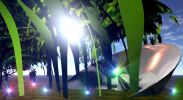
Springtime_Fireflies.jpgSpringtime Fireflies (by Roberto Tremolada)74 visitenessun commentoMareKromium
(10 voti)
|
|

Express_To_Heaven.jpgExpress to Heaven (by Roberto Tremolada)66 visitenessun commentoMareKromium
(10 voti)
|
|
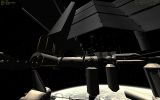
Space_Suburb.jpgSpace "Suburbia"... (by Roberto Tremolada)66 visitenessun commentoMareKromium
(10 voti)
|
|

Super_Earths.jpgSuper Earths321 visite(ANSA) - ROMA, 07 SET - Due nuove - cosiddette - "Super-Terre" sono state scoperte in orbita intorno ad una stella molto 'fredda', distante circa 100 Anni Luce da noi, e una delle due si trova nella sua Zona Abitabile: questo ha fatto subito salire il pianeta nelle posizioni di testa all'interno della lista di quelli più promettenti da studiare, portandolo al secondo posto dopo i pianeti che orbitano intorno alla famosa stella Trappist-1.
La scoperta, pubblicata sulla rivista Astronomy & Astrophysics, è di un gruppo internazionale di ricercatori guidati da Laetitia Delrez dell'Università di Liegi, che si sono avvalsi della rete di telescopi del progetto Speculoos (Search for habitable planets eclipsing ultra-cool stars), coordinato dalla stessa Università.
Il pianeta più interno tra i due appena scoperti, chiamato LP 890-9b, è circa il 30% più grande della Terra ed effettua un giro completo intorno alla sua stella (LP 890-9) in soli 2,7 giorni. Questo esopianeta era stato inizialmente individuato anche dal telescopio spaziale Tess della Nasa ed è stato poi confermato dagli strumenti di Speculoos, che sono ottimizzati per osservare questo tipo di stelle deboli e fredde che emettono la maggior parte della loro luce nel vicino infrarosso. I telescopi principali del progetto si trovano nell'Osservatorio Paranal dello European Southern Observatory (Eso) in Cile e sull'isola di Tenerife (Canarie).
La seconda super-Terra, invece, era del tutto inaspettata: LP 890-9c è di dimensioni simili alla sua vicina (circa il 40% più grande della Terra), ma orbita intorno alla sua stella in 8,5 giorni, caratteristica che la pone nella Zona Abitabile, vale a dire quella zona in cui, un pianeta con condizioni geologiche e atmosferiche simili alla Terra, avrebbe una temperatura superficiale che consente all'acqua di rimanere liquida per miliardi di anni.MareKromium
(9 voti)
|
|

Fomalhaut-1.jpgFomalhaut161 visiteLet your soul stand cool and composed before a million Universes.
(Lascia che la tua anima rimanga fiera e composta di fronte ad un milione di universi)
(Walt Whitman)MareKromium
(9 voti)
|
|

The_Moon~1.jpgLook at Me...126 visite"Mad is the man who speaks to the Moon. Foolish is he who does not listen to her."
(Traduzione)
"...Folle è l'uomo che parla alla Luna. Stolto chi non le presta ascolto..."
(William Shakespeare)MareKromium
(9 voti)
|
|

Sweden.jpgVälkommen Sverige!221 visiteLocales Pages Accesses Bandwidth Used
Italy 5.841 14.405 258.56 MB
France 417 650 14.02 MB
Sweden 361 361 9.13 MB
...and many others.
Every month we read real data in real time from our "followers". As far as Sweden is concerned, the data are always the same: 361 pages with 361 accesses. Usually, they all occur at the beginning of the month.
So, who are You?
A University? Free Researchers? Amateur Astronomers? Government? Military?
Please, ask us any question you wish!
What are you looking for? You read very little, but you always read the same few pages. And that's funny!
Anyway, we are ready to help, if you need it... And remember: you can read us, but we can read you. So now, plaese, ask whatever you wish...MareKromium
(9 voti)
|
|

Noctis_Labyrinthus_with_Water_and_Vegetation.jpgThe Last Days of Mars: Noctis Labyrinthus Region (Credits: Don Edwards and Paolo C. Fienga)138 visiteDear Friends of Lunar Explorer Italia and the Italian Planetary Foundation,
starting from January, 13th, 2014, we have decided to submit to your careful attention and consideration, 5 (five) "Martian Fantasies" which, in our opinion, may give you an idea about how Mars could have looked like near the end of its "Life" (as we know it, of course). We imagined the existence of some residual Wet-Lands (for instance, a few Lakes with some small River nearby), and a little Vegetation, located just in their immediate proximities.
And then ... a boundless Desert. In other words, only a few "Oasis of Life", made of residual Waters and a minimal Local Vegetation, and both completely surrounded by the yellow and orange Sands of a Desert which, in a (we believe, relatively) short amount of time, would have covered the entire Planet, and turned it into what we can see today.
This "Computer-made Reconstruction" shows you a portion of the Noctis Labyrinthus, in a time that, as you can see, was VERY close to the complete desertification of the entire Region.
Note: for a better understanding of what we have been trying to show you here, please consider that in the locations where the color of the Residual Waters tends towards the green and a very light blue, it means that said Residual Waters are already very shallow; on the other hand, the darker the color of the Residual Waters gets, then the greater is their actual depth.
Please, some feedback on your side will be deeply appreciated and, therefore, do not hesitate to write to us and let us know what you think of these "Fantasies" which we have decided to entitle "The Last Days of Mars".
Thanks and enjoy!
Dr Paolo C. Fienga (PhD) - E-mail: alphacentauri@intercom.itMareKromium
(9 voti)
|
|

OPP-SOL400-1P163689595EFF5000P2663L6M1.jpgLow Sun over Meridiani - Sol 40075 visitenessun commentoMareKromium
(9 voti)
|
|
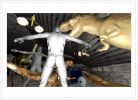
OldTimers.jpgOld Timers (by Roberto Tremolada)86 visitenessun commentoMareKromium
(9 voti)
|
|
| 93 immagini su 8 pagina(e) |
 |
|
4 | |
|
|
|








