| |

| Piú votate - Imagination |

Titan-PIA16634-Fantasy.jpgOn the Surface of Titan...108 visiteCaption NASA:"This artist's concept envisions what Hydrocarbon Ice forming on a liquid Hydrocarbon Sea of Saturn's moon Titan might look like. A new model from scientists on NASA's Cassini mission suggests that clumps of Methane-and-Ethane-rich ice -- shown here as the lighter-colored clusters -- could float under some conditions".MareKromium
(14 voti)
|
|

Triton-Atmosphere-Fantasy.jpgA View from Triton131 visitenessun commentoMareKromium
(14 voti)
|
|

Binary_Star_System.jpgBinary Star System (by Dr Gianluigi Barca)210 visitenessun commentoMareKromium
(14 voti)
|
|
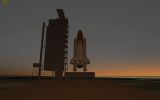
The_Night_Before.jpgThe Night Before (by Roberto Tremolada)71 visitenessun commentoMareKromium
(14 voti)
|
|
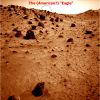
The_American_Eagle-SOL1041-2N218780428EFFAS81P0700R0M1.jpgImagination: the American Eagle - Sol 104179 visiteDue frames dedicati alla "umana capacità" di compiere associazioni logiche basate sull'esperienza (in questo caso visiva) e, conseguentemente, di vedere "cose che hanno un senso umano e compiuto" (ad es.: profili, facce, sentinelle e manufatti vari) laddove c'é solo la Natura e la nostra - a volte sfrenata - Immaginazione...
(14 voti)
|
|

Mars Full Panorama.jpgSummer afternoon on Mars70 visite
(14 voti)
|
|

Time.jpgIs the Future worth twice the Past?196 visiteYes, it is. And a very simple (and "stupid", of course...) pseudo-mathematical "game" proves it. Please read the comment if you want to see the "formula" and the reasoning.
Si, il Futuro vale due volte il Passato. £d un semplicissimo (e sciocco, naturalmente...) "gioco" pseudo matematico lo prova. Leggere, per favore, il commento per la Formula ed il ragionamento retrostante.MareKromium
(13 voti)
|
|
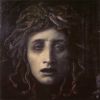
Medusa.jpgPossible Encounter in Gorgonum Chaos...232 visiteFiglia di Forco e di Ceto, Medusa era una delle Gorgoni, insieme a Steno ed Euriale, ma lei era l'unica ad essere mortale.
Nelle rappresentazioni più antiche ella era orrenda, esattamente come le sue sorelle Steno ed Euriale. In versioni più recenti, tuttavia (Pindaro, Ovidio), Medusa venne considerata bellissima e spaventosa allo stesso tempo.
Secondo il mito, Poseidone si era innamorato di Medusa quando ancora era una bellissima fanciulla. Una notte, il dio la sedusse (o forse la violò) nel tempio di Atena. Quest'ultima, profondamente irritata dall’affronto subito, trasformò la fanciulla in un orribile mostro: le mani vennero trasformate in pezzi di bronzo; sulla schiena sorsero delle ali d’oro ed il suo corpo venne ricoperto di scaglie; i denti furono resi simili a zanne di cinghiale; i capelli divennero dei serpenti ed il suo sguardo acquisì il potere di trasformare in pietra chiunque lo incrociasse.
Medusa fu uccisa da Perseo, che le mozzò la testa, ma guardando la sua immagine riflessa sul suo scudo, lucido come uno specchio.
Quando le tagliò il capo, dal collo della Gorgone uscirono i figli che aveva generato dopo la notte con Poseidone: Pegaso e Crisaore e, secondo Ovidio, dal suo sangue nacquero anche il corallo rosso e l'Anfesibena (trattasi di un mitico serpente dotato di due teste: una ad ogni estremità del corpo, e di occhi che brillano come lampade. Secondo il mito greco, Anfesibena fu generata dal sangue gocciolato dalla testa di Medusa quando Perseo volò, stringendola in pugno, sopra il deserto libico. L'Anfesibena, come creatura mitologica e leggendaria, è stata citata da Marco Anneo Lucano e Plinio il Vecchio. Viene citata, inoltre, da Dante nel Canto 24mo dell'Inferno e da Borges nel suo "Manuale di Zoologia Fantastica").
La testa della defunta Gorgone - sebbene mozzata - non perse il suo orribile potere pietrificante e Perseo, infatti, la mostrò ad Atlante, così trasformandolo in pietra.
La testa di Medusa fu quindi - ed infine - donata da Perseo ad Atena, che a sua volta gli aveva dato lo scudo specchiato con il quale l'aveva potuta affrontare senza guardarla direttamente negli occhi e senza così subire la pietrificazione, ed Atena, una volta ricevutala, la pose al centro della propria Egida.MareKromium
(13 voti)
|
|

Chasma Boreale-00.JPGChasma Boreale (1)68 visiteBoth Martian Polar Caps show ragged outlines, with sinuous valleys and spiral-shaped troughs giving the Caps' edges a sawtooth outline. Scientists think the spirals develop as solar heating melts and evaporates the ice more strongly on the Equator-ward and West-facing sides of any slight depression. In time, these deepen into valleys and canyons.
The largest trough in the Northern Polar Cap is a huge canyon named Chasma Boreale. It runs into the ice cap for 570 Km (about 350 miles), making a broad valley that ends at a point called Tenuis Cavus, shown in this THEMIS image taken at visible wavelengths.
(13 voti)
|
|

Exoplanet.jpgExoplanet OGLE-2003-BLG-235L/MOA-2003-BLG-53L67 visiteNASA's Hubble Space Telescope has for the first time identified the parent star of a distant planet (system name OGLE-2003-BLG-235L/MOA-2003-BLG-53L) discovered in 2003 through ground-based gravitational microlensing. Gravitational microlensing occurs when a foreground star amplifies the light of a background star that momentarily aligns with it. Follow-up observations by HST in 2005 separated the light of the slightly offset foreground star from the background star. This allowed the host star to be identified as a red dwarf star located 19.000 LY away. The HST observations allow for the planet's mass and the orbit from its parent red star to be determined.
In this artist's concept, the rings and moon around the gas giant are hypothetical, but plausible, given the nature of the family of gas giant planets in our Solar System.
(13 voti)
|
|

Tempe_Terra-DE-PCF-LXTT-IPF.jpgThe Last Days of Mars: Tempe Terra Region (Credits: Don Edwards and Paolo C. Fienga)96 visiteDear Friends of Lunar Explorer Italia and the Italian Planetary Foundation,
starting from January, 13th, 2014, we have decided to submit to your careful attention and consideration, 5 (five) "Martian Fantasies" which, in our opinion, may give you an idea about how Mars could have looked like near the end of its "Life" (as we know it, of course). We imagined the existence of some residual Wet-Lands (for instance, a few Lakes with some small River nearby), and a little Vegetation, located just in their immediate proximities.
And then ... a boundless Desert. In other words, only a few "Oasis of Life", made of residual Waters and a minimal Local Vegetation, and both completely surrounded by the yellow and orange Sands of a Desert which, in a (we believe, relatively) short amount of time, would have covered the entire Planet, and turned it into what we can see today.
This "Computer-made Reconstruction" shows you a portion of Tempe Terra, in a time that, as you can see, was VERY close to the complete desertification of the entire Region.
Note: for a better understanding of what we have been trying to show you here, please consider that in the locations where the color of the Residual Waters tends towards the green and a very light blue, it means that said Residual Waters are already very shallow; on the other hand, the darker the color of the Residual Waters gets, then the greater is their actual depth.
Please, some feedback on your side will be deeply appreciated and, therefore, do not hesitate to write to us and let us know what you think of these "Fantasies" which we have decided to entitle "The Last Days of Mars".
Thanks and enjoy!
Dr Paolo C. Fienga (PhD) - E-mail: alphacentauri@intercom.itMareKromium
(12 voti)
|
|

Tharsis_Region-PCF-LXTT-IPF-1.jpgThe Last Days of Mars: Tharsis Region (Credits: Don Edwards and Paolo C. Fienga)94 visiteDear Friends of Lunar Explorer Italia and the Italian Planetary Foundation,
starting from January, 13th, 2014, we have decided to submit to your careful attention and consideration, 5 (five) "Martian Fantasies" which, in our opinion, may give you an idea about how Mars could have looked like near the end of its "Life" (as we know it, of course). We imagined the existence of some residual Wet-Lands (for instance, a few Lakes with some small River nearby), and a little Vegetation, located just in their immediate proximities.
And then ... a boundless Desert. In other words, only a few "Oasis of Life", made of residual Waters and a minimal Local Vegetation, and both completely surrounded by the yellow and orange Sands of a Desert which, in a (we believe, relatively) short amount of time, would have covered the entire Planet, and turned it into what we can see today.
This "Computer-made Reconstruction" shows you a portion of the Tharsis Region, and - precisely - an area located to the South of the huge Shield-Volcano known as Olympus Mons.
Note: for a better understanding of what we have been trying to show you here, please consider that in the locations where the color of the Residual Waters tends towards the green and a very light blue, it means that said Residual Waters are already very shallow; on the other hand, the darker the color of the Residual Waters gets, then the greater is their actual depth.
Please, some feedback on your side will be deeply appreciated and, therefore, do not hesitate to write to us and let us know what you think of these "Fantasies" which we have decided to entitle "The Last Days of Mars".
Thanks and enjoy!
Dr Paolo C. Fienga (PhD) - E-mail: alphacentauri@intercom.itMareKromium
(12 voti)
|
|
| 93 immagini su 8 pagina(e) |
2 | |
|
|
|
|
|
|
|








