| Piú viste - MOON |

First Moon-1.jpgFirst Moon56 visitenessun commento
|
|
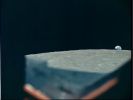
APOLLO_08_AS_08-10074962.jpgAS 08 - 10074962 (NASA Archives' Serial) - Rising Earth56 visite
|
|

APOLLO_08_AS_08-10074960.jpgAS 08 - 10074960 (NASA Archives' Serial) - The "Third Stage" is floating away (3)56 visite
|
|

APOLLO_08_AS_08-10074958.jpgAS 08 - 10074958 (NASA Archives' Serial) - The "Third Stage" is floating away (1)56 visite
|
|

APOLLO_08_AS_08-10074966.jpgAS 08 - 10074966 (NASA Archives' Serial) - Beautiful "Rays"56 visite
|
|

APOLLO_08_AS_08-10074969.jpgAS 08 - 10074969 (NASA Archives' Serial)56 visite
|
|
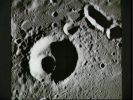
APOLLO_08_AS_08-10074974.jpgAS 08 - 10074974 (NASA Archives' Serial)56 visite
|
|

APOLLO_12_AS_12-53-7917.jpgAS 12-53-7917 - Just like "2001"...56 visiteUn vero peccato che, almeno sino ad oggi (Novembre 2006), le pagine NASA dedicate alle Missioni Apollo (Apollo Lunar Surface Journal) non dedichino, nella Sezione Apollo 12, alcuno spazio alle immagini contenute nel "film-magazine n. 53" (verificate Voi stessi: i magazines pubblicati sono solo quelli andanti da 46 a 52 più il magazine 57. Una dimenticanza della NASA? O forse una nostra svista?
Se lo scoprite, fatecelo sapere! Noi, in ogni caso, qualche frame proveniente dal rullino n. 55 lo abbiamo trovato e Ve lo proponiamo con piacere: non c'è nulla di strano o di anomalo. Solo delle bellissime immagini...
|
|
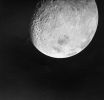
APOLLO_17_AS_17-M-STE-3205.jpgAS 17-M-STE-3205 - Good-bye Moon!56 visiteImage Collection: Mapping (Metric)
Revolution: TE (Trans Earth Cruise)
Coord. (Center of the Moon): 16° North Lat. and 91,5° East Long.
Lens Focal Length: 3"MareKromium
|
|

APOLLO_12_AS_12-57-8451_HR.jpgAS 12-57-8541 - The texture of the Moon56 visitenessun commento
|
|

APOLLO_14_AS_14-66-9299_HR.jpgAS 14-66-9299 (HR) - Looking for the Blue Flare... (11)56 visitenessun commentoMareKromium
|
|

Red_Moon.jpgDark Lunar Eclipse56 visiteCaption NASA:"The Moon passed close to the center of Earth's shadow on August 28th, 2007. Seen best by skywatchers in western North America and the Pacific Region, the resulting Total Lunar Eclipse was a dark one, lasting about 90 minutes. In this telescopic image taken near mid totality from Yass, NSW Australia, the 85 Km wide ray crater Tycho lies near the top right of the shadowed lunar surface.
Of course, even during a Total Lunar Eclipse, the Moon is not completely dark. Instead the Moon remains visible during totality, reflecting reddened light filtering into the Earth's shadow.
The light comes from all the Sunsets and Sunrises, as seen from the lunar perspective, around the edges of a silhouetted Earth".MareKromium
|
|
| 2195 immagini su 183 pagina(e) |
 |
|
|
|
|
171 | |
|
|
|
|





