| Piú viste - MOON |

APOLLO_14_AS_14-77-10358a.JPGAS 14-77-10358 (a) - Lunar Bootprint59 visiteAstronaut bootprint; taken at at a location midway between the LM and Station "A".MareKromium
|
|
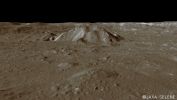
Kaguya-032-tc_012_e_l.jpgTycho: the Central Peak (perspective view - natural colors; credits: Lunexit)59 visitenessun commentoMareKromium
|
|

Kaguya-030-Tycho-tc_012_c_l.jpgTycho: the Inner Rim (perspective view - natural colors; credits: Lunexit)59 visitenessun commentoMareKromium
|
|

Kaguya-029-Tycho-tc_012_a_l.jpgTycho: the Central Peak (perspective view - natural colors; credits: Lunexit)59 visiteCaption JAXA:"Tycho Crater, located on the Lunar Nearside in the Highlands of the Southern Hemisphere at about 43° South Lat. and 7° West Long. is a young crater formed by an impact about 100 Million Years ago. On nights when the Moon is fully lighted, you can see bright rays coming out from Tycho Crater.
The study of Tycho Crater contributed to the development of Lunar Science. The first data on the chemical composition of the Lunar Highlands were obtained by the analytical instrument onboard Surveyor 7, which soft-landed about 20 Km North of the Rim of Tycho, in 1968 (see Note n. 1).
Dr. J. A. Wood of the Smithsonian Astrophysical Laboratory discovered some tiny fragment of Anorthosite in the regolith (soil) samples collected by the Apollo 11 Astronauts. Because of the observation that the chemical composition of the fragments was similar to that of Tycho taken by the Surveyor, Dr. Wood inferred that these fragment were ejected from Tycho by the impact. He proposed the "Lunar Magma Ocean Hypothesis" (see Note n. 2) in order to account for his finding that the Lunar Highlands are composed of Anorthosite.
One of the major objectives of the subsequent Apollo Missions was to find a pristine Anorthosite rock in the Highlands.
The impact that created Tycho Crater ejected highland anorthositic crust all over the Near Side of the Moon. This impact by a small asteroidal body took place, as we said, about 100 MY ago, when the dinosaurs inhabited the Earth. It was, however, still a relatively recent event in Lunar History, and the effects of the impact event can still be seen.
Note 1) In preparation for the manned Lunar Missions of the Apollo Program, NASA developed soft-landing techniques with the Surveyor Program. Surveyor 7 was the final spacecraft of the series and landed near the north rim of Tycho Crater on 10 January 1968 (UT). During this mission, many photographs of the Lunar Highland landscape were taken and a geological survey was performed.
Note 2) “Lunar magma ocean hypothesis”: To explain the formation of Anorthosite that the Lunar Surface was once completely molten to a depth of about 200 Km, thus forming a “lunar magma ocean”. This hypothesis has contributed not only to Lunar Science but also to ideas about the formation of the Earth. MareKromium
|
|

Panoramic-AS15-85-11448-11456.jpgFrom AS 15-85-11448 until 11456 (EVA-1; Station 2)59 visitenessun commentoMareKromium
|
|

Panoramic-AS11-37-5453-5458.jpgFrom AS 11-37-5453 until 5458 - Down Sun, before EVA59 visitenessun commentoMareKromium
|
|

Panoramic-AS12-46-6779-6782.jpgFrom AS 12-46-6779 until 6782 (EVA-1 - Landing Site; Alan Bean taking Pictures)59 visite116:27:03 MT - Rightward of 6778, with overlap of 6777 but none of 6778. Shows Al Bean taking photographs of the plus-Y footpad, possibly AS 12-47-6906.
The TV camera is at the right-hand side of the picture and the S-Band antenna is visible beyond the plus-Y (North) strut. Note that Pete Conrad is standing slightly below the level of the footpads, having moved partway down the intitial slope into Surveyor Crater to take this pan.
Note also that Pete mistakenly took the pan at 15-foot focus rather than 74-foot focus.MareKromium
|
|

Panoramic-AS12-46-6756-6761.jpgFrom AS 12-46-6756 until 6761 (EVA-1; The TV Camera)59 visite116:24:47 MT - Rightway of 6755. Close-up of the TV camera, with the Solar Wind Collector (SWC) at the left edge of the picture. Note the loop in the TV cable running off to the left.
Paul Coan, Manned Spaceflight Center Television Subsystem Manager who was responsible for the equipment used on the Apollo spacecraft, writes, "The same type of cable used to carry video and power between the Apollo 11 TV camera and the LM was used during Apollo 12 to power the first color TV camera to be put on the Lunar Surface.
However, the connector on the color camera did not match the connector on the end of the Lunar Surface cable that was an integral part of the camera handle. (See a detail from Apollo 11 photo S-69-31575 ). Since the design and qualification of the Lunar Surface cable was so expensive, it was cost prohibitive to replace the connector on the cable. Cost, schedule, and design constraints also precluded replacing the connector on the color camera.
So, we decided to build an adapter that provided the interconnection."
In a detail from 6756, the color-camera camera hangs down from the back, with the yellow-coated adapter immediately blow attached to the silver-tube of the 'handle' from the Apollo 11 configuration.
Coan adds, "During testing of the color Lunar Camera connected to the LM on the pad at KSC, we noticed hum bars in the video.
We then realized that the finite resistance of the power circuit in the 100 foot Lunar Camera cable combined with the switching power supply in the camera was sufficient to inject the hum bars in the video. We had to rework the power supply circuits to eliminate the hum bars. There was some quick redesign/rework done to make the camera work."
"Finally, there was a special room provided at KSC for final checkout of the cameras before they were installed in the spacecraft. So that we could test under controlled lighting conditions, the room was painted totally black and provided with heavy window curtains to eliminate light from outside".MareKromium
|
|

Panoramic-AS16-107-17483-17485.jpgFrom AS 16-107-17483 until 17485 (EVA-2; Station 4 Crater)59 visitenessun commentoMareKromium
|
|

LRO-2500-Saha_E_Crater.jpgThe Floor of Crater "Saha E"59 visiteThe lava-like melt produced by impacts on the Moon can have a variety of morphologies.
The polygonal texture you see here is located on the Floor of Crater Saha E, an approx. 28-Km-diameter Impact Crater located East of Mare Smythii.
This texture could be the result of impact melt coating boulders and other deposits on the Floor of the Crater. From the perspective of exploration planning, impact melt deposits are scientifically interesting because they can be used to age-date impacts. Impact melts can also contain geochemical traces of the original impact, and often contain small fragments of the original pre-impact target rocks. LROC will be providing high-resolution images of many other fresh, relatively undegraded craters to document the complex aftermath of impact events as well as to define targets for future human lunar exploration.MareKromium
|
|

28-Farside-Luna3.jpgThe Far-Side of the Moon from "Luna 3"58 visiteCaption NASA originale:"This wide-angle view shows the far side of the Moon, comprising most of the image, with the near side making up about one-quarter of the disk at left. The dark patch at upper right is Mare Moscoviense and the dark areas at below and left of center are Mare Marginus and Mare Smythii. These are on the border between the near and far sides. The small dark circle at lower right is the crater Tsiolkovskiy. The image is centered at 15° N, 120° E; North is at 11:30 (Luna 3-phc6)".
|
|

37-Ranger7.jpgMare Nubium: the impact of Ranger 758 visiteCaption NASA originale:"The final two images taken by Ranger 7 before its impact on the Moon's Surface. These image were taken by the number 1 and 3 P-channel cameras at 0.39 and 0.19 seconds before impact from an altitude of 1070 and 519 meters, respectively. The pictures are cut off because the spacecraft impacted the surface before completing the transmission. The top image was taken by the P3 camera and the bottom image by P1. The P3 image is about 25 m across. North is at 12:30 for both images. The impact occurred on 31 July 1964 at 13:25:48.82 UT (Ranger 7, CP1002)".
Location & Time Information
Date/Time (UT): 1964-07-31 T 13:25:48
Distance/Range (km): 0.519
Central Latitude/Longitude (deg): -10.7, 339.3 E
Orbit(s): N/A
|
|
| 2195 immagini su 183 pagina(e) |
 |
|
|
|
|
167 | |
|
|
|
|





