| Piú viste - MOON |

APOLLO 17 AS 17-151-23260.jpgAS 17-151-23260 - Copernicus Crater62 visiteThe large Crater Copernicus has served as a type example of Lunar Impact Craters since the classic analysis was made by E. M. Shoemaker in 1962. Bright rays of ejecta radiate outward from Copernicus across a large part of the Moon's Near-Side. Material from one of the rays may have been sampled at the Apollo 12 Landing Site, 370 Km South of the center of the crater. This photograph shows how the Crater appeared from the Apollo 17 spacecraft looking Southward over the Montes Carpatus (Carpathian Mountains).
Notice that the rim deposits immediately adjacent to the Crater have a very crisp, blocky appearance in contrast to the softer appearance of the rest of the ejecta blanket. This crisp zone is also found on many other craters and suggests the ejecta here was swept clean by some erosion process late in the cratering event. The terraced slumps on the Crater wall appear like giant stair steps leading to the floor, 3 to 4 Km below the rim. The 1-Km-high central peaks were made famous in 1966 by a "Picture of the century" view looking into the crater from the south by Lunar Orbiter 2. Now Apollo has given us scores of even more spectacular photographs.
|
|

71-moon_northpole 1.jpgThe Lunar North Pole (1)62 visiteUna bellissima coppia di immagini ad Alta Risoluzione dell'area Nord Polare della Luna, alla ricerca - ancora una volta - dei "Picchi della Luce Eterna" (anche se poi, come già avemmo occasione di dire in passato) si dovrebbe trattare non di picchi (nel senso di porzioni superiori di montagne appuntite), bensì di altopiani.
Comunque sia, queste Regioni della "Luce Eterna" esistono, sappiamo dove sono e, forse, costituiranno davvero un punto di partenza verso la costituzione di un avamposto Lunare permanente.
Staremo a vedere...
|
|

APOLLO 16 AS 16-M-0692.jpgAPOLLO 16 AS 16-M-0692 - Tormented Surface62 visitenessun commento
|
|

APOLLO_08_AS_08-10074975.jpgAS 08 - 10074975 (NASA Archives' Serial)62 visite
|
|

APOLLO_11_AS_11-45-6697_HR.jpgAS 11-45-6697 - Moon-dust (HR)62 visiteChe cosa stiamo guardando?
Ebbene si tratta di riprese ravvicinate - e ad Alta Risoluzione -, del Suolo Lunare.
Questi frames, come sempre ordinati e curati dal Lunar and Planetary Institute, meriterebbero commenti autorevoli ma la NASA (ormai si sa...) ha - da anni - deciso che, per la diffusione del Sapere, sono preferibili i trattati per Specialisti - corredati da una o due immagini - piuttosto che i frames (affascinanti ed "immediati") corredati da una decina di righe di commento.
Ecco, diciamo che la massima (oltre che l'unica...) espressione "divulgativa" adottata dalla NASA la si può vedere nella famosa Rubrica "NASA - Picture of the Day": bella, decisamente, ma davvero poca cosa se si considera il materiale di cui dispone l'Ente Aerospaziale Americano. Comunque sia - e laddove ci sentiremo capaci - proveremo noi a scrivere qualche nota di commento per questi interessantissimi frames.
Frames che, come in questo caso, rappresentano il suolo ai piedi degli Astronauti: un suolo "disturbato" dallo svogimento di attività umane. Purtroppo non siamo in grado di fornirVi una scala dimensionale dei dettagli ripresi e non sappiamo neppure dire con certezza se l'attività di "disturbo", in questi casi, è stata accidentale o voluta.
Ci limiteremo all'essenziale quindi: quanto vediamo in questo frame e nel seguente è, molto probabilmente, della polvere e dei minuscoli ciottoli - dimensioni stimate: da 0,3 a 0,8 mm - smossi dall'azione del retro-razzo impiegato del LM per rallentare ed ammorbidire il Lunar Landing.
Il suolo disturbato da azioni fisiche degli Astronauti (passi, attività di scavo et sim.), per quanto ci consta, si presenta diversamente e lo vedremo meglio in altri frames che Vi proporremo in seguito.MareKromium
|
|

APOLLO_17_AS_17-M-R26-0828.jpgAS 17-M-R26-0828 - Racah Crater62 visiteCoord.: 16,5° South Lat. and 180° West Long.
Lens Focal Length: 3"
Camera Tilt: 40°
Camera Azimuth: 7
Camera Altitude: 118 Km
Sun Elevation (on local horizon): 3° MareKromium
|
|

Red_Moon.jpgDark Lunar Eclipse62 visiteCaption NASA:"The Moon passed close to the center of Earth's shadow on August 28th, 2007. Seen best by skywatchers in western North America and the Pacific Region, the resulting Total Lunar Eclipse was a dark one, lasting about 90 minutes. In this telescopic image taken near mid totality from Yass, NSW Australia, the 85 Km wide ray crater Tycho lies near the top right of the shadowed lunar surface.
Of course, even during a Total Lunar Eclipse, the Moon is not completely dark. Instead the Moon remains visible during totality, reflecting reddened light filtering into the Earth's shadow.
The light comes from all the Sunsets and Sunrises, as seen from the lunar perspective, around the edges of a silhouetted Earth".MareKromium
|
|
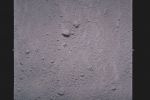
APOLLO_12_AS_12-57-8442_HR-a.jpgAS 12-57-8442 (a) - Soil surface disturbed by the LM descent engine exhaust (coloring: Lunexit)62 visitenessun commentoMareKromium
|
|

APOLLO_14_AS_14-77-10365a.JPGAS 14-77-10365 (a) - Thermal Degradation Sample62 visiteThermal Degradation Sample; taken in the vicinity of Station "A".MareKromium
|
|

APOLLO_14_AS_14-77-10370a.JPGAS 14-77-10370 (a) - Undisturbed Soil62 visiteUndisturbed soil; taken in the vicinity of Station "A".MareKromium
|
|

APOLLO_11_AS_11-45-6698a.JPGAS 11-45-6698 (a) - Disturbed Soil62 visiteSoil disturbed by Astronaut activities.MareKromium
|
|

APOLLO_11_AS_11-45-6697a.JPGAS 11-45-6697 (a) - Disturbed Soil62 visiteSoil disturbed by Astronaut activities.MareKromium
|
|
| 2195 immagini su 183 pagina(e) |
 |
|
|
|
|
161 | |
|
|
|
|





