| Piú viste - MOON |

Kaguya-040-hdt.jpgThe "hidden colors" of the Moon (by Dr M. Faccin)70 visiteNote di Marco Faccin:"...stavo guardando queste immagini e, se ci fate caso, presentano una sorta di "disturbo a scalino"; ho quindi pensato di deinterlacciarle e poi ho scoperto che avevano dei "colori nascosti".
Provate anche Voi, con un qualsiasi programma di colorizzazione: aumentate la saturazione colore e vedrete!
Perchè sono state decolorate? Non ne ho idea.
Il problema è che sembra che si sia usato uno standard video diverso dal PAL. E' quindi difficile ricostruire l'esatta matrice del colore originale ripreso però possiamo accontentarci di quel poco che è rimasto...".
Note di Paolo C. Fienga:"La Luna ha dei colori suoi propri, del tutto specifici e peculiari? Si, certo: ovviamente: come TUTTO nell'Universo.
Perchè non li vediamo? Perchè i nostri occhi - ergo la nostra "vista" - per meravigliosi/a che sìano/sia, sono/è limitati/a. E perchè le Agenzie Spaziali "nascondono" i colori?
Ma è ovvio: perchè, come Vi abbiamo dimostrato più e più volte, l'informazione "colore" ci permette l'acquisizione di conoscenze ulteriori e profonde in ordine a quanto osservato (pensate al Cielo ed alla Superficie di Marte, come esempi più eclatanti).
Ed è evidente che l'acquisizione di dette conoscenze "ulteriori" e "profonde", nell'ottica di NASA, ESA, JAXA etc., non deve (ancora?) diventare/essere un "Patrimonio Comune".
E questo è quanto.MareKromium
|
|

LRO-0005b-369228main_ap14labeled_540.jpgFra Mauro: the Apollo 14 Landing Site (edm - labeled)70 visitenessun commentoMareKromium
|
|

19-Oceanus Procellarum.jpgNorthern Oceanus Procellarum69 visiteCaption NASA originale:"Lunar Orbiter 5 view of a chain of elongated craters and low mounds in northern Oceanus Procellarum on the Moon. The chain continues to the south (down) of this image as a mare ridge. The chain may have been formed by upwelling of material along a line of weakness resulting in extension to form mounds and collapse to from the elongated craters. The crater at the upper left is about 7 Km in diameter (Lunar Orbiter 5, frame M-183)".
Location & Time Information
Date/Time (UT): 1967-08-17 T 23:29:55
Distance/Range (km): 170
Central Latitude/Longitude (deg): +35.43/318.55
|
|

43-Ranger9.jpgMare Nubium panorama from Ranger 969 visiteCaption NASA originale:"The first Ranger 9 image of the Moon, taken with the A camera from a distance of 2378 Km. The image is centered on the Mare Nubium region of the Moon, which extends to the bottom of the image. At upper left is southeastern Oceanus Procellarum. The 2 craters with the central peaks at right are Alphonsus, diameter 108 Km and below it Arzachel, diameter 96 Km. The crater near the center at about 8:00 is 60 Km Bullialdus. The frame is approximately 1050 Km across and north is at 12:30. The final impact point of Ranger 9 is in the Alphonsus Crater, midway between the central peak and rim at about 1:30 (Ranger 9, A001)".
Location & Time Information
Date/Time (UT): 1965-03-24 T 13:49:41
Distance/Range (km): 2377.62
Central Latitude/Longitude (deg): -15.37, 018.68 W
Orbit(s): Impact - Hard Landing
|
|

Triesnecker-00.jpgTriesnecker (1)69 visitenessun commento
|
|
Moon Panorama - 2.jpgMoon Panorama (3)69 visitenessun commento
|
|

33-SulpiciusGallus.jpgSulpicius Gallus' Region69 visiteThis mosaic of three images, taken by the advanced Moon Imaging Experiment (AMIE) on board ESA's SMART-1 spacecraft, shows the area close to the Sulpicius Gallus crater on the Moon.
AMIE obtained this sequence on 18 March 2006, from a distance of 1200 kilometres from the surface, with a ground resolution ranging from 110 to 114 metres per pixel.
The area shown in the top image is centred at a latitude of 19.7º North and longitude 12.2º East; the image in the middle is centred at a latitude of 18.2º North and longitude 12.3º East; the bottom image is centred at a latitude of 16.7º North and longitude 12.5º East.
The prominent crater on the upper left area of this mosaic is called Sulpicius Gallus. It is a fairly fresh, bowl-shaped crater with a diameter of roughly 12 kilometres. The flat lava plains surrounding it belong to the Mare Serenitatis (the 'Sea of Serenity') on the north-eastern side of the Moon facing Earth. The mountains going diagonally through the middle part of the mosaic are called Montes Haemus. They are denoting the edge of the huge impact crater which formed the Mare Serenitatis.
The area around Sulpicius Crater is very interesting for lunar scientists – it is one of the most geologically and compositionally complex areas of the nearside of the Moon. The geologic history of this region has been shaped by impacts of different scales and epochs, by volcanism of variable style and composition with time, and by limited tectonics. Specific findings (Bell and Hawke, 1995) include the detection of relatively fresh highlands materials in the crater.
Good spectroscopic data (that is relative to the mineralogical composition) are available both from the Clementine mission and from ground-based observations, allowing to better constrain the geological evolution of our closest cosmic neighbour.
The area has been suggested to contain mixtures of glassy and black beads generated when large impacts melted part of the lunar surface. However, modelling the spectral properties of material similar to lunar material does not allow to unambiguously match the composition of the material to the measured data.
Colour observations of the AMIE camera will help in further clarifying these issues. So, the combination of high spatial resolution imaging and high spectral resolution spectroscopy from datasets from SMART-1, Clementine and ground based telescopes will finally allow to better model mineral mixtures on the Moon.
The crater Sulpicius Gallus is named after a Roman general, state man and orator. He is famous for having predicted an eclipse of the moon on the night before the battle of Pydna (168 BC). A man of great learning, in his later years he devoted himself to the study of astronomy.
|
|
APOLLO_14_AS_14-66-9350_(HR).jpgAS 14-66-9350 (HR) - Looking for the Blue Flare... (21)69 visitenessun commentoMareKromium
|
|

APOLLO_15_-_AS15-84-11313_HR.jpgAS 15-84-11313 - Mount Hadley69 visitenessun commentoMareKromium
|
|

APOLLO_12_-_AS_12-49-7318_HR2.jpgAS 12-49-7318 - Mysterious reflection... (HR; additional process. by Dr M. Faccin)69 visitenessun commentoMareKromium
|
|

LRO-2504-Mare_Moscoviense.jpgMare - Highlands Boundary in Mare Moscoviense69 visitenessun commentoMareKromium
|
|
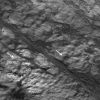
LRO-2500-Epigenes_A_Crater-2.jpgEpigenes A69 visiteAnother example of dark Impact Melt flows channeling through the preexisting material on the Crater Wall.
The white arrow points to the Crater Floor.
(this image is approx. 540 meters wide)MareKromium
|
|
| 2195 immagini su 183 pagina(e) |
 |
|
|
|
|
155 | |
|
|
|
|





