| Piú viste - MOON |

APOLLO 17 AS 17-146-22294~0.jpgAS 17-146-22294 - Big Boulder and me... (HR)77 visiteCaption NASA originale:"165:49:31 MT - Station 6 "locator" to the LRV, with Jack in the background taking photos AS17-139-21206 to 21211 and using Fragment 2 to give him some stability. Fragment 3 is the smaller piece of rock that is next to Fragment 2 and to the right of Jack (Schmitt)".
|
|

APOLLO_12_-_AS_12-49-7318_HR1.jpgAS 12-49-7318 - Mysterious reflection... (HR; additional process. by Giorgio Picciau)77 visitenessun commentoMareKromium
|
|

LRO-0007b-369443main_lroc_apollo16_lrg.jpgDescartes Highlands: the Apollo 16 Landing Site (edm)77 visitenessun commentoMareKromium
|
|
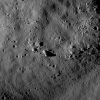
LRO-0008-376470main_tsiol438_lr_area.jpgTsiolkovskiy Crater77 visiteThe Far-Side Crater Tsiolkovskiy is one of the most spectacular and unique geologic features on the Moon.
Identified in the first image of the Far-Side, and named after visionary space pioneer Konstantin Tsiolkovskiy, Tsiolkovskiy Crater (185 Km diameter) has a an irregular (meaning: non-circular) shape, a Central Peak, and is completely filled with mare basalt.
Many geological and geomorphological features can be seen within and around the Crater, making this a particularly interesting place on the Moon to work and study.MareKromium
|
|

13-Billy Crater.jpgBilly Crater (HR)76 visiteCrater Billy, located at 50,1° West and 13,8° South on the Lunar Surface at the southern edge of Oceanus Procellarum, has a diameter of 46 Km and is up to 1,3 Km deep.
Billy is filled with dark mare material and is one of the darkest spots on the Lunar Surface. The crater is deemed to be of age class 5 - indicating an ancient crater [in this case at least 3,2 BY old] and filled, or partially filled with lava.
The image represents a composite made from two raw images (i.e. no flat field or other corrections have been applied) of the region taken one orbit apart.
|
|

72-moon_northpole 2.jpgThe Lunar North Pole (2)76 visiteCaption ESA originale:"(...) This picture is valuable as it shows illumination conditions at the Region. It is important to understand global illumination conditions to help in planning the location of future landing sites and, later, possible bases on the Moon".
|
|

APOLLO 16 AS 16-118-18873.jpgAS 16-118-18873 - Leaving California...76 visitenessun commento
|
|

Panoramic-AS12-46-6845-6851.jpgFrom AS 12-46-6845 until 6851 (EVA-1; Middle Crescent Crater)76 visite118:18:41 MT - Pete Conrad has moved to his left several feet and starts a clockwise, left-to-right partial pan back around to the Northeastern Rim to give a stereo view of Middle Crescent Crater. The discoloration at the center of the image is due to a dust smudge on the lens that showed up first on AS 6813.
MareKromium
|
|

LRO-2500-Peary_Crater.jpgPeary Crater and the North Pole of the Moon76 visiteOne day in the not-too-distant future, lunar explorers may spend their winter holidays at the Lunar North Pole.
Peary, an irregularly-shaped Impact Crater centered at 88,5° North Lat. and approx. 30° East Long., could be the place to do just that.
Adjacent to the Lunar North Pole, Peary has areas along its Crater Floor cast in permanent shadow, but it also has areas along its rim that may be permanently illuminated by the Sun. The proximity to the North Pole, possible areas of permanent shadow and light, plus the potential for in-situ resources make Peary crater a challenging and enticing location for future human and robotic exploration.
Peary Crater is one of 50 specific sites being explored by lunar geologists using LROC images for NASA's Constellation Program.MareKromium
|
|

Luna-03.jpgThe Yutu-2 Rover from LRO76 visiteI dati sino ad ora in nostro possesso sono stati raccolti nel Cratere Von Kármán a partire dal 3 gennaio 2019 quando la navicella spaziale cinese Chang'e 4 è atterrata al suo interno, così diventando la prima Navicella Spaziale ad atterrare dolcemente sul lato (a noi) "nascosto" della Luna . Il Sito ha un valore simbolico oltre che scientifico. Theodore von Kármán (1881-1963) è stato il consigliere di dottorato di Qian Xuesen , il fondatore del Programma Spaziale Cinese.
Il 4 febbraio 2019, la IAU ha approvato il nome del sito di atterraggio come Statio Tianhe . Il picco centrale del Crater Von Kármán, a nord-ovest del Sito di atterraggio, è stato chiamato Mons Tai . Sono stati anche nominati tre piccoli crateri: Hegu, a sud del Landing Site, Zhinyu a Ovest e Tianjin a Nord-Est.MareKromium
|
|

PlatoCrater-06.jpgPlato Crater (2)75 visitenessun commento
|
|

ZZ-ZZ-ZZ-ZZ-ZZ-ZZ-ZZ-ZZ-Earth&Moon from Nozomi.jpgThe Earth-Moon System from Nozomi75 visiteCaption NASA originale:"Japan launched its first mission to orbit Mars, Nozomi (Hope), on July 3rd, 1998, from the Kagoshima Space Center on the island of Kyushu. Nozomi's goal is to explore the Martian atmosphere and magnetic field as well as Regions of the Planet's surface and Moons. Formerly known as Planet-B, the spacecraft will use highly elliptical orbits with successive Earth/Moon flybys to help slingshot itself along its ultimate trajectory toward Mars, arriving at the Red Planet in October 1999. This stunning picture of the crescent Earth-Moon system was taken by Nozomi's onboard camera on July 18 from a point in space about 100.000 miles from the Earth and 320.000 miles from the Moon. Vibrant and bright, the reflective clouds and oceans of Earth contrast strongly with the dark, somber tones of the Lunar Surface".
|
|
| 2195 immagini su 183 pagina(e) |
 |
|
|
|
|
150 | |
|
|
|
|





