| Piú viste - THE LUNAR EXPLORER ARCHIVES |

g03_s65_18752.jpgGemini 03: Earth's Terminator60 visite
|
|
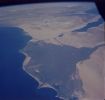
g04_s65_34776.jpgGemini 04: the "Blue Land"60 visite
|
|

g05_s65_45645.jpgGemini 05: clouds & mountains60 visite
|
|
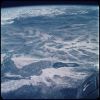
g05_s65_45747~0.jpgGemini 05: the "Blue Land"60 visite
|
|

AS09-20-3150.jpgAS 09-20-3150 - Clouds60 visite
|
|

AS09-21-3254.jpgAS 09-21-3254 - Earth and LM in the distance60 visite
|
|

g10_s66_46054.jpgGemini 10: Land, Sea, Rivers and Clouds60 visite
|
|

g09_s66_38418.jpgGemini 09: the Earth, from 400 miles above60 visite
|
|

g09_s66_38408.jpgGemini 09: an "incoming storm", from orbit60 visite
|
|

North_Polar_Features-North_Polar_Cap-MGS.jpgAnnular Clouds over the North Pole (Natural Colors; credits: NASA/JPL/MSSS)60 visiteCaption NASA:"Two annular (---> somewhat circular) clouds are seen in the upper left corner of this mosaic of MOC wide angle camera daily global mapping images. To the right of the picture's center is the Martian North Polar Cap. The image has a scale of about 7,5 Km (about 4,7 miles) per pixel. Annular clouds are common in mid-Northern Summer in the North Polar Region and may result from eddy currents in the lower atmosphere. The appearance of such clouds happens every year; this year they came like clockwork within a two-week forecasted period, based on the previous 4 Martian Years of experience gained from MGS MOC daily global imaging.
Despite their superficial resemblance to Earth-orbiting satellite views of hurricanes, these cloud features are not the result of strong winds and they typically dissipate later in the day. The pictures used to make this mosaic were acquired less than 2 days before the MOC was turned off for MGS's 5th Mars-Earth Solar Conjunction period. During Conjunction, Mars was on the other side of the Sun, relative to Earth, and thus MGS could not transmit data (through the Sun) during the second half of October".
|
|

ra7_b100.jpgThe Moon from Ranger-7: Mare Cognitum (5)60 visiteThe "Ranger" Spacecrafts that failed:
Ranger 1: launched 23 August 1961.
Failed to leave Earth parking orbit.
Ranger 2: launched 18 November 1961.
Failed to leave Earth parking orbit.
Ranger 3: launched 26 January 1962.
Earth contact lost, missed the Moon by ~36.800 Km (ricordateVi bene questo dato: BERSAGLIO MANCATO di 36.000 Km!).
Ranger 4: launched 23 April 1962.
Sequencer failed, impacted the Moon 26 April 1962.
Ranger 5: launched 18 October 1962.
Earth contact lost, missed the Moon by 725 Km (un netto miglioramento rispetto al Ranger-3...)
Ranger 6: launched 30 January 1964.
Cameras failed, impacted the Moon 2 February 1964.MareKromium
|
|

ra7_b001.jpgThe Moon from Ranger-7: Mare Cognitum (4)60 visiteRanger-9's ID:
Launched: 21 March 1965
Impacted Moon: 24 March 1965 at 14:08:20 UT
Location of impact: Latitude 12,91° South and Longitude 357,62° East - Alphonsus crater
Ranger Spacecraft Technical Data: each Ranger spacecraft had 6 cameras on board. The cameras were fundamentally the same with differences in exposure times, fields of view, lenses and scan rates. The camera system was divided into two channels, P (partial) and F (full). Each channel was self-contained with separate power supplies, timers, and transmitters. The F-channel had 2 cameras: the wide-angle A-camera and the narrow angle B-camera. The P-channel had four cameras: P1 and P2 (narrow angle) and P3 and P4 (wide angle). The final F-channel image was taken between 2,5 and 5" before impact (altitude about 5 Km) and the last P-channel image 0,2 to 0,4" before impact (altitude about 600 mt). The images provided better resolution than was available from Earth based views by a factor of 1000. These highly detailed images showed Apollo planners that finding a smooth landing site was not going to be easy. MareKromium
|
|
| 3220 immagini su 269 pagina(e) |
 |
|
|
|
|
261 | |
|
|
|
|





