| Piú viste |
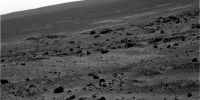
SOL1035-2P218250779ESFAS20P2583L6M1.jpgHorizon - Sol 103567 visitenessun commentoMareKromium
|
|
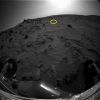
SOL1037-2F218431834EFFAS42P1201L0M1-00.jpgBright object near Spirit (1)67 visiteUna sequenza di 4 frames molto interessanti (individuati dal Dr Gianluigi Barca) i quali ci mostrano un oggetto di forma ovaleggiante e dimensioni modestissime (diremmo, considerata la distanza del rilievo dal Rover e le dimensioni approssimative - ma conosciute - di altri oggetti posti sul medesimo arco, che si potrebbe trattare di un qualcosa avente una lunghezza compresa fra i 15 ed i 25 cm) la cui luminosità - o albedo (relativa) - è talmente elevata, in rapporto all'albedo media degli altri corpi situati sulla superficie alla quale esso accede, da farci pensare subito ad un possibile frammento di "metallo", oppure ad un "cristallo" o magari - perchè no? - ad un estruso di "ghiaccio".
Vedremo...MareKromium
|
|
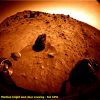
SOL1051-2F219669933EFFASAFP1214R0M1-02.jpgA little time before Sunset... - Sol 1051 (Extremely Enhanced Natural Colors; credits for the additional process. and color.: Dr Paolo C. Fienga - Lunexit Team)67 visitenessun commentoMareKromium
|
|

NGC-0602-1.jpgNGC 602 - Star Cluster67 visite"...I will let them walk by brooks of water, in a straight path in which they shall not stumble..."
- Jeremiah 31:9
|
|

McNaught-09.jpgThe "Tail" of McNaught, at Sunset...67 visiteCaption NASA originale:"What's happening over the horizon? Many a sky enthusiast who thought they had seen it all had never seen anything like this. To the surprise of many Northern Hemisphere observers, the tail of Comet McNaught remained visible even after the comet's head set ahead of the Sun. What's more, visible were bright but extremely rare filamentary striae from the comet's expansive dust tail. The cause of dust tail striae are not known for sure, but are possibly related to fragmentation of comet's nucleus. The last comet to show prominent striae was Comet Hale-Bopp in 1997.
Pictured above, the tail of Comet McNaught was caught just after Sunset last Friday above the Carnic Alps of Northern Italy".
|
|

Titan-Regions-Ganesa_Macula_Region-PIA09176.jpgGanesa Macula67 visiteCaption NASA:"This radar image of Titan shows Ganesa Macula, interpreted as a cryovolcano (ice volcano), and its surroundings. Cryovolcanism is thought to have been an important process on Titan and may still be happening today.
This mosaic was made from images obtained by the Cassini radar mapper on two flybys. The lower part of the image was from the flyby on Oct. 26, 2005, while the upper part was from the Jan. 13, 2007, flyby.
Ganesa macula is the dark circular feature seen on the lower left of the mosaic.
Bright rounded features, interpreted as cryovolcanic flows, are seen towards the top and the right of the mosaic.
This image mosaic was taken in synthetic aperture mode. The resolution of the images is approx. 350 mt (1150 feet). North is toward the top. The image mosaic is about 570 Km (about 354 miles) wide and 390 Km (about 240 miles) high".
|
|
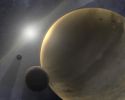
GasGiant-PIA09117.jpgA "young" Gas-Giant67 visiteCaption NASA:"This is an artist's concept of a hypothetical 10-million-year-old star system. The bright blur at the center is a star much like our Sun. The other orb in the image is a gas-giant planet like Jupiter. Wisps of white throughout the image represent traces of gas.
Astronomers using NASA's Spitzer Space Telescope have found evidence showing that gas-giant planets either form within the first 10 million years of a Sun-like star's life, or not at all. The lifespan for sun-like stars is about 10 billion years.
The scientists came to this conclusion after searching for traces of gas around 15 different Sun-like stars, most with ages ranging from 3 to 30 million years. With the help of Spitzer's Infrared Spectrometer Instrument, they were able to search for relatively warm gas in the inner regions of these star systems, an area comparable to the zone between Earth and Jupiter in our own solar system. They also used ground-based radio telescopes to search for cooler gas in the outer regions of these systems, an area comparable to the zone around Saturn and beyond".MareKromium
|
|

as09-19-2951.jpgAS 09-19-2951 - Floating Away...67 visitenessun commento
|
|
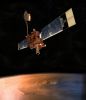
00-A-Mars_Global_Surveyor.jpgMars Global Surveyor67 visiteMars Global Surveyor was launched in 1996 on a mission designed to study Mars from orbit for two years. It accomplished many important discoveries during nine years in orbit. On Nov. 2, 2006, the spacecraft transmitted information that one of its arrays (---> pannelli) was not pivoting (--> ruotando) as commanded.
Loss of signal from the MGS Orbiter began on the following orbit.
Mars Global Surveyor has operated longer at Mars than any other spacecraft in history and for more than four times as long as the prime mission originally planned.
NASA has recently formed an internal review board to look more in-depth into why NASA's Mars Global Surveyor went silent in November 2006 and recommend any processes or procedures that could increase safety for other spacecraft.
|
|

NGC-4449.jpgNGC 4449 - Irregular Galaxy67 visite"...Insegnare qualcosa di giusto a qualcuno è enormemente più facile del mettere in pratica, noi stessi, quel medesimo insegnamento.
E ricordare a qualcuno che il Futuro lo si costruisce solo guardando verso di esso e dimenticando il passato è pure un insegnamento giusto e saggio ma, ahinoi, spesso impraticabile..."
P.C. Floegers - "Conversations for Tomorrow"MareKromium
|
|
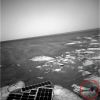
OPP-SOL1173-1N232319876EFF82__P1911L0M1-00.jpgThe "Martian Ace-of-Spades" (1) - context image - Sol 117367 visiteUn nuovo dettaglio della Superficie Marziana, davvero bizzarro ed estremamente intrigante, è stato individuato ed evidenziato anche oggi dal nostro ottimo Dr Gianluigi Barca su ben 2 distinti frames Opportunity.
Come certo saprete, la verifica dell'esistenza di un rilievo "bizzarro" attraverso frames diversi (consecutivi o non) è fondamentale per distinguere la semplice illusione ottica/svista dalla effettiva presenza di un qualcosa che, in ogni caso, vale la pena esaminare.
In questo frangente, come vedete, la Singolarità è data dalla presenza di un rilievo il quale ci ricorda (molto bene, diremmo!) un Asso di Picche.
Fantasia sfrenata? Illusione ottica? Svista? O magari "segnale" in codice?...
Questo non lo sa nessuno, ovviamente.
Ciò che sappiamo, invece, è che il nostro "Asso" si vede molto bene in 2 frames e quindi non è una svista nè un'illusione ottica determinata dal fatto che la ripresa è stata effettuata da un particolare angolo visuale.
Cosa resta, quindi? Resta la "Fantasia Sfrenata", il "Segnale in Codice" e, last but not least, la presenza di un rilievo superficiale curioso il quale, come ovvio, non è certo rappresentativo di un Asso di Picche (almeno nel senso terrestre del termine…).
Ecco: grazie al Dr Gianluigi Barca, anche in questo caso possiamo distinguere la realtà (il rilievo bizzarro, ma genuino - che si vede in frames differenti) dalla fantasia e dalla pura speculazione (l'Asso di Picche).
La differenza fra i Privati Ricercatori ed i cialtroni, a questo punto, la fa l'Onestà Intellettuale.
Quella stessa Onestà che ci fa dire, adesso come mille altre volte, che ciò che si vede in questi frames SEMBRA un Asso di Picche e noi, per sorridere, ci scherziamo sopra pur sapendo benissimo che il solo parlare di "Asso di Picche Marziano" è una (simpatica e leggera) sciocchezza.
Peccato che, come dice il nostro Amico, Collega e Socio - Dr A. Feltri - "il Buon Senso, la Razionalità ed il Pragmatismo, in questo Mondo, non paghino il becco di un quattrino"...
MareKromium
|
|

The_Sun-PIA09322.jpgClose-up View of an Active Region of the Sun (March 23, 2007)67 visitenessun commentoMareKromium
|
|
| 25353 immagini su 2113 pagina(e) |
 |
|
|
|
|
992 | |
|
|
|
|





