| Piú viste |

OPP-SOL1095-1P225388193EFF79R1P2371L2M1_v2.jpgHeads & Tails... - Sol 1095 (EDM n.1 - credits: Ivana Tognoloni)68 visite...Effettivamente, la sensazione che il rilievo indicato dalla freccia gialla di Sx sia una sorta di "testolina" (con tanto di "occhio nero", che sbuca da sotto una sorta di conchiglia rovesciata), c'è...MareKromium
|
|

The_Sky_of_Saturn-4256690919_1c0b492298_o.gifIn the Sky of Saturn (GIF-Movie; credits: Dr M. Faccin)68 visitenessun commentoMareKromium
|
|

Japetus-MF1.jpgThe unusually-looking Surface of Japetus (possible Natural Colors; credits: Dr M. Faccin - Lunexit Team)68 visitenessun commentoMareKromium
|
|
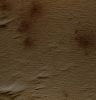
PSP_010200_1805_RED_abrowse-01.jpgFresh Crater Cluster (EDM - Natural Colors; credits: Dr Paolo C. Fienga - Lunexit Team)68 visiteMany of the newest craters are part of a crater cluster, like this one. This cluster is about 350 meters (almost a quarter mile) across at its longest, and the largest crater in the image is 5 meters (16 feet) in diameter.
These clusters likely result from breaking up of the impactor before it strikes the surface. How widely dispersed the craters are depends on the strength and density of the impactor. Scientists can study these clusters to learn more about the object that created them.MareKromium
|
|

PSP_001700_2505_RED_abrowse-00.jpgThe "Frozen pseudo-Lake" of Vastitas Borealis (CTX Frame - Natural Colors; credits: Dr Paolo C. Fienga - Lunexit Team)68 visiteThe right side (Dx) of this observation shows a portion of a "Frost Patch" on a mound inside a Northern Hemisphere Crater. This is the same frosted mound shown in this image. The Frost Patch has remained largely stable at least since the Viking era (late 1970s).
The bright frost region is bounded by a Dunefield on the N/E. Several sizes of Dunes are visible. The size classes probably represent generations of dunes that formed under a variety of dominant wind conditions.
The EDM shows the Dunes and Frost Boundary up-close. The Frost is largely absent over the Dunes and is more stable over the ground that does not have dune-shaped landforms.
Note Lunexit: il Cratere, che la NASA stessa si affrettò a battezzare "Louth" (nonostante fosse ancora pending l'approvazione del nome da parte dell'International Astronomical Union (IAU) - un'Entità tanto enorme e pesante quanto, nei fatti, inutile...), è tornato ad essere un Cratere senza Nome dell'Emisfero Nord.
Il "presunto" Lago ghiacciato è diventato un "Frost Patch" (lett.: una "chiazza di brina") e le sue caratterizzazioni - ed implicazioni, come a suo tempo espresse dall'ESA - sono...sparite! Nelle pagine NASA (ed ESA, recenti) non vi è traccia di investigazioni o analisi più approfondite su questo - comunque intrigante - Rilievo Superficiale. Nulla.
Il possibile Laghetto del Cratere Louth, Regione di Vastitas Borealis - Marte -, di fatto non solo non esiste (e su questo potremmo anche essere d'accordo, sebbene a malincuore), ma non è MAI esistito (e su questo modo di pensare e di agire, invece, NON SIAMO ASSOLUTAMENTE D'ACCORDO: perchè è scorretto, intrinsecamente contraddittorio, nonchè scientificamente e logicamente viziato).
Curioso, quindi, (e "curioso" è un puro eufemismo) il modo in cui tutta questa storia è stata (mal)trattata dalle "Potenze Spaziali"... Veramente curioso.MareKromium
|
|
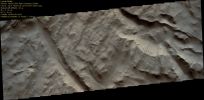
LycusSulci-PIA12454.jpgLycus Sulci (Natural Colors; credits: Dr Paolo C. Fienga - Lunexit Team)68 visitenessun commentoMareKromium
|
|

FIGURA_25.jpgThe Santa Rita Platform68 visiteUn promemoria: le Piattaforme San Marco e Santa Rita 1 e 2 erano di proprietà dell'ENI (Ente Nazionale Idrocarburi) il quale, soprattutto negli Anni '60 e '70, si dimostrò un autentico "Fiore all'Occhiello" dell'Industria Petrolifera (e non solo) Italiana.
Un Esempio, per tutti, di Società Commerciale Moderna e "Multiculturale" (e "Multietnica").
Poi i tempi sono cambiati...MareKromium
|
|
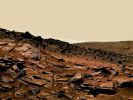
SOL759-HomePlate-PF.jpgHome Plate Pan - Sol 759 (Natural - but enhanced - Colors; credits: Dr Paolo C. Fienga - Lunexit Team)68 visitenessun commentoMareKromium
|
|

LRO-2502-Mare_Imbrium.jpgMare Imbrium68 visitenessun commentoMareKromium
|
|

LRO-2501-Oceanus_Procellarum~0.jpgLunar Landslide in an Unnamed Crater of Oceanus Procellarum (Natural Colors; credits: Dr Paolo C. Fienga - Lunexit Team)68 visitenessun commentoMareKromium
|
|

Moons-EB.gifKnown and Unknown Saturnian Moons' Carousel... (GIF-Movie; credits: Elisabetta Bonora - Lunexit Team)68 visitenessun commentoMareKromium
|
|
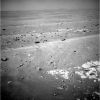
OPP-SOL2168-1N320649164EFFABJKP1665L0M1.jpgUFO over Meridiani Planum or a just an Image-Artifact? - Sol 216768 visiteL'oggetto ignoto (già segnalato nell'Image-Mosaic realizzato dal Dr Faccin e propostoVi un paio di giorni fa), nel singolo frame Opportunity n. 1N32064916EFFABJKP1665L0M1 (ottenuto quasi a Mezzogiorno - Ora Locale di Marte - Regione di Meridiani Planum) ci appare assai brillante ed estremamente ben definito.
Ma la sua texture ci lascia perplessi: è troppo "uniforme", "limpida" e "solida".
In altre parole, il dettaglio controverso è troppo nitido (rispetto al resto dell'immagine) per essere un oggetto reale. E se si trattasse di oggetto reale (cosa di cui noi, al momento, dubitiamo), allora esso dovrebbe essere davvero starordinariamente luminoso - come un piccolo Sole - ed incredibilmente vicino ad Opportunity (diremmo - così, ad occhio - che esso, ribadiamo SE REALE, dovrebbe posizionarsi dai 5/600 metri a non più di 1 Km dal Rover).
Purtroppo (dovendo e volendo restare razionali e pragmatici) non si può dire nulla di più.MareKromium
|
|
| 25353 immagini su 2113 pagina(e) |
 |
|
|
|
|
976 | |
|
|
|
|





