| Piú viste |
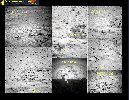
SOL1404-1763-Mosaic000.gifUnbelievable "Pseudo-Balance" - Sol 1763 (GIF-Mosaic)68 visiteL'oggetto curioso ed in equilibrio "discutibile", come vedete in questo davvero eccellente Foto-Mosaico/GIF-Movie realizzato dal Dr Barca, si risolve in una roccia a forma (effettivamente) triangolare, con una sorta di base/piedistallo costituita in modo tale da permettergli di rimanere in posizione verticale e quindi di "ergersi" rispetto a tutti gli altri rilievi che caratterizzano questa specifica zona.
Potremmo fermarci qui e, come sempre, fare i de-bunkers noi stessi e quindi ammettere candidamente che ci siamo sbagliati e che la pseudo-roccia misteriosa non è altro che l'ennesima roccia marziana super-bizzarra. Si, potremmo farlo...Ma sarebbe troppo facile e banale!
Dunque stavolta Vi invitiamo a fare uno sforzo ulteriore e quindi mettere a confronto le varie inquadrature (più o meno) ravvicinate di questo dettaglio superficiale con l'ultima inquadratura (e cioè quella ottenuta dutrante il Sol 1763) che ha fatto nascere tutti i nostri dubbi e sospetti.
Notate qualcosa? No?!?
Guardate bene...MareKromium
|
|

L-Original_Lunar_Orbiter_Frames-LO1-1099-02_med.jpgOriginal Lunar Orbiter - Frame LO1-1099 (EDM - the Area, now EMPTY)68 visiteIncommentabile anche questo...MareKromium
|
|

The_Rings-PIA11142.jpgSaturn's Rings: the whole System68 visitenessun commentoMareKromium
|
|
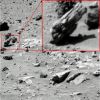
SOL1134-2P227036982EFFASY4P2434L5M1-3.jpgImpossible Balance... - Sol 1134 (credits: Dr G. Barca)68 visite...La Saga dell'Equilibrio Impossibile non finisce proprio mai e questo, come potete vedere bene, è un altro caso che definire SCONCERTANTE ed ECLATANTE (oltre che, a nostro avviso, fisicamente impossibile) è, come dire?, semplicemente riduttivo!
Chissà che cosa pensa di questo rilievo (come di altri simili) il bravo Dr Bellutta e tutta la sua STAFF...
Ottimo Occhio ed Ottimo Lavoro, once again, del nostro Dr Barca, che ringraziamo.MareKromium
|
|

APOLLO_15_AS_15-85-11377.jpgAS 15-85-11377 - Hadley Delta (possible True Colors; credits: Dr Paolo C. Fienga)68 visitenessun commentoMareKromium
|
|

SOL405-GB.jpgWhite-Pink Skies over Gusev - Sol 405 (possible True Colors; credits: Dr G. Barca)68 visitenessun commentoMareKromium
|
|

ESP_011618_1885_RED_abrowse-01.jpgRecent Double-Impact (edm - possible Natural Colors; credits: Lunar Explorer Italia)68 visiteThe MRO Context Imager (CTX) team has been discovering many new impact events on Mars, and then they request HiRISE follow-up imaging to confirm an impact origin and to identify and measure the craters.
Crater clusters are common as these small (typically less than 1 meter diameter) objects break up in the thin Martian air and separate a little bit to make crater clusters up to a few hundred meters wide. The example shown here is the result of an impact that occurred between May 2003 and September 2007.
It was first discovered as a dark spot in a CTX image acquired in March 2008, but later found to be partly visible at the very edge of a CTX image acquired in September 2007.
A dark spot is not present in the previous image of this location with sufficient resolution to have detected it, acquired by the visible THEMIS camera on Mars Odyssey in May 2003. Thus the impact might have formed anytime between May 2003 and September 2007. The dark markings are created by removing or disturbing the surficial dust cover, and so far new impact sites have been discovered only in dust-covered regions of Mars.
Although small Martian crater clusters are common, this example is unusual because there is a dark line between the two largest craters. We hypothesize that atmospheric breakup coincidentally made two nearly equal-size objects that impacted close together in space and time so the air blasts interacted with each other to disturb the dust along this line.
Hundreds of these small objects (mostly asteroid fragments) impact Mars per year. A comparable number of small objects impact Earth each year, but explode in the upper reaches of our atmosphere and have no effect on the surface, fortunately for those of us who live here.MareKromium
|
|
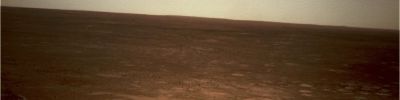
SOL483-2N169237348ESFAAB2P1560L0M1.jpgGusev Skyline - Sol 483 (Natural Colors; credits: Lunar Explorer Italia)68 visitenessun commentoMareKromium
|
|

SOL661-6-GB-LXT.jpgRocky Skyline - Sol 661 (possible True Colors; credits: Dr Barca & Lunar Explorer Italia)68 visitenessun commentoMareKromium
|
|
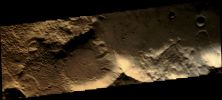
Landslide-Terra_Sirenum-20090302a-PCF-LXTT.jpgLandslide in Terra Sirenum (Enhanced Natural Colors; credits: Dr Paolo C. Fienga - Lunar Explorer Italia)68 visiteCoord.: 11,6° South Lat. and 186,9° East Long.MareKromium
|
|
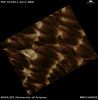
PSP_010501_2615_RED_abrowse.jpgAbalos Undae (Natural Colors; credits: Lunar Explorer Italia)68 visiteMars Local Time: 14:25 (early afternoon)
Coord. (centered): 81,6° North Lat. and 279,6° East Long.
Spacecraft altitude: 318,7 Km (such as about 199,2 miles)
Original image scale range: 63,8 cm/pixel (with 1 x 1 binning) so objects ~ 1,91 mt across are resolved
Map projected scale: 50 cm/pixel
Map projection: EQUIRECTANGULAR
Emission Angle: 0,1°
Phase Angle: 69,6°
Solar Incidence Angle: 70° (meaning that the Sun is about 20° above the Local Horizon)
Solar Longitude: 145,8° (Northern Summer)
Credits: NASA/JPL/University of Arizona
Additional process. and coloring: Lunar Explorer ItaliaMareKromium
|
|

Minds-MF.jpgA Beautiful Mind (by Marco Faccin)68 visitenessun commentoMareKromium
|
|
| 25353 immagini su 2113 pagina(e) |
 |
|
|
|
|
970 | |
|
|
|
|





