| Piú viste |

SOL503-2N171032368EFFAAIIP0798R0M1-1.jpgBizarre, Alien or just Unusual? - Sol 503 (credits: Dr Marco Faccin)68 visiteL'unico commento fattibile è: guardate!MareKromium
|
|

OPP-SOL447-1.jpgCutting the edge... - Sol 447 (True Colors; credits: Dr Gianluigi Barca)68 visitenessun commentoMareKromium
|
|

APOLLO_14_AS_14-77-10364a.JPGAS 14-77-10364 (a) - Thermal Degradation Sample68 visiteThermal Degradation Sample; taken in the vicinity of Station "A".MareKromium
|
|

SOL595-2-Sky-3.jpgNight Sky, Stars and (maybe) Phobos - Sol 595 (2 - credits: Dr G. Barca)68 visitenessun commentoMareKromium
|
|
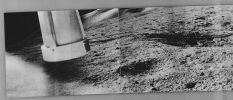
Luna21-Photomosaic-001a.jpgShallow Craters68 visitenessun commentoMareKromium
|
|
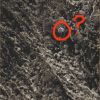
SOL646.jpgMould?!? - Sol 646 (Superdefinition; credits: Dr G. Barca)68 visiteUn altro image-artifact?...MareKromium
|
|
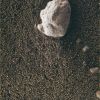
SOL1008-1.jpgMartian "Pumice Stone" and "wet" Sands - Sol 1008 (Superdefinition; credits: Dr G. Barca)68 visitenessun commentoMareKromium
|
|

Tethys-PIA09915-0.jpgTethys (MULTISPECTRUM-2; credits: Lunexit)68 visiteCaption NASA:"From a highly inclined orbit, the Cassini Spacecraft looks toward far Northern Latitudes on Tethys.
Here, the spacecraft was above a position about 45° North of the moon's Equator.
This vantage point afforded a view of the moon's three most recognizable features: the Ithaca Chasma Canyon System (at lower right), Odysseus Crater (at upper left) and the Equatorial Band of Darker Terrain (at lower left).
Lit terrain seen here is on the Leading Hemisphere of Tethys (1062 Km, or approx. 660 miles across). North is up.
The image was taken in visible light with the Cassini spacecraft narrow-angle camera on April 29, 2008. The view was obtained at a distance of approx. 991.000 Km (such as about 616.000 miles) from Tethys and at Phase Angle of 73°.
Image scale is roughly 6 Km (about 4 miles) per pixel".MareKromium
|
|

OPP-SOL186-1.jpgBerries and White Dust... - Sol 186 (Superdefinition + MULTISPECTRUM; credits: Dr G. Barca)68 visitenessun commentoMareKromium
|
|
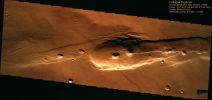
Volcanic_Features-Collapse_Pits-Alba_Patera-20080618a-PCF-LXTT-00.jpgCollapse Features near Alba Patera (Enhanced and Saturated Natural Colors; credits for the additional process. and color.: Dr Paolo C. Fienga - Lunexit Team)68 visiteCaption NASA:"Alba Patera is a very large old volcano on the surface of Mars. While still impressive in height, it no longer towers over the surrounding plains.
It is thought that after a major eruption that emptied the magma chamber beneath Alba Patera the entire volcano collapsed into the empty space below.
This collapse is marked by extensive fracturing. This VIS image shows collapse features on a much smaller scale".MareKromium
|
|

The_Rings-PIA10419.jpgOn the edge... (MULTISPECTRUM-2; credits: Lunexit)68 visiteCaption NASA:"This detailed look at Saturn's A-Ring captures Daphnis in the narrow Keeler Gap. The small moon creates complex wave patterns in the gap edges that Cassini scientists are working to understand. To the right of the Keeler Gap, the outer A-Ring edge is significantly brighter than the rest of the Ring.
This view looks toward the unilluminated side of the Rings, from about 32° above the Ring-Plane. Daphnis is about 8 Km (approx. 5 miles) wide.
The image was taken in visible light with the Cassini Spacecraft narrow-angle camera on May 31, 2008. The view was acquired at a distance of approx. 1 MKM (about 629.000 miles) from Saturn.
Image scale is roughly 6 Km (about 4 miles) per pixel".MareKromium
|
|

EXOGEOLOGY-006.jpgSmall "Pseudo-Pyramidal" Surface Feature: a Martian Dreikanter68 visiteEsempio di struttura pseudo-piramidale di piccola scala: in questo frame, un boulder di forma vagamente (pseudo) piramidale - comunque poligonale - che venne fotografato dal Rover Spirit durante i suoi primi Giorni Marziani.MareKromium
|
|
| 25353 immagini su 2113 pagina(e) |
 |
|
|
|
|
969 | |
|
|
|
|





