| Piú viste |

Noachis_Terra-M0705535-00.jpgBizarre-looking Features of Southern Noachis Terra (Original NASA/MGS/MSSS b/w M0705535 CTX Frame)69 visiteUn'altra serie di immagini che ci portano, attraverso tre passaggi, a dare un'occhiata ravvicinata al bordo di un grande cratere da impatto (di color grigio chiaro) il quale presenta una serie di piccole crepe di colore scuro (si vedono nella parte superiore del frame con dettaglio ravvicinato nel frame successivo) dalle quali sembra fuoriuscire qualcosa. Più in basso, sul fondo di questo cratere, una sorta di lago nero, bellissimo e (almeno per noi) del tutto inesplicabile- o forse no...ma ne parleremo in sede di commento alla terza parte di questa immagine.
Il frame che stiamo guardando ora (e dal quale sono stati ottenuti i due ingrandimenti che Vi proponiamo qui di seguito) è stato ottenuto da una distanza di circa 372 Km dal suolo di Marte e l'ora locale, al momento dello scatto, segnava le 14:50 circa.
|
|

South_Polar_Regions-M0903484-02.jpgFeatures of the South Polar Regions (EDM - Original NASA/MGS/MSSS b/w Frame)69 visitenessun commento
|
|

ZP-Mercuryandfriends.jpgMercury, Venus and Saturn in the Western Sky...Again!69 visiteDa "NASA - Picture of the Day" del 30 Giugno 2005:"Venus, Mercury, and Saturn wandered close together in western evening skies last week. On Saturday, June 25, astronomer R. Jay GaBany recorded this snapshot of their eye-catching planetary conjunction, from historic Lick Observatory on Mt. Hamilton, California, USA. The view looks toward the Pacific shortly after sunset with the lights of San Jose and the southern San Francisco Bay area in the foreground. Of course, Venus is the brightest of the trio. Mercury is nearby on the right and Saturn is below and left, closest to the horizon. Farther to the right of the planetary triangle are Pollux and Castor, twin stars of Gemini, with Regulus, bright star of the constellation Leo, at the very upper left corner of the picture. In the coming days, Venus and Mercury remain close, while Saturn continues to drop below them, toward the horizon".
|
|
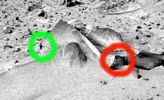
SOL555-2P175629860ESFAD56P2569L3M1.jpgRocks: Sol 555 (1)69 visiteAncora una volta ci troviamo davanti ad una di quelle strane formazioni rocciose che abbiamo battezzato (non a caso) pseudo-rocce: in questo frame potete notare, nell'area cerchiata in rosso, una roccia che presenta un'apertura (diremmo un buco) di forma apparentemente triangolare a ridosso della sua sommità. In realtà, dopo aver compiuto una piccola analisi, il rilievo è più complesso ed assomiglia ad una sorta di minuscolo camino il quale accede ad un'apertura più larga ed inclinata (che si vedrà meglio nel prossimo frame) che sembra "tagliare" nettamente la parte superiore della roccia. Ed ancora una volta ci chiediamo se questi "fori" non sìano punti di accesso/uscita a/da un Marte sotterraneo che è molto difficile anche solo immaginare...
|
|

M-051-8.jpgM 51: The "Whirlpool Galaxy" - HST69 visite"...Gli faceva uno strano effetto guardare l'abitacolo della nave che, come un'urna, custodiva ora il suo corpo a cui il deserto, presto, avrebbe dato sepoltura sotto il suo piatto letto.
In fondo gli dispiaceva pensare quel corpo preda inerme tra le braccia della Morte, così come lo era stato del Tempo, in Vita.
Il Tempo e la Morte: i due più abili Maestri di cui si serve il Grande Architetto per lavorare la sua materia.
Gli sarebbe piaciuto sottrarlo a tale scempio e consegnarlo all'Eternità ma, ripensandoci, la cosa gli apparve presuntuosa e perfino sciocca..."
Giuseppe Spina - "La Città Celeste"
|
|
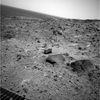
SOL565-2N176524383EFFADAEP0645L0M1.jpgOn the way to the summit: the Paradise of Geologists... (1) - Sol 56569 visiteForse si tratta di un nome sciocco o di una banalizzazione, ma dopo quello che abbiamo visto e che continuiamo a vedere intorno a Spirit non ci sembra che esista un altro modo per definire questo mondo di pietre, simil-pietre, rocce, rocce anomale, sassi, polveri e macigni (ora più ed ora meno vagamente antropomorfici...). Siamo in una sorta di "Paradiso dei Geologi", e su questo crediamo che nessuno abbia da ridire. Che poi, in questo "Paradiso", vi sìano soltanto rocce...Beh, noi non ci giureremmo.
|
|
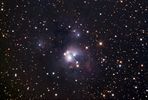
NGC-7129.jpgNGC 712969 visite"...An intellectual is someone whose mind watches itself..."
Albert Camus (1913-1960) - "Carnets"
|
|

SOU-SOL008-81442_full.jpg"Monster-Pan" in 3-D (14) - Sol 869 visitenessun commento
|
|

SOL448-01.jpgA sea of rocks...in 3D! (1) - Sol 44869 visiteUno degli splendidi lavori del Dr Feltri, da gustare con gli occhialini rossi e verdi e quindi da studiare: nulla (o quasi...) è come sembra.
|
|

Volcanoes-Arsia_Mons-01-PIA04294.jpgArsia Mons and its "clouds" (1) - 19 June 2001, Ls 180° (Extremely Saturated Natural Colors; credits NASA/JPL/MSSS)69 visiteVariazioni e ripetitività climatiche osservate sulla Regione dove sorge il grande vulcano Arsia Mons.
Original caption:"A wide angle view taken by the Mars Orbiter Camera on NASA's Mars Global Surveyor. At intervals of approximately one Mars year apart, similar spiral dust clouds over a volcano named Arsia Mons can be seen. This image was taken on June 19, 2001, such as the first day of Southern Winter on Mars".
|
|

SOL616-2N181053077EFFAEOTP0607L0M1.jpgTennessee Valley (4) - Sol 61669 visitenessun commento
|
|

Dione-PIA07748.jpgThe surface of Dione from about 4486 Km69 visiteThe terrain in this image is located within a 60-Km-wide impact crater along the feature called Padua Linea. The western rim of the encompassing crater runs from the middle left to the upper right. The crater's central peak can be seen at the lower right. Multiple generations of fractures are visible here. Numerous fine, roughly parallel linear grooves run across the terrain from top to bottom and are interrupted by the larger, irregular bright fractures. In several places, fractures postdate some deposits in the bottoms of craters that are not badly degraded by time. Such a fracture, for example, runs from the center toward the upper right. Most of the craters seen here have bright walls and dark deposits of material on their floors. As on other Saturnian moons, rockslides on Dione may reveal cleaner ice, while the darker materials accumulate in areas of lower topography and lower slope (e.g. crater floors and the bases of scarps). This view is centered on terrain near 11° South lat. and 238° West long.
|
|
| 25353 immagini su 2113 pagina(e) |
 |
|
|
|
|
944 | |
|
|
|
|





