| Piú viste |

IMAGE063-APOLLO 17 AS 17-145-22202.jpgBloody Moon... (5)249 visiteE così, chiudendo questa incredibile Investigation con il frame ultra-compresso che viene messo a disposizione del Pubblico dall'"Apollo 17 Lunar Surface Journal (Image library)", vorremmo ringraziare il Dr Feltri per il solito - spettacolare - contribuito ed il Dr Barca per la notevolissima attenzione che ha posto nell'analisi visuale dei NASA Original Apollo frames e che gli ha permesso l'identificazione di un dettaglio davvero sconcertante.
Un'analisi che, se eseguita con passione ed attenzione - credeteci! - riserva sempre (SEMPRE) qualche sorpresa...
|
|

OPP-SOL1616-1N271647752EFF90EBP1937L0M1-IT-00.jpgExtremely unusually-looking Surface Feature in Meridiani Planum - Sol 1616 (an Image-Mosaic by Ivana Tognoloni - Lunexit Team)249 visitenessun commentoMareKromium
|
|

OPP-SOL1607-1N270853778EFF90D8P1981R0M1-IT-03.jpgExtremely unusually-looking Surface Feature in Meridiani Planum - Sol 1607 (an Image-Mosaic by Ivana Tognoloni - Lunexit Team)249 visitenessun commentoMareKromium
|
|

ESP_020891_1560_RED_abrowse-PCF-LXTT.jpgCandidate MSL Landing Site: the Floor of Eberswalde Crater (Absolute Natural Colors; credits for the additional process. and color.: Dr Paolo C. Fienga - Lunexit Team)249 visitenessun commentoMareKromium
|
|

Volcanoes-Jovis_Tholus-TR-20080519a-PCF-LXTT.jpgPortion of the Jovis Tholus Caldera (Absolute Natural Colors; credits for the additional process. and color: Dr Paolo C. Fienga - Lunexit Team)249 visiteCaption NASA:"Jovis Tholus is a small Volcano in the Tharsis Region (also known as "Volcanic District") of Mars. The Western part of the Volcano - as it can be seen here - has collapsed (meaning that it broke down under its own weight)".
MareKromium
|
|

Comparisons.jpgComparisons249 visiteSun - Earth: the average diameter of the Sun is about 1,392,000 km, almost 109 times larger than the Earth (12,742 km). This means that we could put 109 Earths side by side to match the diameter of our star.
Stephenson 2-18 - Sun: the largest known star compared to the Sun. We are talking about a radius of 2,158 solar radii (solar radius equals 696,340 km). If we were to place it at the centre of our Solar System, its photosphere would engulf the orbit of Saturn, the lord of the rings.
Ton 618 - Stephenson 2-18: the largest known black hole compared to the largest star. Ton 618 has a diameter of 2606 astronomical units (1 astronomical unit is equivalent to the distance Earth - Sun or 150 million kilometres). To give a better idea, Saturn (used as a comparison before) is 10 astronomical units away from the Sun.
We are ants in the Universe!MareKromium
|
|

SOL063-2P131931008ESF1300P2733L1M1.jpgA Night on Mars (4)248 visiteDietro questo atteggiamento, diventato comune anche fra molti Ricercatori e Divulgatori - nostrani e non - a nostro modo di vedere, non c'è nessun rispetto per la Scienza e per la Ricerca. C'è solo paura e ignoranza.
E non sappiamo davvero quale di queste due calamità sia la peggiore...
|
|

APOLLO 15 AS 15-85-11453.jpgAS 15-85-11453 - A vision of Mount Hadley and the surrounding darkness248 visiteLa zona di Mount Hadley, tra luci ed ombre. Questa immagine e quelle che seguono sono decisamente suggestive proprio perchè, ancora una volta, ci fanno intuire i contrasti insiti nel panorama Lunare. A dire il vero queste fotografie in b/n, anche se sono molto belle e abbastanza nitide (almeno per la maggior parte) rendono il paesaggio - come dire?!? - un pò "cupo e tenebroso". Spettrale, forse, è la parola giusta.
|
|

Mars-013.jpgMars: Yesterday and Today248 visiteDoes Mars have canals? A hot debate topic of the late 1800s, several prominent astronomers including Percival Lowell not only claimed to see an extensive system of long straight canals on Mars, but used them to indicate that intelligent life exists there. The relatively close opposition of 1894 was used to make drawings like the one digitally re-scaled on the above left. The above map was originally prepared by Eugene Antoniadi and redrawn by Lowell Hess for the book Exploring Mars, by Roy A. Gallant. In more modern times, the latest Mars opposition has allowed the Hubble Space Telescope to capture a picture of similar orientation. Comparison of the two images shows that large features were impressively recorded, but that an extensive system of long and straight canals just does not exist. Satellites orbiting Mars have now shown conclusively that the red planet does indeed have surface features similar to canals, but that these are usually smaller, curved, and less extensive than that previously claimed. Real canyon systems like Noctis Labyrinthus are most likely cracks caused by surface stress.
|
|

ZZ-ZZ-ZZ-NSX-InfraredMoon-Edited.jpgEclipsed Moon in infrared - edited248 visiteUn grazie di cuore - come al solito... - al Dr Alessio Feltri il quale, approfittando della splendida immagine della Luna in infrarosso, coglie l'occasione per mostrarci ed illustrarci, in parallelo, qualcuno dei rilievi visibili più interessanti nonchè le aree di landing delle Missioni Apollo.
Inutile dire che c'è già materiale sufficiente per iniziare a riflettere...
|
|
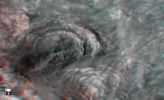
0000b.jpgThe Dawn of "X-Mars": the Dam (edm - High-Def-3D; credits: Dr M. Faccin & Lunar Explorer Italia)248 visiteIn questo extra-detail mgnf (sempre realizzato dal Dr Faccin), la struttura a doppio arco del rilievo si può cogliere in tutta la sua bellezza.
Si tratta di un double-crater ormai in rovina? Secondo noi no. Certo, da qui a dire che si tratta di un rilievo artificiale ci passa la stessa distanza che separa la Terra da Marte, ma un dato a noi pare certo: questa Surface Feature NON E' rappresentativa nè di un cratere "tradizionale" (e cioè "da impatto"), nè di un pozzo da collasso (e cioè il risultato finale di una subsidenza ---> cedimento di una struttura a causa del suo stesso peso).
E' una "Planetary Oddity": una "Stranezza Planetaria", che va osservata e studiata. Tutto qui.MareKromium
|
|
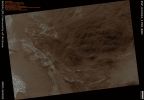
ESP_020932_1700_RED_abrowse-PCF-LXTT.jpgFeatures of Melas Chasma (Absolute Natural Colors; credits for the additional process. and coloring: Dr Paolo C. Fienga - Lunexit Team)248 visitenessun commentoMareKromium
|
|
| 25353 immagini su 2113 pagina(e) |
 |
|
|
|
|
94 | |
|
|
|
|





