| Piú viste |
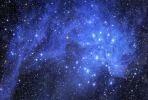
M-045-1.jpgBlue Clouds around the Pleiades70 visite"...Non è la Voce che comanda la Storia: sono le Orecchie che la comandano..."
Italo Calvino
MareKromium
|
|

Meridiani_Planum-PIA13598-PCF-LXTT.jpgOpportunity's "Martian Traverse" through Sol 2442 (Natural Colors; credits for the additional process. and color.: Dr Paolo C. Fienga - Lunexit Team)70 visiteThe white line on this map shows where NASA's Mars Rover Opportunity has driven from the place where it landed in January 2004 - inside Eagle Crater, at the lower left end of the track - to where it reached on the 2442nd Martian Day, or Sol, of its work on Mars (such as December 6, 2010).
The map covers an area about 14 Km (approx. 8,7 miles) wide.
South is at the top.
An Eastward drive of 124 meters (405 feet) on Sol 2442 brought Opportunity to within about 550 meters (1800 feet) of Santa Maria Crater.
Santa Maria, with a diameter about of about 90 meters (295 feet), is nearly as big as Endurance Crater, which Opportunity entered and explored from June to December 2004.
The Sol 2442 drive brought Opportunity's Total Odometry to 25,92 Km (such as 16,11 miles). The long-term destination of the Mission since mid-2008 has been Endeavour Crater, still more than 6 Km (about 3,7 miles) away. The western edge of Endeavour appears in the upper right, including Ridges that are part of the Crater's eroded Rim. This Crater is about 22 Km (approx. 14 miles) in diameter, dwarfing the largest crater that Opportunity has visited so far, Victoria, which is about 800 meters (approx. half a mile) in diameter. Opportunity explored the Rim and interior of Victoria from mid-2006 to mid-2008.
The base map for this traverse map is a mosaic combining images from the High Resolution Imaging Science Experiment camera and the Context Camera, both on NASA's Mars Reconnaissance Orbiter. It is used by Tim Parker of NASA's Jet Propulsion Laboratory, Pasadena, for mapping each of Opportunity's drives based on images taken by the rover after the drive.
Opportunity completed its three-month prime mission in April 2004 and has continued operations in extended missions since then. JPL, a division of the California Institute of Technology in Pasadena, manages the Mars Exploration Rover Project for the NASA Science Mission Directorate, Washington. The University of Arizona, Tucson, operates the High Resolution Imaging Science Experiment. Malin Space Science Systems, San Diego, operates the Context Camera.MareKromium
|
|

Jus_Chasma-PCF-LXTT.jpgFeatures of Jus Chasma (Absolute Natural Colors; credits for the additional process. and color.: Dr Paolo C. Fienga)70 visitenessun commentoMareKromium
|
|

Dunes-Migrating_Dunefield-NoachisTerra-PCF-LXTT.jpgMigrating Dunes in Noachis Terra (Absolute Natural Colors; credits for the additional process. and color.: Dr Paolo C. Fienga - Lunexit Team)70 visitenessun commentoMareKromium
|
|

PSP_005658_1760_RED_abrowse-00-PCF-LXTT.jpgWinslow Crater (CTX Frame - Absolute Natural Colors; credits for the additional process. and color.: Dr Paolo C. Fienga - Lunexit Team)70 visitenessun commentoMareKromium
|
|

Channels-Kasei_Valles-20080528a-PCF-LXTT.jpgKasei Valles (Absolute Natural Colors; additional process.: Dr Paolo C. Fienga - Lunexit Team)70 visitenessun commentoMareKromium
|
|
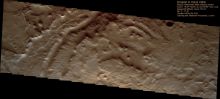
Channels-Indus_Vallis-20070919a-PCF-LXTT.jpgIndus Vallis (Absolute Natural Colors; additional process.: Dr Paolo C. Fienga - Lunexit Team)70 visitenessun commentoMareKromium
|
|
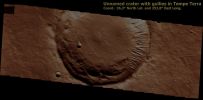
Craters-Unnamed_Crater-TempeTerra-PCF-LXTT.jpgUnnamed Crater in Tempe Terra (Natural Colors; credits for the additional process. and color.: Dr Paolo C. Fienga - Lunexit Team)70 visitenessun commentoMareKromium
|
|

Tempel1-ZZ-ZJ-Stardust_1024-MF-LXTT-HD3D.jpgComet Tempel-1 from Stardust NeXT Spacecraft (Hi-Def-3D; credits for the additional process.: Dr Marco Faccin - Lunexit Team)70 visitenessun commentoMareKromium
|
|
SOL1388-2P249497680EFFAWNSP2552R6M1-PCF-LXTT.jpgDeep Rover Tracks - Sol 1388 (Absolute Natural Colors; credits for the additional process. and color.: Dr Paolo C. Fienga - Lunexit Team)70 visitenessun commentoMareKromium
|
|

ZZ-Mercury-Limb-PIA14250-PCF-LXTT-1.jpgCrescent Mercury (Natural Colors; credits for the additional process. and color.: Dr Paolo C. Fienga - Lunexit Team)70 visiteMercury forms a beautiful crescent shape in this image, acquired as the MESSENGER Spacecraft was high above Mercury's Southern Hemisphere. On the left side is the Terminator, dividing the day from night. On the right side is the sunlit Limb, separating Mercury from the darkness of (the Inner) Space.
This image was acquired as part of MDIS's limb imaging campaign. Once per week, MDIS captures images of Mercury's Limb, with an emphasis on imaging the Southern Hemisphere Limb. These Limb images provide information about Mercury's shape and complement measurements of topography made by the Mercury Laser Altimeter (MLA) of Mercury's Northern Hemisphere.
On March 17, 2011 (March 18, 2011, UTC), MESSENGER became the first Spacecraft ever to orbit the planet Mercury. The mission is currently in its commissioning phase, during which Spacecraft and instrument performance are verified through a series of specially designed checkout activities. In the course of the one-year primary mission, the Spacecraft's 7 scientific instruments and radio science investigation will unravel the history and evolution of the Solar System's innermost Planet.
Date acquired: May, 24th, 2011
Image Mission Elapsed Time (MET): 214697006
Image ID: 290397
Instrument: Wide Angle Camera (WAC) of the Mercury Dual Imaging System (MDIS)
WAC filter: 7 (748 nanometers)
Center Latitude: 53,01° South
Center Longitude: 116,7° East
Resolution: 2827 meters/pixel
Scale: Mercury's radius is about 2440 Km (approx. 1520 miles)MareKromium
|
|

Saturn-PIA12825.jpgSaturnian Storm (False Colors; credits: NASA/JPL-Caltech/Space Science Institute)70 visiteCaption NASA:"These false-color images from NASA's Cassini Spacecraft chronicle a day in the life of a huge storm that developed from a small spot that appeared 12 weeks earlier in Saturn's Northern Mid-Latitudes.
This storm is the largest and most intense observed on Saturn by NASA's Voyager or Cassini Spacecraft. The storm is still active. As seen in these and other Cassini images, the storm encircles the Planet - whose circumference at these latitudes is approx. 186.000 miles (about 300.000 Km).
From North to South, it covers a distance of about 9000 miles (approx. 15.000 Km), which is one-third of the way around the Earth. It encompasses an area of about 1,5 BSMs (Billion Square Miles - such as approx. 4 BSKM), or eight times the surface area of Earth. This storm is about 500 times the area of the biggest of the Southern Hemisphere storms observed by Cassini.
The highest clouds in the image are probably around 100 millibars pressure, or 60 miles (approx. 100 Km) above the regular undisturbed clouds. These false colors show clouds at different altitudes. Clouds that appear blue here are the highest and are semitransparent, or optically thin. Those that are yellow and white are optically thick clouds at high altitudes. Those shown green are intermediate clouds. Red and brown colors are clouds at low altitude unobscured by high clouds, and the deep blue color is a thin haze with no clouds below. The base of the clouds, where lightning is generated, is probably in the water cloud layer of Saturn's Atmosphere. The storm clouds are likely made out of Water Ice covered by crystallized Ammonia.
Taken about 11 hours -- or one Saturn day -- apart, the two mosaics in the lower half of this image product consist of 84 images each. The mosaic in the middle was taken earlier than the mosaic at the bottom. Both mosaics were captured on Feb. 26, 2011, and each of the two batches of images was taken over about 4,5 hours.
Two enlargements from the earlier, middle mosaic are shown at the top of this product. The white lines below the middle mosaic identify those parts of the mosaic that were enlarged for these close-up views. The enlargement on the top left shows the head of the storm, and that on the top right shows the turbulent middle of the storm. Cassini observations have shown the head of the storm drifting West at a rate of about 2,8° of Longitude each Earth day (28 meters per second, or 63 miles per hour). The central latitude of the storm is the site of a Westward jet, which means that the clouds to the North and South are drifting Westward more slowly or even drifting eastward. In contrast, clouds at Saturn's Equator drift Eastward at speeds up to 450 meters per second (about 1000 miles per hour).
Both of the long mosaics cover an area ranging from about 30° to 51° North Latitude. The views stretch from about 138° (on the left) to 347° West Longitude (on the right), passing through 360/0° West Longitude near the far right of the mosaics.
The images were taken with the Cassini Spacecraft narrow-angle camera using a combination of spectral filters sensitive to wavelengths of Near-InfraRed light. The images filtered at 889 nanometers are projected as blue. The images filtered at 727 nanometers are projected as green, and images filtered at 750 nanometers are projected as red.
The views were acquired at a distance of approx. 1,5 MMs (such as about 2,4 MKM) from Saturn and at a Sun-Saturn-Spacecraft Angle (i.e.: Phase Angle) of 62°. Both the top and bottom images are simple cylindrical map projections, defined such that a square pixel subtends equal intervals of Latitude and Longitude. At higher Latitudes, the pixel size in the North-South direction remains the same, but the pixel size in the East-West direction becomes smaller. The pixel size is set at the Equator, where the distances along the sides are equal. The images of the long mosaics have a pixel size of 33 miles (53,108 Km) at the Equator, and the two close-up views have a pixel size of 6 miles (9,656 Km) per pixel at the equator".MareKromium
|
|
| 25353 immagini su 2113 pagina(e) |
 |
|
|
|
|
939 | |
|
|
|
|





