| Piú viste |

SOL0421-PIA07457_fig1.jpgDistant Winds - Sol 421 (Absolute Natural Colors; credits for the additional process. and color.: Dr Paolo C. Fienga - Lunexit Team)70 visitenessun commentoMareKromium
|
|

Titan-N00156687-88-89-MF-PCF-LXTT.jpgWatching through the Fog... (Absolute Natural Colors; credits for the additional process. and color.: Drr Marco Faccin and Paolo C. Fienga - Lunexit Team)70 visitenessun commentoMareKromium
|
|

OPP-SOL2298-1P332189464ESFAKVTP2364L6M1.jpgHorizon - Sol 2298 (Natural Colors; credits for the additional process. and color.: Lyle.org & Paolo C. Fienga - Lunexit Team)70 visitenessun commentoMareKromium
|
|

Solar_Corona-TSE2010_JLD4.jpgThe "Crown" of the Sun70 visiteDalla Rubrica "NASA - Picture of the Day" del giorno 21 Luglio 2010:"During a total Solar Eclipse, the Sun's extensive Outer Atmosphere, or Corona, is an inspirational sight. Subtle shades and shimmering features that engage the eye span a brightness range of over 10,000 to 1, making them notoriously difficult to capture in a single photograph.
But this composite of 7 consecutive digital images over a range of exposure times comes close to revealing the Crown of the Sun in all its glory. The telescopic views were recorded from the Isla de Pascua (Easter Island) during July, 11th, 2010 Total Solar Eclipse and also show solar prominences extending just beyond the edge of the eclipsed Sun.
Remarkably, features on the dim, Near Side of the New Moon can also be made out, illuminated by Sunlight reflected from a Full Earth".MareKromium
|
|
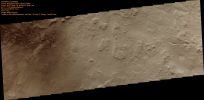
Craters-Unnamed_Crater-MO.jpgUnnamed Crater with Dunefield (Natural Colors; credits for the additional process. and color.: Dr Paolo C. Fienga - Lunexit Team)70 visitenessun commentoMareKromium
|
|
Enceladus-N00160966-N00160995-GB-LXTT3.gifClosing-up on the Enceladian "Fountains of Light" (a GIF-Movie by Dr Gianluigi Barca - Lunexit Team)70 visitenessun commentoMareKromium
|
|

Enceladus-N160990-91-93-EB-LXTT.jpgIs there any "Luminescence" over the "Tiger Stripes"? (Superdefinition; credits for the additional process. and color.: Elisabetta Bonora - Lunexit Team)70 visitenessun commentoMareKromium
|
|
PSP_003234_2210-PCF-LXTT1.jpgThe "Face on Mars" (Natural Colors; credits for the additional process. and color.: NASA/JPL and Dr Paolo C. Fienga - Lunexit Team)70 visitenessun commentoMareKromium
|
|
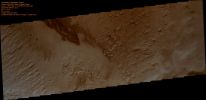
Craters-Danielson_Crater-Dunefield-PIA13328.jpgDunes inside Danielson Crater (Natural Colors; credits for the additional process. and color.: Dr Paolo C. Fienga - Lunexit Team)70 visitenessun commentoMareKromium
|
|
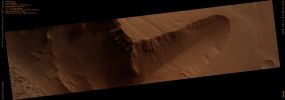
ESP_018374_1740_RED_abrowse.jpgWest Candor (Natural Colors; credits: Dr Paolo C. Fienga - Lunexit Team)70 visitenessun commentoMareKromium
|
|
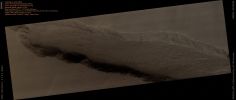
PSP_004412_1715_RED_abrowse-PCF-LXTT.jpgArsia "Dusty" Layers (Absolute Natural Colors; credits for the additional process. and color.: Dr Paolo C. Fienga - Lunexit Team)70 visiteThis image covers a Pit in the lower West Flank of Arsia Mons, one of the 4 giant Volcanos of the Tharsis Region.
Many Layers are exposed in the Pit, probably marking individual Lava Flows that overlapped (meaning: ONE Layer - ONE Flow), and provide information about the nature of the volcanic eruptions. This image was acquired in the middle of large regional Dust Storms on Mars, but the Atmosphere over this image is only moderately dusty because the altitude is 6,5 Km higher than the Planetary Mean (-----> media altitudine planetaria), so the air is quite thin and cannot hold as much Dust.
Although the Atmosphere is not too dusty, the Surface is buried by a Dust Layer that might be meters thick. These high-altitude locations on Mars have thick Dust Deposits because the thin air cannot blow away the Dust, or at least not as fast as it accumulates. On Earth the Oceans serve as "Dust Traps", while on Mars such Traps are the highest Volcanoes. MareKromium
|
|

SOL354-MF-LXTT-1.jpgEffects of Abrasion - Sol 354 (an Image-Mosaic in Natural Colors by Dr Marco Faccin - Lunexit Team)70 visitenessun commentoMareKromium
|
|
| 25353 immagini su 2113 pagina(e) |
 |
|
|
|
|
938 | |
|
|
|
|





