| Piú viste |
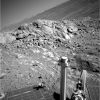
SOL210-2N145017053EFF8500P1742L0M1.jpgThe Martian Mound: close observation (4) - Sol 21070 visitenessun commento
|
|

M-015-1.jpgM 15 - Globular Star Cluster70 visite"...Omnes, si ad originem primam revocantur, a coelis sunt..."
(Seneca)
"...Tutti noi, se ci riportiamo alla prima origine, veniamo dai Cieli..."
|
|

M-105-1.jpgM 105 - A Group of Galaxies70 visite"...Spiritus quidem promptus est, caro autem infirma..."
(S. Matteo, 26, 41)
"...Lo Spirito può anche essere (rimanere) giovane, ma la carne invecchia..."
|
|

M-053-1.jpgM 53 (NGC 5024) - Globular Star Cluster70 visite"...Amicitiam trahit Amor..."
(Proverbio medievale)
"...L'Amore conduce all'Amicizia..."
|
|

M-063-1.jpgM 63 (NGC 5055) - The "Sunflower" Galaxy70 visite"...Splendida era l'Estate, ed il profumo della campagna, e dei girasoli.
Splendida eri tu: fiammeggianti i tuoi occhi, il tuo sorriso, la tua pelle..."
P.C. Floegers - "Poesie"
|
|

OPP-SOL206-1N146479214EFF35B8P0141R0M1.jpgDeep inside Endurance Crater (detail mgnf)70 visitenessun commento
|
|

OPP-SOL203-1N146206602EFF3566P1981R0M1.jpgDunes inside Endurance Crater (detail mgnf) - Sol 20370 visitenessun commento
|
|

OPP-SOL204-1N146292625EFF3570P1977L0M1.jpgTracks on the slope of Endurance Crater - Sol 20470 visitenessun commento
|
|

OPP-SOL207-1N146560905EFF35B8P0643L0M1.jpgA global view of Endurance Crater and its Dunes (1) - Sol 20770 visitenessun commento
|
|

Io-Eruption-PIA02545.jpgEruption on Tvashtar Catena70 visiteAn active volcanic eruption on Jupiter's moon Io was captured in this image taken on February 22, 2000 by NASA's Galileo spacecraft. Tvashtar Catena, a chain of giant volcanic calderas centered at 60 degrees north, 120 degrees west, was the location of an energetic eruption caught in action in November 1999. A dark, "L"-shaped lava flow to the left of the center in this more recent image marks the location of the November eruption. White and orange areas on the left side of the picture show newly erupted hot lava, seen in this false color image because of infrared emission. The two small bright spots are sites where molten rock is exposed to the surface at the toes of lava flows. The larger orange and yellow ribbon is a cooling lava flow that is more than more than 60 kilometers (37 miles) long. Dark, diffuse deposits surrounding the active lava flows were not there during the November 1999 flyby of Io.
This color mosaic was created by combining images taken in the near-infrared, clear, and violet filters from Galileo's camera. The range of wavelengths is slightly more than that of the human eye. The mosaic has been processed to enhance subtle color variations. The bright orange, yellow, and white areas at the left of the mosaic use images in two more infrared filters to show temperature variations, orange being the coolest and white the hottest material. This picture is about 250 kilometers (about 155 miles) across. North is toward the top and illumination from the Sun is from the west (left).
|
|

Io-Southern Limb and light-PIA02250.jpgThe Southern Limb of Io and a possible "Transient Phoenomenon"70 visiteUn'immagine interessantissima del bordo dell'emisfero sud di Io. Elevatissimo dettaglio e grande suggestione del paesaggio. Io è un mondo violento ed in costante tumulto: il numero di vulcani attivi su questo Pianeta è elevatissimo (gli ultimi dati in nostro possesso parlavano di 6 vulcani attivi contemporaneamente), dunque non ci meravigliamo se vediamo delle flares, come quella alla Dx di questo frame, splendere nel buio. Potrebbe trattarsi di un outgassing: un classico fenomeno transitorio.
Original caption:"NASA's Galileo spacecraft captured this dramatic image of mountains on Io in February 2000. The image was taken when the Sun was low in the sky, illuminating the scene from the left, so it reveals topographic details of Io's surface. A low scarp, roughly 250 meters (820 feet) high, runs from the upper left toward the center of the image. Mongibello Mons, the jagged ridge at the left of the image, rises 7 kilometers (23,000 feet) above the plains of Io, higher than any mountain in North America. Few of Io's mountains (see also PIA02526) resemble volcanoes. Instead, Galileo scientists believe that the mountains are formed when blocks of Io's crust are uplifted along thrust faults. Angular mountains are thought to be younger, while older mountains have more subdued topography, such as the rise near the top center of this image.
The image has a resolution of 335 meters (1,100 feet) per picture element. North is to the top of the image.
|
|

Triton-PIA02214_modest.jpgTriton from Voyager 2 (false colors)70 visiteCaption NASA originale:"This false color image of Triton is a composite of images taken through the violet, green and ultraviolet filters. The image was taken early on Aug. 25, 1989 when Voyager 2 was about 190.000 Km (118.000 miles) from Triton's surface. The smallest visible features are about 4 Km(2,5 miles) across. The image shows a geologic boundary between completely dark materials and patchy light/dark materials. A layer of pinkish material stretches across the center of the image. The pinkish layer must be thin because underlying albedo patterns show through. Several features appear to be affected by the thin atmosphere; the elongated dark streaks may represent particulate materials blown in the same direction by prevailing winds and the white material may be frost deposits".
|
|
| 25353 immagini su 2113 pagina(e) |
 |
|
|
|
|
928 | |
|
|
|
|





