| Piú viste |
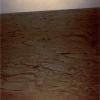
OPP-SOL1682-1P277505130EFF91G3P2367R1M1.jpgEtched Terrain near Victoria - Sol 1682 (possible natural colors; credits: Lunexit)71 visitenessun commentoMareKromium
|
|
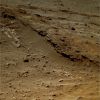
SOL937-3.jpgMartian "Reef"? - Sol 937 (natural colors; credits: Dr G. Barca & Lunexit)71 visitenessun commentoMareKromium
|
|
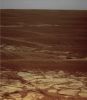
OPP-SOL1716-1P280529844ESF94B2P2280L2M1.jpgPaving and Ripples on the way to Endeavour (2) - Sol 1716 (tri-chromatic version; credits: Lunexit)71 visiteMareKromium
|
|

Craters-Unnamed_Crater_in_Sirenum_Fossae-20071121a-PCF-LXTT.jpgUnnamed Crater in Sirenum Fossae (Darkened and Enhanced Absolute Natural Colors; credits for the additional process. and color.: Dr Paolo C. Fienga - Lunar Explorer Italia)71 visiteCaption NASA:"This Unnamed Crater is located in near Sirenum Fossae and some of its modifications may be related to the tectonic activity that created the Fossae System. The Floor of this Unnamed Crater has be changed drastically from its original appearance". MareKromium
|
|

PSP_009311_1735_RED.jpgPeri-Equatorial Surface Features (possible True Colors; credits: Lunar Explorer Italia)71 visiteMars Local Time: 15:27 (early afternoon)
Coord. (centered): 6,5° South Lat. and 33,9° East Long.
Spacecraft altitude: 264,3 Km (such as about 165,2 miles)
Original image scale range: 26,4 cm/pixel (with 1 x 1 binning) so objects ~52,9 cm across are resolved
Map projected scale: 25 cm/pixel
Map projection: EQUIRECTANGULAR
Emission Angle: 3,0°
Phase Angle: 57,1°
Solar Incidence Angle: 59° (meaning that the Sun is about 31° above the Local Horizon)
Solar Longitude: 101,9° (Northern Summer)
Credits: NASA/JPL/University of Arizona
Additional process. and coloring: Lunar Explorer ItaliaMareKromium
|
|

Psp_009794_1875_red.jpgRelatively Fresh (and Rayed) Crater, Windstreaks and Fissure in Cerberus Fossae (Saturated Natural Colors; credits for the additional process. and color.: Dr Paolo C. Fienga - Lunar Explorer Italia)71 visiteMars Local Time: 15:29 (early afternoon)
Coord. (centered): 7,4° North Lat. and 165,3° East Long.
Spacecraft altitude: 274,7 Km (such as about 171,7 miles)
Original image scale range: 27,5 cm/pixel (with 1 x 1 binning) so objects ~82 cm across are resolved
Map projected scale: 25 cm/pixel
Map projection: EQUIRECTANGULAR
Emission Angle: 0,1°
Phase Angle: 52,4°
Solar Incidence Angle: 52° (meaning that the Sun is about 38° above the Local Horizon)
Solar Longitude: 119,1° (Northern Summer)
Credits: NASA/JPL/University of Arizona
Additional process. and coloring: Lunar Explorer ItaliaMareKromium
|
|

Psp_009802_1700_red.jpgGanges Cavus' Walls and Interior (possible True Colors; credits: Lunar Explorer Italia)71 visiteMars Local Time: 15:30 (middle afternoon)
Coord. (centered): 9,9° South Lat. and 308,4° East Long.
Spacecraft altitude: 264,1 Km (such as about 165,1 miles)
Original image scale range: 26,4 cm/pixel (with 1 x 1 binning) so objects ~52,8 cm across are resolved
Map projected scale: 25 cm/pixel
Map projection: EQUIRECTANGULAR
Emission Angle: 8,3°
Phase Angle: 67,2°
Solar Incidence Angle: 61° (meaning that the Sun is about 29° above the Local Horizon)
Solar Longitude: 119,4° (Northern Summer)
Credits: NASA/JPL/University of Arizona
Additional process. and coloring: Lunar Explorer ItaliaMareKromium
|
|
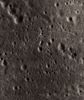
L-Original_Lunar_Orbiter_Frames-LO1-1098-02_med~0.jpgOriginal Lunar Orbiter - Frame LO1-1098 (ctx frame - the "Full" Area in Natural Colors; credits: Lunar Explorer Italia)71 visitenessun commentoMareKromium
|
|

Mimas-PIA10548.jpgMimas over the Rings (possible True Colors credits: Lunar Explorer Italia71 visiteCaption NASA:"Gray Mimas appears to hover above the colorful Rings. The large crater seen on the right side of the moon is named for William Herschel, who discovered Mimas in 1789.
The image was taken using red, green and blue spectral filters; it was acquired with the Cassini Spacecraft narrow-angle camera on Sept. 9, 2007 at a distance of approx. 3,1 MKM (such as about 1,9 MMs) from Mimas and at a Sun-Mimas-Spacecraft, or Phase, Angle of 34°. Image scale is roughly 19 Km (about 12 miles) per pixel".MareKromium
|
|
OPP-SOL1604-MF.jpgLook: Opportunity is VERY clean! - Sol 1602 (Natural Colors; credits for the additional process. and color.: Dr Marco Faccin - Lunexit Team)71 visitenessun commentoMareKromium
|
|

ESP_011618_1885_RED_abrowse-01.jpgRecent Double-Impact (edm - possible Natural Colors; credits: Lunar Explorer Italia)71 visiteThe MRO Context Imager (CTX) team has been discovering many new impact events on Mars, and then they request HiRISE follow-up imaging to confirm an impact origin and to identify and measure the craters.
Crater clusters are common as these small (typically less than 1 meter diameter) objects break up in the thin Martian air and separate a little bit to make crater clusters up to a few hundred meters wide. The example shown here is the result of an impact that occurred between May 2003 and September 2007.
It was first discovered as a dark spot in a CTX image acquired in March 2008, but later found to be partly visible at the very edge of a CTX image acquired in September 2007.
A dark spot is not present in the previous image of this location with sufficient resolution to have detected it, acquired by the visible THEMIS camera on Mars Odyssey in May 2003. Thus the impact might have formed anytime between May 2003 and September 2007. The dark markings are created by removing or disturbing the surficial dust cover, and so far new impact sites have been discovered only in dust-covered regions of Mars.
Although small Martian crater clusters are common, this example is unusual because there is a dark line between the two largest craters. We hypothesize that atmospheric breakup coincidentally made two nearly equal-size objects that impacted close together in space and time so the air blasts interacted with each other to disturb the dust along this line.
Hundreds of these small objects (mostly asteroid fragments) impact Mars per year. A comparable number of small objects impact Earth each year, but explode in the upper reaches of our atmosphere and have no effect on the surface, fortunately for those of us who live here.MareKromium
|
|

UranusfromHST-2.JPGUranus, from HST (Natural, but enhanced, Colors; credits: NASA)71 visitenessun commentoMareKromium
|
|
| 25353 immagini su 2113 pagina(e) |
 |
|
|
|
|
922 | |
|
|
|
|





