| Piú viste |
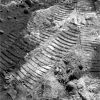
SOL404-2P162233725EFFA618P2559R1M1.jpgRover's tracks (2)71 visitevedi il commento al frame che precede
|
|

Saturn-dragonstorm_cassini_full.jpgSaturn "dragon-storm" (false colors/near infrared)71 visiteDa "NASA - Picture of the Day" del 25 Febbraio 2005:"Dubbed the "Dragon Storm", convoluted, swirling cloud features are tinted orange in this false-color, near-infrared image of Saturn's Southern Hemisphere. In one of a series of discoveries announced by Cassini researchers, the Dragon Storm was found to be responsible for mysterious bursts of radio static monitored by Cassini instruments during the last year as the spacecraft orbited the ringed planet. The storm is now thought to be a giant Saturnian thunderstorm, like storms on Earth, with radio noise produced in high-voltage lightning discharges. The Cassini observations are also consistent with the Dragon Storm being a long-lived storm, deep within the gas giant's atmosphere, that periodically flares-up to produce large, visible storm regions".
|
|
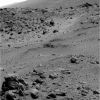
SOL411-2P162854153EFFA800P2269L5M1.jpgUnusual rocks (?) around Spirit (4) - The "Nest", again! - Sol 41171 visiteCambio di filtro/colore per questa nuova ripresa (crediamo che si tratti del filtro 7), ma nessun cambio di opinione da parte nostra: questo cumulo di pietre non ci sembra affatto naturale. E' troppo lineare, geometrico e razionale... Con questo, però, non vogliamo dire che la Natura non sia lineare, geometrica e razionale:diciamo solo che, pur usando tutta la prudenza possibile, a noi non pare che Spirit stia fotografando un semplice "rock outcrop". Tutto qui.
|
|
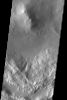
Craters-Unnamed_Crater_in_Deuteronlius_Mensae-PIA07452.jpgCentral Peak Crater in Deuteronlius Mensae (Original NASA/JPL/ASU b/w Frame)71 visiteCaption NASA originale:"This image is located in Deuteronlius Mensae and contains a Central Peak in the middle of an older, flat-floored Unnamed Crater, infilled by Sediment".
Notate il picco centrale, fortemente deteriorato, e poi mettetelo a confronto con le immagini della Sfinge di Marte: dovreste notare che esistono delle (leggere) similitudini. Allora noi ci domandiamo, alla luce di quest'ultimo particolare (ultimo di una LUNGA serie...), se la NASA stia cercando di smontare in maniera radicale e definitiva la "Leggenda di Cydonia" riprendendo altri rilievi curiosi (pensate ai frames THEMIS ART MONTH p.e.) ma indubitabilmente di origine naturale, oppure se, effettivamente, il fatto di vedere un rilievo dall'alto e da una certa angolazione può essere (come noi crediamo che sia!) una fonte costante di sviste clamorose ed alle quali nessuno (neppure il Prof. Hoagland & Co.) è davvero immune.
E speriamo che i sostenitori dell'artificialità della "Faccia di Marte" non si arrabbino troppo con noi...
|
|

Craters-Unnamed_Crater_with_Windstreak-PIA07508-00.jpgUnnamed Crater with Windstreak (Original NASA/MGS/MSSS b/w Frame)71 visiteCaption NASA originale:"This MGS-MOC image shows a 1,2 Km North Mid-Latitude Unnamed Crater with a bright Windstreak".
Location near: 30,8° North Lat. and 131,8° West Long.
Image width: ~3 Km (~1,9 mi)
Illumination from: lower left
Season: Northern Summer
|
|

NGC-3628.jpgNGC 3628 - Spiral Galaxy71 visite"...For all things are yours, whether Paul or Apollos or Cephas or the World of Life or Death or the Present or the Future - all belong to you, and you belong to Christ, and Christ belongs to God..."
1 Corinthians 3:21-23
|
|

Asteroids_from_HST-00.jpgAsteroids, from HST (1)71 visiteCaption NASA originale da "NASA - Picture of the Day" del 18 Aprile 2005:"Rocks from space hit Earth every day. The larger the rock, though, the less often Earth is struck. Many kilograms of space dust pitter to Earth daily. Larger bits appear initially as a bright meteor. Baseball-sized rocks and ice-balls streak through our atmosphere daily, most evaporating quickly to nothing. Significant threats do exist for rocks near 100 meters in diameter, which strike the Earth roughly every 1000 years. An object this size could cause significant tsunamis were it to strike an ocean, potentially devastating even distant shores. A collision with a Massive asteroid, over 1 Km across, is more rare, occurring typically millions of years apart, but could have truly global consequences".
|
|

OPP-SOL437-04272005_tinyCrators.jpgThe comments af NASA about the "mini-craters" - Sol 43771 visiteE' con grande soddisfazione che riportiamo i commenti ufficiali NASA sulla scoperta dei 2 mini-crateri di Meridiani poichè, come potrete verificare, le loro supposizioni combaciano con le nostre. Questa piccola - ma significativa - identità di vedute ci conforta sulla validità delle nostre conoscenze scientifiche e capacità deduttive e ci spinge inoltre a proseguire, con sempre nuovi entusiasmi, nella ricerca di qualche tassello ulteriore da inserire nel mosaico del passato, del presente e, forse, anche del futuro del Pianeta Rosso.
Caption NASA:"Given that these 2 craters haven't been covered by sand even though they are surrounded by sand ripples on a flat plain lends support to the idea that they're fairly recent. Of course recent might mean any time from yesterday to 100 MY ago. Both are impact craters formed either by an object from space that was large enough to make it through the Martian atmosphere without burning up or by rock fragments ejected from a larger crater (...)" - M. Golombek - NASA.
|
|

NGC-1851-PIA07908_modest.jpgNGC 1851 - Globular Star Cluster in Columba Constellation71 visite"...Fantasy deals with things that are not and cannot be. Science fiction deals with thing that can be and that, some day, will be..."
Frederic Brown (1906 - 1972) - "Angels and Spaceships" (1955)
|
|
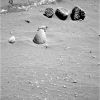
SOL483-2P169243029EFFAAB2P2591R1M1.jpg"Cone-Rock" and other stones71 visitenessun commento
|
|
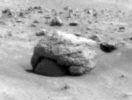
SOL485-3-2P169421624EFFAAB2P2419L2M1.jpgCoated rock: possible Anomaly (detail mgnf) - Sol 485 (2)71 visiteEcco il dettaglio. L'immagine è stata ripresa usando il filtro/colore n. 2 alle ore 13:31:16 MLT.
Vi suggeriamo di guardare che cosa succede alla "coated rock" allorchè viene utilizzato il filtro/colore n. 7...
|
|

SOL061-09-sg-02-mickey-A061R1.jpgHumphrey and the 'Magic Stone' - Sol 6171 visiteHumphrey è stato piallato, ripulito e leggermente eroso dal RAT (Rock Abrasion Tool) del Rover - i tre cerchi scuri che appaiono be visibili in alto, quasi sulla 'testa' di Humphrey, sono inequivocabili.
Così come inequivocabile è la nuova trasformazione di Magic Stone che, ancora una volta, ci mostra la sua protuberanza rocciosa mentre si sporge da un'ampia crepa che contraddistingue il lato suo frontale.
Noi, tempo fa, quando commentammo questa sequenza per la prima volta, alla fine optammo per l'illusione ottica, cagionata dai cambi di filtro/colore e dai cambi di prospettiva. Oggi, ad oltre un anno di distanza ed alla luce delle innumerevoli - e similari - stranezze che abbiamo visto su Marte e che sono tutte rimaste ignorate dalla NASA e dai media - anche quelli di settore - ci siamo ricreduti: Magic Stone è una roccia anomala e ciò che le accade è inspiegabile. Se un 'trucco' c'è, allora è Made in NASA; se non c'è trucco, allora Magic Stone NON E' una roccia.
Le Vostre opinioni saranno benvenute.
|
|
| 25353 immagini su 2113 pagina(e) |
 |
|
|
|
|
913 | |
|
|
|
|





