| Piú viste |

NGC-4676.jpgNGC 4676 - Interacting Galaxies (HST)71 visite"...Ci sono eventi, nel Cosmo, che la Scienza non può spiegare. Galassie che collidono, Stelle che implodono, Sistemi in equilibrio instabile che passano intatti attraverso le ere e Lune tranquille che, improvvisamente, sfuggono alle loro orbite e si perdono nell'Infinito. Forse, in qualche modo ed in qualche misura, anche i Corpi Celesti obbediscono ad impulsi primordiali, superiori a quelle che noi chiamiamo Leggi Universali. Noi sappiamo che l'Universo "vive", ma l'Universo è, in sè, "vivo"?!?..."
P.C. Floegers - "Conversations"
|
|
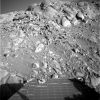
SOL205-2N144577475EFF8200P1746L0M1.jpgThe Martian Mound: close observation (1) - Sol 20571 visiteDopo tanti giorni passati ad osservare da una certa distanza ed a fare speculazioni, ecco che il Rover Spirit è a meno di 2 metri da questo strano terrapieno che, come accennavamo in passato, ci ricorda una struttura similare scoperta e fotografata sulla Luna, durante la Missione Apollo 12. Noi crediamo che la configurazione assunta dalle rocce che formano il terrapieno possa non essere frutto di un accatastamento determinato dal concorso, simultaneo o protratto nel tempo, di cause naturali (tipo frane...
|
|

M-026-1.jpgM 26 - Open Star Cluster71 visite"...La Scienza Convenzionale non può esistere senza il Tempo: Essa ne ha un'assoluta necessità, anche se non lo comprende. Ogni Postulato, al pari di ogni Teoria, si fonda sull'assunto per cui tutta quanta la realtà che percepiamo (e, dunque, anche il Tempo) si muove secondo un flusso lineare e coerente di cause ed effetti, che noi chiamiamo "Continuum". Bisogna ammettere che la costruzione è affascinante. E' un vero peccato che non esista nessun Continuum..."
P.C. Floegers - "In the Paradox"
|
|

M-063-1.jpgM 63 (NGC 5055) - The "Sunflower" Galaxy71 visite"...Splendida era l'Estate, ed il profumo della campagna, e dei girasoli.
Splendida eri tu: fiammeggianti i tuoi occhi, il tuo sorriso, la tua pelle..."
P.C. Floegers - "Poesie"
|
|

M-099-1.jpgM 99 (NGC 4254) - Irregular Spiral Galaxy71 visite"...Ulteriora mirari, presentia sequi..."
(Tacito)
"...(è cosa saggia) guardare al futuro, ma (è cosa più saggia) tenere a mente il presente..."
|
|

Jupiter_s limb-Gal-PIA00896_modest.jpgJupiter's limb, from Galileo71 visiteCaption NASA originale:"North is at the top. The images are projected on a sphere, with features being foreshortened towards the north. The planetary limb runs along the right edge of the mosaic. Cloud patterns appear foreshortened as they approach the limb. The smallest resolved features are tens of kilometers in size. These images were taken on April 3, 1997, at a range of 1.4 MKM by the Solid State Imaging system (CCD) on NASA's Galileo spacecraft".
|
|

SOL229-Mosaic-PIA06838_modest.jpgEastward from the "West Spur" of the "Columbia Hills"71 visitePlanetary scientists got excited when they saw this imagery coming in from NASA's Mars Exploration Rover Spirit because they could see hints of rock strata and other interesting geologic features ahead. In the middle of this image, from upper left to the lower right, lies a trough that resembles a small ravine. To the right of that and a little way up the hill, beyond a rock-strewn surface, sits a small rounded ridge. Fine horizontal streaks, just perceptible in this image, suggest possible layering in the bedrock. Above that are rock features that appear to drape across the slopes. Scientists are discussing whether to take the rover closer or select other interesting targets for further study.
|
|

IDA&DACTYL-PIA00333.jpgIda and Dactyl in "natural colors"71 visiteThis color picture is made from images taken by the imaging system on the Galileo spacecraft about 14 minutes before its closest approach to asteroid 243 Ida on August 28, 1993. The range from the spacecraft was about 10,500 kilometers (6,500 miles). The images used are from the sequence in which Ida's moon was originally discovered; the moon is visible to the right of the asteroid. This picture is made from images through the 4100-angstrom (violet), 7560 A (infrared) and 9680 A (infrared) filters. The color is 'enhanced' in the sense that the CCD camera is sensitive to near infrared wavelengths of light beyond human vision; a 'natural' color picture of this asteroid would appear mostly gray. Shadings in the image indicate changes in illumination angle on the many steep slopes of this irregular body as well as subtle color variations due to differences in the physical state and composition of the soil (regolith).
|
|

VE-Caliban.jpgCaliban71 visiteUna "Luna Minore" di Urano, Calibano, persa fra le stelle ed individuabile solo grazie alla "cerchiatura" bianca inserita in questa (comunque molto bella) immagine.
|
|
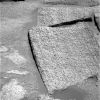
OPP-SOL307-1P155433729EFF38EVP2555R1M1.jpgTipuna Rock and "water on Mars" (4) - H. 11:42 MLT - SOL 30771 visiteSe la piccola chiazza grigia che vediamo alla base di Tipuna è effettivamente una piccola pozza d'acqua, allora dobbiamo assumere che quest'acqua sgorga direttamente dalle pareti di Endurance. Il che vuol dire che, da qualche parte, sulle pareti di Endurance, c'è una sorgente. Ma se questa sorgente esiste e da essa "sgorga dell'acqua", come mai la forma e le dimensioni della "pozzanghera", a distanza di ore ed ore tra un frame e l'altro, non cambiano mai? Insomma: Marte forse non è gelido come dicono alla NASA, ma è certamente (ed ovviamente) molto più freddo della Terra. Assumendo che l'acqua in questione sia liquida e corrente solo per alcune (poche) ore del giorno (salvo poi ghiacciare, dal pomeriggio alla tarda mattinata del giorno seguente) dovremmo - proprio in virtù di questo fatto - notare delle consistenti differenze fra le dimensioni e la luminosità della pozzanghera tra un frame e l'altro. Differenze che, invece, NON si vedono!
|
|

SOL305-1-site_A89_CY_navcam_360_cyp_L-A365R1_br2.jpgWest Spur: 360° panorama on Sol 305 (1)71 visiteCaption NASA originale:"Spirit was climbing the "West Spur" of the "Columbia Hills." The Rover had just finished inspecting a rock called "Lutefisk" and was heading uphill toward an area called "Machu Picchu." Spirit used its navigational camera to take the images combined into this mosaic. The Rover's location when the images were taken is catalogued as the mission's site 89, position 205".
|
|

40-Ranger8.jpgMare Tranquillitatis and Sabine Crater71 visiteCaption NASA originale:"Ranger 8 image of the Mare Tranquillitatis (Sea of Tranquillity) area of the Moon taken from 511 Km about 4 minutes before surface impact. The 30 Km diameter Sabine crater is at upper left. Note the two linear features at the center of the frame and rugged region at the bottom. The frame is about 95 Km across and North is up. The Apollo 11 landing site is about 30 Km to the right of this area (Ranger 8, B045)".
Location & Time Information
Date/Time (UT): 1965-02-20 T 09:53:42
Distance/Range (km): 511.27
Central Latitude/Longitude (deg): +00.38, 021.03 E
Orbit(s): Impact - Hard Landing
|
|
| 25353 immagini su 2113 pagina(e) |
 |
|
|
|
|
910 | |
|
|
|
|





