| |
| Piú viste |
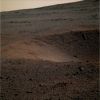
OPP-SOL3019-GB-LXTT-IPF.jpgLooking Around... - Sol 3019 (RAW Natural Colors; credits for the additional process. and color.: Dr Gianluigi Barca - Lunexit Team)72 visitenessun commentoMareKromium
|
|

SOL0014-EB-MF-LXTT-IPF.jpgClose-up at Gale: Salt? - Sol 14 (RAW Natural Colors; credits for the additional process. and color.: Elisabetta Bonora and Marco Faccin/Lunar Explorer Italia/Italian Planetary Foundation)72 visitenessun commentoMareKromium
|
|

ZZ-Mercury-Craters-Eitoku_Crater-PIA16361-PCF-LXTT.jpgEitoku Crater (Absolute Natural Colors; credits for the additional process. and color.: Dr Paolo C. Fienga/Lunar Explorer Italia/Italian Planetary Foundation)72 visiteThe main and really impressive Impact Crater visible in this NASA - MESSENGER Spacecraft image, Eitoku (which has a diameter of approx. 100 Km - such as about 62 miles) , displays several (almost) Central Peaks that appear especially prominent due to the high Solar Incidence Angle (meaning that the Sun was setting onto the imaged Local Horizon at the time that this picture was taken - and therefore the shadows of each and every Mercurian relief resulted way more visible - i.e.: longer - and suggestive) as well as to the fact that this frame has not been Map Projected. Note that Central (and/or almost Central, like in this case) Peaks are a relatively common Feature in Mercury's larger Impact Craters. Note, also, that the smaller Impact Craters visible on the Floor and Rim (which, on its side, appears quite degraded) of Eitoku Crater indicate/suggest that we are actually looking at an old Impact Feature.
Date acquired: July, 3rd, 2012
Image Mission Elapsed Time (MET): 249790754
Image ID: 2129670
Instrument: Narrow Angle Camera (NAC) of the Mercury Dual Imaging System (MDIS)
Center Latitude: 21,77° South
Center Longitude: 202,6° East
Resolution: 120 meters/pixel
Solar Incidence Angle: 83,4° (meaning that the Sun, at the time that the picture was taken, was about 6,6° above the imaged Local Mercurian Horizon)
Emission Angle: 59,9°
Sun-Mercury-Messenger (or "Phase") Angle: 134,5°
This picture (which is an Original NASA - MESSENGER Spacecraft color frame published on the NASA - Planetary Photojournal with the ID n. PIA 16361) has been additionally processed and then colorized in Absolute Natural Colors (such as the colors that a human eye would actually perceive if someone were onboard the NASA - MESSENGER Spacecraft and then looked down, towards the Surface of Mercury), by using an original technique created - and, in time, dramatically improved - by the Lunar Explorer Italia Team. Different colors, as well as different shades of the same color, mean, among other things, the existence of different Elements (Minerals) present on the Surface of Mercury, each having a different Albedo (---> Reflectivity) and Chemical Composition.MareKromium
|
|

ZZ-Mercury-Volcanic_Regions-Plains-PIA16428-PCF-LXTT-IPF.jpgVolcanic Region (Absolute Natural Colors; credits for the additional process. and color.: Dr Paolo C. Fienga/Lunar Explorer Italia/Italian Planetary Foundation)72 visiteMany Regions of Mercury's Surface show a relatively smooth and dark brown/reddish-colored Terrain (with almost black patches near and around the Rims of the major Impact Craters) that, in a way, appears to have "flooded" (---> quickly covered, either in whole or in part) low-lying Areas and, at the same time, which has also partially filled (and/or, here and there, almost completely buried) what seem to be the oldest Impact Craters existing on the Surface. Said that, we can reasonably speculate that these smooth Plains could have formed, in a very distant past of the Innermost Planet of the Solar System, as a consequence of the occurrence of some powerful Volcanic Activity which, in fact, ended up by - litterally - "drowning" these Regions with - and in - extremely voluminous amounts of, most likely, low-viscosity Basaltic Lavas.
Notice that the beautiful colors of the Mercurian Surface, as well as all the details of the Terrain seen here, all appear to be extremely clear, sharp and well visible, (also) thanks to to fact that the Sun, at the time that the picture was taken, was relatively high in the Sky (59,2° on the Local Horizon, to be exact).
Date acquired: July, 21st, 2012
Images Mission Elapsed Time (MET): 251402330, 251402350, and 251402334
Images ID: 2244264, 2244269, and 2244265
Instrument: Wide Angle Camera (WAC) of the Mercury Dual Imaging System (MDIS)
Center Latitude: 8,27° South
Center Longitude: 113,1° East
Scale: this scene is approx. 475 Km across
This picture (which is an Original NASA - MESSENGER Spacecraft color frame published on the NASA - Planetary Photojournal with the ID n. PIA 16428) has been additionally processed and then re-colorized in Absolute Natural Colors (such as the colors that a human eye would actually perceive if someone were onboard the NASA - MESSENGER Spacecraft and then looked down, towards the Surface of Mercury), by using an original technique created - and, in time, dramatically improved - by the Lunar Explorer Italia Team. Different colors, as well as different shades of the same color, mean, among other things, the existence of different Elements (Minerals) present on the Surface of Mercury, each having a different Albedo (---> Reflectivity) and Chemical Composition.MareKromium
|
|
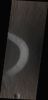
Volcanoes-Ceraunius_Tholus-Summit-PIA16595-PCF-LXTT-IPF.jpgThe Eastern Side of Ceraunius Tholus' Summit Caldera (Absolute Natural Colors; credits for the additional process. and color.: Dr Paolo C. Fienga/Lunar Explorer Italia/Italian Planetary Foundation)72 visiteThis image (taken by the NASA - Mars Odyssey Orbiter during its 47827th orbit around the Red Planet) shows us the Eastern Side of the Summit Caldera of a Volcano known as Ceraunius Tholus (which is part, jointly with Uranius Mons and Uranius Tholus, of the so-called "Uranius Group of Volcanoes"). Ceraunius Tholus is approx. 130 Km across and approx. 5,5 Km high; it was so named after a Classical Albedo Feature and it is located in the Tharsis Quadrangle of Mars. Ceraunius Tholus is generally believed to be a Basaltic Shield-Volcano with the lower part buried beneath the lava-formed Plains forming. Earlier interpretations suggested also that it may be a "Stratovolcano". The Slopes on Ceraunius Tholus are quite steep with an average slope of 8° and with many Radial Erosional Channels and Pitted Valleys extending from just below the Rim of the Caldera, toward the base of the Volcano. The current view, however, is that the Valleys were eroded by Water. Interesting features that characterize Ceraunius Tholus are 3 (three) large Canyons located on the North/Western Flank of the Volcano and which are up to approx. 2,5 km wide and 300 meters deep. The biggest of these 3 (three) Canyons also appears to be the youngest one; it protrudes from the lowest point of the Volcanic Summit Caldera and it ends at the interesting Rahe Crater (an oblique Impact Crater with measures of about 35 × 18 Km), just North from the Volcano, where it formed a Depositional Fan. Its origin is (let us say, "obviously") still debatable and there are at least 3 (three) Main Models proposed to explain it: Creation by way of Fluvial Action, Volcanic (---> Lava) Flows or a combination of both of them. The Caldera of Ceranius Tholus is also dotted with many Collapse Pits (NOT visible in this frame), which, as you should know, are distinct from Impact Craters since they have no Rim and vary in abundance all across the Caldera. Some scientists believe that Glaciers may have existed on many of the Volcanoes located in the District of Tharsis, including Olympus Mons, Ascraeus Mons, and Pavonis Mons. Ceraunius Tholus, on uts side, may also have had its Glaciers Melt to form some temporary Lakes in the past. In fact, the smoothness and flatness of the Ceraunius Tholus' Summit Caldera Floor strongly suggests that, in a far and distant past, some meltwater might actually have accumulated over there, thus forming a so-called (and just temporary, as we said before) "Caldera Lake".
Latitude (centered): 24,0691° North
Longitude: 263,105° East
Instrument: VIS
Captured: September, 25th, 2012
This frame (which is an Original Mars Odyssey Orbiter b/w frame published on the NASA - Planetary Photojournal with the ID n. PIA 16595) has been additionally processed and then colorized in Absolute Natural Colors (such as the colors that a human eye would actually perceive if someone were onboard the NASA - Mars Odyssey Orbiter and then looked down, towards the Surface of Mars), by using an original technique created - and, in time, dramatically improved - by the Lunar Explorer Italia Team.MareKromium
|
|

Titan-PIA16635-PCF-LXTT-IPF-1.jpgTitanian Northern Lakes (Absolute Natural Colors; credits for the additional process. and color.: Dr Paolo C. Fienga/Lunar Explorer Italia/Italian Planetary Foundation)72 visiteThe Lakes existing on the Saturnian moon Titan, reflect Radio Waves in varying ways, as it can be noticed in this Radio-Image obtained by the the NASA - Cassini Spacecraft. Scientists think the variations in Reflectivity, or Brightness, have to be related with the smoothness (such as the so-called "texture") of the imaged Surface. However, if a Lake is fully liquid, it always looks VERY dark (actually black); but if it is only partially liquid, then it looks a lot brighter. In this frame, taken from Titan's High Northern Latitudes (such as at approx. 79° North Latitude and 58° West Longitude) on May, 22, 2012, the Lakes located on on the left (Sx) side of it are full of Liquid Hydrocarbons, while the ones - barely visible - located on the top right (Dx) of the picture are only partially filled - it has to be said, however, that what can be seen on the right side of the frame, could even be the representation of simple Saturated Ground (---> a Surface Feature - or, better yet, a Surface "Condition" - known as "Mudflat" ---> Mudflats or Mud Flats, also known as Tidal Flats, are Coastal Wetlands that form when huge quantities of Mud are deposited by the action of Oceanic Tides or particularly fast-flowing Rivers).
The Lakes visible in this image are each about 35 to 45 Km (such as approx. 22 to 30 miles) across, or about the size of Lake Tahoe, on the California-Nevada Border. Some of the differences in Reflectivity could also be explained by the presence, in the Lakes, of floating blocks of Hydrocarbon Ice. The image was obtained by the Cassini Radar Mapper at a scale of about 350 meters (1100 feet) per pixel.
This frame (which is a crop obtained by an Original NASA - CASSINI Spacecraft Radio-Image published on the NASA - Planetary Photojournal with the n. PIA 16635), since it is just a Radio-Image of the Titanian Surface and NOT a real view of it, has been colorized, according to an educated guess, by Dr Paolo C. Fienga (LXTT-IPF), in what they could reasonably be its possible Absolute Natural Colors (such as the colors that a human eye would perceive if someone were onboard the NASA - CASSINI Spacecraft and, once the thick layer of Titanian Hazes and Fogs shall have been completely overcome, looked down, towards the Surface of Titan itself), by using an original technique created - and, in time, dramatically improved - by the Lunar Explorer Italia Team.MareKromium
|
|
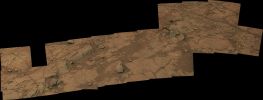
SOL0141-1-GB-LXTT-IPF.jpgThe "Paving" of Yellowknife Bay - Sol 141 (an Image-Mosaic in Calibrated Natural Colors; credits for the additional process. and color.: Dr Gianluigi Barca/Lunar Explorer Italia/Italian Planetary Foundation)72 visitenessun commentoMareKromium
|
|

089-Craters-Licinia_Crater-PIA16050-PCF-LXTT-IPF.jpgLicinia Crater (Absolute Natural Colors; credits for the additional process. and color.: Dr Paolo C. Fienga/Lunar Explorer Italia/Italian Planetary Foundation)72 visiteThis NASA - Dawn Spacecraft Framing Camera (FC) image of 4-Vesta shows Licinia Crater, which is the large Impact Crater positioned in the center of the picture. Licinia Crater has a fresh, sharp Rim that is scalloped in shape; all around the Inner Walls of Licinia Crater there are many Streaks of Dark and Bright Dusty Material cascading towards the Crater's center. There are also many hummocky Slumps of Material around the Crater's Walls and Base. A large Mound of Material (most likely made of small Rocks and Dust) is well visible in the Crater's center, and the Mound itself is surrounded by more smooth and dark unidentified Material. The possibility that such (as of yet, we repeat, unidentified) smooth Material visible on 4-Vesta's Surface might be the so-called "Impact Melt" is currently under investigation. Licinia Crater is one of the freshest Impact Craters that can be seen in this image.
This area visible here is located in the "Floronia Quadrangle" of 4-Vesta, in the Northern Hemisphere of the Giant Asteroid. The NASA - Dawn Spacecraft obtained this image with its Framing Camera (FC) on October 11, 2011. The image was taken through the Camera's Clear Filter and the distance of the Spacecraft from the Surface of 4-Vesta was, at the time that the picture was taken, of approx. 700 Km (such as a little less than 435 miles); the image has a resolution of about 63 meters (207 feet) per pixel. This picture of Licinia Crater was acquired during the HAMO (---> High-Altitude Mapping Orbit) phase of the mission.
This frame (which is an Original NASA - Dawn Spacecraft b/w image published on the NASA - Planetary Photojournal with the ID n. PIA 16050) has been additionally processed and then colorized, according to an informed speculation carried out by Dr Paolo C. Fienga (LXTT-IPF), in Absolute Natural Colors (such as the colors that a human eye would actually perceive if someone were onboard the NASA - Dawn Spacecraft and then looked outside, towards the Giant Asteroid 4-Vesta), by using an original technique created - and, in time, dramatically improved - by the Lunar Explorer Italia Team. Different colors, as well as different shades of the same color, mean, among others, the existence of different Elements present on the Surface of 4-Vesta, each having a different Albedo (---> Reflectivity) and Chemical Composition.MareKromium
|
|

Chasma-Ophir_Chasma-PIA17702-PCF-LXTT-IPF.jpgFeatures of Ophir Chasma (EDM - Absolute Natural Colors; credits for the additional process. and color.: Dr Paolo C. Fienga/Lunar Explorer Italia/Italian Planetary Foundation)72 visiteThe really huge Landslides existing along the Walls of Ophir Chasma (which is nothing else but a deep Canyon located in the Coprates Quadrangle of Mars, at about 4° South Latitude and 72,5° West Longitude. It is approx. 317 km long and it was so named after a "Classical Albedo Feature") host a variety of Geologic Surfaces and Mineralogies.
Some of them possess a variety of Hydrated Sulfate Minerals that formed, eons ago, in the presence of Partially Acidic Liquid Water. This NASA - Mars Reconnaissance Orbiter's Contextual (or "CTX", for short) Image, which is representing an ancient (possibly and approximately 3 Billion Years-old) Landslide, shows us the presence, within it, of 2 (two) very distinct Surface Albedoes, which, in fact, mark a Transition Zone from one Sulfate Mineralogy to another (a circumstance that proves beyod doubts the occurrence, in a far and distant past, of some remarkable variations in the evolution of the visible Surface).
The Upper Slopes (such as the ones located towards the North) are light-toned, and this fact is due to the concurrent abundance of Hydrated Sulfate Minerals and Bright Surface Dust. On the other hand, the Surfaces that make up the Southern Portion of the Landslide, are darker in tone, and this is due to the greater abundance of Dark Sediment that, in time, formed "Strings of Sand Drifts" (extremely well visible in this Extra Detail Magnification). In addition to the above, the underlying Units of Bedrock consist of Darker Minerals that received a lesser hydration then the Northern ones, and this further circumstance implies the occurrence of a strong (and, perhaps, sudden) change in the Ancient Aqueous Environments that formed them.
Mars Local Time: 14:52 (Early Afternoon)
Coord. (centered): 4,328° South Lat. and 288,657° East Long.
Spacecraft altitude: 271,0 Km (such as about 168,291 miles)
Original image scale range: 27,1 cm/pixel (with 1 x 1 binning) so objects ~ 81 cm across are resolved
Map projected scale: 25 cm/pixel
Map projection: EQUIRECTANGULAR
Emission Angle: 6,3°
Phase Angle: 52,7°
Solar Incidence Angle: 47° (meaning that the Sun was about 43° above the Local Horizon at the time the picture was taken)
Solar Longitude: 27,0° (Northern Spring - Southern Fall)
Credits: NASA/JPL/University of Arizona
Additional process. and coloring: Lunar Explorer Italia
This picture (which is an Original NASA - Original Mars Reconnaissance Orbiter - False Colors and NON-Map Projected sub-frame identified by the serial n. PSP_007535_1755-1) has been additionally processed, magnified, contrast enhanced, Gamma corrected, and then re-colorized in Absolute Natural Colors (such as the colors that a human eye would actually perceive if someone were onboard the NASA - Mars Reconnaissance Orbiter and then looked down, towards the Surface of Mars), by using an original technique created - and, in time, dramatically improved - by the Lunar Explorer Italia Team.MareKromium
|
|

Tethys_and_Saturn-PIA18318-PCF-LXTT-IPF.jpgFather and Daughter... (Absolute Natural Colors; credits for the additional process. and color.: Dr Paolo C. Fienga - Lunexit Team)72 visiteThe two large Impact Craters on Tethys, near the line where the day fades into the night (the so-called "Terminator Line"), almost resemble two giant eyes observing Saturn. The location of these aforementioned Impact Craters on Tethys' Terminator throws their topography into sharp relief. Both are large Impact Craters, but the larger and Southernmost of the two, shows a more complex structure.
The angle of the lighting highlights a Central Peak in this Crater. In fact, Central Peaks are the final and well visible result of the Surface (of the impacted Celestial Body) reacting to the violent Post-Impact Excavation of the Crater itself. On the other hand, the Northern Crater does not show a similar Surface Feature. Why? No one knows for sure but, possibly, the impact was too small (better yet: to small AND slow) to form a Central Peak or, maybe, the composition of the Materials located in the immediate vicinities of the Impact Area couldn't support the formation of a Central Peak. In this image, Tethys is significantly closer to the NASA - Cassini Spacecraft's Wide-Angle Camera, while the Ringed Gas-Giant Planet (---> Saturn) is in the background. And yet, the moon is still utterly dwarfed by Saturn.
This view looks toward the Anti-Saturn Side of Tethys; North is up and rotated 42° to the right (Dx). The image was taken in Visible Light with the NASA - Cassini Spacecraft's Wide-Angle Camera on April 11, 2015. The view was obtained at a distance of approximately 75.000 miles (such as about 120.700,5 Km) from Tethys and the Image Scale on Tethys is roughly 4 miles (such as about 6,437 Km) per pixel.
This frame (which is an Original NASA - CASSINI Spacecraft's b/w and NON Map-Projected image published on the NASA - Planetary Photojournal with the ID n. PIA 18318) has been additionally processed, contrast enhanced, magnified, in order to allow the vision of the slightest details of the Surface, Gamma corrected and then colorized - according to an educated guess (or, if you wish, an informed speculation) carried out by Dr Paolo C. Fienga - in Absolute Natural Colors (such as the colors that a human eye would actually perceive if someone were onboard the NASA - Cassini Spacecraft and then looked outside, toward Saturn and the Saturnian moon "Tethys"), by using an original technique created - and, in time, dramatically improved - by the Lunar Explorer Italia Team. Different colors, as well as different shades of the same color, mean, among other things, the existence of different Elements (Gases and Minerals, respectively) present in the Atmosphere of Saturn, and on the Surface of Tethys, each having a different Albedo (---> Reflectivity) and Chemical Composition.
Note: it is possible (but we, as IPF, have no way to be one-hundred-percent sure of such a circumstance), that the actual luminosity of Saturn and Tethys - as it is in this frame - would appear, to an average human eye, a little bit lower than it has been shown (or, better yet: interpreted) here.MareKromium
|
|

ZZ-ZZ-ZZ-ZZ-ZZ-ZZ-ZZ-ZZ-Ultima_Thule_2-flyby.gifUltima Thule (Fly-By)72 visiteOriginal Caption:"Mission scientists created this "departure movie" from 14 different images taken by the New Horizons Long Range Reconnaissance Imager (LORRI) shortly after the spacecraft flew past the Kuiper Belt object nicknamed Ultima Thule (officially named 2014 MU69) on Jan. 1, 2019".MareKromium
|
|

101955-Bennu-011.jpg101955 Bennu - Boulderland72 visiteCaption NASA:"An abundance of Boulders litters the Surface of the Asteroid 101955 Bennu in this dramatic close-up from the OSIRIS-REx Spacecraft.
Taken on March 28 from a distance of just 3,4 Km (approx. 2,1 miles) the field of view is about 50 meters across while the light colored boulder at top right is about 4,8 meters tall.
Likely a loose conglomerate rubble pile Asteroid, Bennu itself spans less than 500 meters. That's about the height of the Empire State Building.
Mapping the near Earth Asteroid since the Spacecraft's arrival in December of 2018, the OSIRIS-REx mission plans a TAG (Touch-and-Go) maneuver for July 2020 to sample Bennu's rugged Surface, returning the sample to planet Earth in September 2023. Citizen scientists have been invited to help choose the sample collection site". MareKromium
|
|
| 25353 immagini su 2113 pagina(e) |
 |
|
|
|
|
907 | |
|
|
|
|
|
|





