| Piú viste |

Saturn and 2 Companions-N00015014.jpgSaturn and some Companion from about 9.000.000 Km72 visitenessun commento
|
|

Amalthea-PIA02532.jpgA white streak on Amalthea72 visite...spazio interstellare, nè per essere attratti ed ingurgitati definitivamente da Giove, come è invece accaduto alla Cometa Shoemaker-Levy. Molti Scienziati non escludono neppure l'ipotesi che possa trattarsi di frammenti di una Luna Gioviana disintegratasi (magari a seguito di una collisione) qualche milione di anni fa. La verità, come sempre, non sarà facile da trovarsi...
|
|

M-019-2.jpgM 19 - Globular Star Cluster72 visite"...Qualcuno ha detto - credo un certo Einstein... - che il Futuro, ancorchè irraggiungibile, può essere visto, in qualche modo. Io credo che questa affermazione sia esatta solo in parte: infatti è vero che il Futuro - oggi irraggiungibile - può essere visto in qualche modo, ma...Non è esattamente 'Il Futuro': è solo 'Un Possibile Futuro'!..."
P.C. Floegers - "In the Paradox"
|
|

M-021-1.jpgM 21 - Open Star Cluster72 visite"L'Infinito e l'Eternità esprimono due delle qualità di Dio. Non possono essere comprese nè discusse: devono essere solo accettate per quello che sono"
P.C. Floegers - "In the Paradox"
|
|

Sunspots - SST.jpgSunspots72 visiteCaption NASA originale:"This stunning image shows remarkable and mysterious details near the dark central region of a planet-sized sunspot in one of the sharpest views ever of the surface of the Sun. Just released, the picture was made using the Swedish Solar Telescope now in its first year of operation on the Canary Island of La Palma. Along with features described as hairs and canals are dark cores visible within the bright filaments that extend into the sunspot, representing previously unknown and unexplored solar phenomena".
|
|

Jupiter-water cloud-GAL-PIA01639_modest.jpgWater clouds on Jupiter72 visiteThis false-color picture of a convective thunderstorm 10.000 Km(6.218 miles) northwest of Jupiter's Great Red Spot was obtained by NASA's Galileo spacecraft on June 26, 1996. The white cloud in the center is a tall, thick cloud about 1.000 Km (620 miles) across, standing 25 Km (15 miles) higher than most of the surrounding clouds. Its base extends off to the left and appears red in this representation. This red color indicates that the cloud base is very deep in the atmosphere, about 50 Km (30 miles) below the surrounding clouds. Most of the wisps and features in Jupiter's clouds are thick and thin ammonia clouds, forming at a pressure just less than Earth's sea level pressure. On Jupiter, water is the only substance to form a cloud at a depth where the pressure is about 5 times the Earth's sea level pressure. The red base of this thunderstorm is so deep that it can only be a water cloud. In 1979 NASA's Voyager spacecraft saw convective clouds of this type near the Great Red Spot. They erupted like this roughly once every 10 days and lasted a few days each. But Voyager's cameras could not allow the determination of the storms' altitude. It is thought that this storm is analogous to an Earth thunderstorm, with the cloud's high, bright, white portion comparable to the familiar anvil cloud on Earth. Whether any rain or snow is falling below this cloud is unknown, but there are indications that similar storms on Jupiter have lightning in them.
|
|
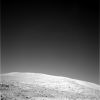
SOL271-2N150429723EFF8953P0334R0M1.jpgMartian Sky and Panorama (3)72 visitenessun commento
|
|

OPP-SOL251-1F150468165EFF36A5P1214L0M1.jpg"Big Rock" from Front Hazcam (2)72 visiteStessa visione di cui al frame precedente, ma da una distanza leggermente inferiore. La visione "distorta", in questo caso, ci aiuta a cogliere meglio - a nostro avviso - i tanti dettagli della Grande Roccia. Ne ricaviamo, insomma, utilizzando un obbiettivo di tipo grandangolare (come quello della Camera Frontale del Rover), una visione leggermente "più profonda".
|
|

VG-Desdemona-V2.jpgDesdemona - Voyager 272 visitenessun commento
|
|

VH-Juliet-V2.jpgJuliet - Voyager 272 visitenessun commento
|
|
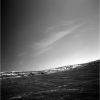
OPP-SOL269-1N152063405EFF37B5P1910L0M1.jpgClouds over Endurance Crater - Sol 26972 visiteUn'immagine davvero suggestiva del Cielo di Marte segnato da nuvole stratiformi, passate sopra Endurance Crater intorno alle 12:30, ora locale.
Bellissima.
|
|

Titan-W00002390.jpgThe "Dark Side" of Titan from about 107.000 Km72 visiteLa Sonda Cassini-Huygens è passata accanto a Titano ed ora se ne sta rapidamente allontanando. Questa immagine è stata ripresa quando Titano era già stato superato di oltre 100.000 Km. Si tratta, come potete intuire, di una ripresa del lato di Titano immerso nella notte, mentre la luce che emerge dal bordo del Pianeta - formando una sorta di "aureola" - è causata dai raggi del Sole che passano attraverso gli strati superiori della sua atmosfera, generando un curioso fenomeno di diffusione luminosa.
Questo tipo di immagine, oltre ad essere piuttosto suggestiva, ci permette anche di vedere abbastanza bene i vari sub-strati in cui si suddivide (o sembra suddividersi...) l'atmosfera di Titano.
|
|
| 25353 immagini su 2113 pagina(e) |
 |
|
|
|
|
894 | |
|
|
|
|





