| |
| Piú viste |

Titan-N00199279-84-False_and_Natural_Color-EB-MF-LXTT-IPF.jpgVisions of Titan (Superdefinition, False Colors - Left-Sx - Calibrated Natural Colors - Right-Dx -; credits for the additional process. and color.: Elisabetta Bonora and Marco Faccin/Lunar Explorer Italia/Italian Planetary Foundation) 73 visitenessun commentoMareKromium
|
|

ZZ-Mercury-Craters-Prokofiev_Crater-PIA16857-PCF-LXTT-IPF.jpgIn the Everlasting Night of Prokofiev Crater (Absolute Natural Colors; credits for the additional process. and color.: Dr Paolo C. Fienga - Lunar Explorer Italia/Italian Planetary Foundation)73 visiteProkofiev Crater, so officially named in August 2012 after the Russian composer, is the largest Impact Crater (with a diameter of approx. 112 Km - such as about 69,5 miles) located in Mercury's North Polar Region which hosts Radar-Bright Surface Material. Furthermore, the NASA - MESSENGER Spacecraft has also found evidence that within the cold, dark, and permanently shadowed Inner Regions of Prokofiev, Water Ice is exposed on the Mercurian Surface, just like it seems to happen on the Floors of extremely deep and steep Impact Craters and Canyons located near and at the Poles of our own Moon.
Date acquired: January, 17th, 2013
Image Mission Elapsed Time (MET): 266090610
Image ID: 3288616
Instrument: Wide Angle Camera (WAC) of the Mercury Dual Imaging System (MDIS)
Center Latitude: 84,90° North
Center Longitude: 68,75° East
Resolution: 70 meters/pixel
Solar Incidence Angle: 84,9° (meaning that the Sun, at the time that the pictures were taken, was about 5,1° above the imaged Local Mercurian Horizon)
Emission Angle: 6,1°
Sun-Mercury-Messenger (or "Phase") Angle: 78,8°
This picture (which is an Original NASA - MESSENGER Spacecraft b/w frame published on the NASA - Planetary Photojournal with the ID n. PIA 16857) has been additionally processed and then colorized in Absolute Natural Colors (such as the colors that a human eye would actually perceive if someone were onboard the NASA - MESSENGER Spacecraft and then looked down, towards the Surface of Mercury), by using an original technique created - and, in time, dramatically improved - by the Lunar Explorer Italia Team. Different colors, as well as different shades of the same color, mean, among other things, the existence of different Elements (Minerals) present on the Surface of Mercury, each having a different Albedo (---> Reflectivity) and Chemical Composition.
MareKromium
|
|

ZZ-Mercury-Craters-Unnamed_Crater-PIA17290-PCF-LXTT-IPF-0.jpgUnnamed and (relatively) Fresh Impact Crater (CTX Frame - Absolute Natural Colors; credits for the additional process. and color.: Dr Paolo C. Fienga/Lunar Explorer Italia/Italian Planetary Foundation)73 visiteThis Absolute Natural Color Image-Mosaic shows us a bright (and, of course, relatively speaking, "fresh") Impact Crater - approx. 33 Km (such as about 20,49 miles) in diameter - exhibiting possible evidence of a Pyroclastic Deposit on it's Eastern Side (---> Dx of the Crater for the Observer), as well as a series of Secondary Impact Craters which have unearthed some - still unknown - kind of Sub-Surface Material, barely visible (and lightly gray-colored) in the North-Eastern corner of the picture (---> upper right quadrant).
Date acquired: November, 6th, 2011
Images Mission Elapsed Time (MET): 229105596, 229105592, 229105588
Images ID: 980566, 980565, 980564
Instrument: Wide Angle Camera (WAC) of the Mercury Dual Imaging System (MDIS)
Center Latitude: 25,42° North
Center Longitude: 266,80° East
Solar Incidence Angle: 52,3° (meaning that the Sun, at the time that the picture was taken, was about 37,7° above the imaged Local Mercurian Horizon)
Emission Angle: 16,8°
Sun-Mercury-Messenger (or "Phase") Angle: 69,1°
This picture (which is an Original NASA - MESSENGER Spacecraft's false colors Map-Projected image-mosaic published on the NASA - Planetary Photojournal with the ID n. PIA 17290) has been additionally processed, contrast enhanced, magnified and then re-colorized in Absolute Natural Colors (such as the colors that a human eye would actually perceive if someone were onboard the NASA - MESSENGER Spacecraft and then looked down, towards the Surface of Mercury), by using an original technique created - and, in time, dramatically improved - by the Lunar Explorer Italia Team. Different colors, as well as different shades of the same color, mean, among other things, the existence of different Elements (Minerals) present on the Surface of Mercury, each having a different Albedo (---> Reflectivity) and Chemical Composition.MareKromium
|
|

ZZ-Mercury-Craters-Neruda_Crater-PIA17515-PCF-LXTT-IPF-1.jpgNeruda Crater (EDM - Absolute Natural Colors; credits for the additional process. and color.: Dr Paolo C. Fienga/Lunar Explorer Italia/Italian Planetary Foundation)73 visiteThis frame is an Extra Detail Magnification (or "EDM", for short) featuring the Central Peaks' System of the Mercurian Impact Crater named "Neruda", after the Chilean poet Pablo Neruda (born on July, 12, 1904 in Parral - Chile - and died on September, 23, 1973 in the Chilean State's Capital, Santiago). As you can see, this Impact Crater (whose diameter is approx. 112 Km - such as about 69,55 miles) exhibits several Central Peaks punctuated by a few more recent, small Craters, resulting in a rugged Surface mostly made of ups and downs (and now think how difficult it would be if one hypothetical Astronaut decided - or just needed - to traverse the whole Crater's highly irregular Floor...). Similarly, the Crater's namesake Pablo Neruda experienced a number of ups and downs in his life, from success as a poet, through poverty, war and ultimately alleged poisoning.
Date acquired: July, 24th, 2012
Image Mission Elapsed Time (MET): 251577944
Image ID: 2256593
Instrument: Narrow Angle Camera (NAC) of the Mercury Dual Imaging System (MDIS)
Center Latitude: 52,20° South
Center Longitude: 125,30° East
Solar Incidence Angle: 80,4° (meaning that the Sun, at the time that the picture was taken, was about 9,6° above the imaged Local Mercurian Horizon)
Emission Angle: 2,4°
Sun-Mercury-Messenger (or "Phase") Angle: 78,0°
This picture (which is a crop taken from an Original NASA - MESSENGER Spacecraft's b/w and Map-Projected image published on the NASA - Planetary Photojournal with the ID n. PIA 17515) has been additionally processed, contrast enhanced, magnified to aid the visibility of the details and then colorized in Absolute Natural Colors (such as the colors that a human eye would actually perceive if someone were onboard the NASA - MESSENGER Spacecraft and then looked down, towards the Surface of Mercury), by using an original technique created - and, in time, dramatically improved - by the Lunar Explorer Italia Team. Different colors, as well as different shades of the same color, mean, among other things, the existence of different Elements (Minerals) present on the Surface of Mercury, each having a different Albedo (---> Reflectivity) and Chemical Composition.MareKromium
|
|

Chasma-Ophir_Chasma-PIA17702-PCF-LXTT-IPF.jpgFeatures of Ophir Chasma (EDM - Absolute Natural Colors; credits for the additional process. and color.: Dr Paolo C. Fienga/Lunar Explorer Italia/Italian Planetary Foundation)73 visiteThe really huge Landslides existing along the Walls of Ophir Chasma (which is nothing else but a deep Canyon located in the Coprates Quadrangle of Mars, at about 4° South Latitude and 72,5° West Longitude. It is approx. 317 km long and it was so named after a "Classical Albedo Feature") host a variety of Geologic Surfaces and Mineralogies.
Some of them possess a variety of Hydrated Sulfate Minerals that formed, eons ago, in the presence of Partially Acidic Liquid Water. This NASA - Mars Reconnaissance Orbiter's Contextual (or "CTX", for short) Image, which is representing an ancient (possibly and approximately 3 Billion Years-old) Landslide, shows us the presence, within it, of 2 (two) very distinct Surface Albedoes, which, in fact, mark a Transition Zone from one Sulfate Mineralogy to another (a circumstance that proves beyod doubts the occurrence, in a far and distant past, of some remarkable variations in the evolution of the visible Surface).
The Upper Slopes (such as the ones located towards the North) are light-toned, and this fact is due to the concurrent abundance of Hydrated Sulfate Minerals and Bright Surface Dust. On the other hand, the Surfaces that make up the Southern Portion of the Landslide, are darker in tone, and this is due to the greater abundance of Dark Sediment that, in time, formed "Strings of Sand Drifts" (extremely well visible in this Extra Detail Magnification). In addition to the above, the underlying Units of Bedrock consist of Darker Minerals that received a lesser hydration then the Northern ones, and this further circumstance implies the occurrence of a strong (and, perhaps, sudden) change in the Ancient Aqueous Environments that formed them.
Mars Local Time: 14:52 (Early Afternoon)
Coord. (centered): 4,328° South Lat. and 288,657° East Long.
Spacecraft altitude: 271,0 Km (such as about 168,291 miles)
Original image scale range: 27,1 cm/pixel (with 1 x 1 binning) so objects ~ 81 cm across are resolved
Map projected scale: 25 cm/pixel
Map projection: EQUIRECTANGULAR
Emission Angle: 6,3°
Phase Angle: 52,7°
Solar Incidence Angle: 47° (meaning that the Sun was about 43° above the Local Horizon at the time the picture was taken)
Solar Longitude: 27,0° (Northern Spring - Southern Fall)
Credits: NASA/JPL/University of Arizona
Additional process. and coloring: Lunar Explorer Italia
This picture (which is an Original NASA - Original Mars Reconnaissance Orbiter - False Colors and NON-Map Projected sub-frame identified by the serial n. PSP_007535_1755-1) has been additionally processed, magnified, contrast enhanced, Gamma corrected, and then re-colorized in Absolute Natural Colors (such as the colors that a human eye would actually perceive if someone were onboard the NASA - Mars Reconnaissance Orbiter and then looked down, towards the Surface of Mars), by using an original technique created - and, in time, dramatically improved - by the Lunar Explorer Italia Team.MareKromium
|
|

Tethys_and_Saturn-PIA18318-PCF-LXTT-IPF.jpgFather and Daughter... (Absolute Natural Colors; credits for the additional process. and color.: Dr Paolo C. Fienga - Lunexit Team)73 visiteThe two large Impact Craters on Tethys, near the line where the day fades into the night (the so-called "Terminator Line"), almost resemble two giant eyes observing Saturn. The location of these aforementioned Impact Craters on Tethys' Terminator throws their topography into sharp relief. Both are large Impact Craters, but the larger and Southernmost of the two, shows a more complex structure.
The angle of the lighting highlights a Central Peak in this Crater. In fact, Central Peaks are the final and well visible result of the Surface (of the impacted Celestial Body) reacting to the violent Post-Impact Excavation of the Crater itself. On the other hand, the Northern Crater does not show a similar Surface Feature. Why? No one knows for sure but, possibly, the impact was too small (better yet: to small AND slow) to form a Central Peak or, maybe, the composition of the Materials located in the immediate vicinities of the Impact Area couldn't support the formation of a Central Peak. In this image, Tethys is significantly closer to the NASA - Cassini Spacecraft's Wide-Angle Camera, while the Ringed Gas-Giant Planet (---> Saturn) is in the background. And yet, the moon is still utterly dwarfed by Saturn.
This view looks toward the Anti-Saturn Side of Tethys; North is up and rotated 42° to the right (Dx). The image was taken in Visible Light with the NASA - Cassini Spacecraft's Wide-Angle Camera on April 11, 2015. The view was obtained at a distance of approximately 75.000 miles (such as about 120.700,5 Km) from Tethys and the Image Scale on Tethys is roughly 4 miles (such as about 6,437 Km) per pixel.
This frame (which is an Original NASA - CASSINI Spacecraft's b/w and NON Map-Projected image published on the NASA - Planetary Photojournal with the ID n. PIA 18318) has been additionally processed, contrast enhanced, magnified, in order to allow the vision of the slightest details of the Surface, Gamma corrected and then colorized - according to an educated guess (or, if you wish, an informed speculation) carried out by Dr Paolo C. Fienga - in Absolute Natural Colors (such as the colors that a human eye would actually perceive if someone were onboard the NASA - Cassini Spacecraft and then looked outside, toward Saturn and the Saturnian moon "Tethys"), by using an original technique created - and, in time, dramatically improved - by the Lunar Explorer Italia Team. Different colors, as well as different shades of the same color, mean, among other things, the existence of different Elements (Gases and Minerals, respectively) present in the Atmosphere of Saturn, and on the Surface of Tethys, each having a different Albedo (---> Reflectivity) and Chemical Composition.
Note: it is possible (but we, as IPF, have no way to be one-hundred-percent sure of such a circumstance), that the actual luminosity of Saturn and Tethys - as it is in this frame - would appear, to an average human eye, a little bit lower than it has been shown (or, better yet: interpreted) here.MareKromium
|
|
ZZ-ZZ-ZZ-ZZ-ZZ-ZZ-ZZ-ZZ-Ultima_Thule_2-flyby.gifUltima Thule (Fly-By)73 visiteOriginal Caption:"Mission scientists created this "departure movie" from 14 different images taken by the New Horizons Long Range Reconnaissance Imager (LORRI) shortly after the spacecraft flew past the Kuiper Belt object nicknamed Ultima Thule (officially named 2014 MU69) on Jan. 1, 2019".MareKromium
|
|

ZZ-ZZ-ZZ-ZZ-ZZ-ZZ-ZZ-ZZ-ZZ-Pluto-PIA21863.jpgFlying over Pluto...73 visiteNote: the topographic reliefs visible here have been exaggerated by a factor of 2 to 3 to emphasize topography; the Surface colors have also been enhanced to bring out detail. Digital mapping and rendering were performed by Paul Schenk and John Blackwell of the Lunar and Planetary Institute in Houston".
MareKromium
|
|

Dart-2.jpgGreat Balls of Fire! - 273 visitenessun commentoMareKromium
|
|

M-090-1.JPGM 90 - Spiral Galaxy72 visite"Non eventus imputari debet cuiusque rei, sed consilium"
(Seneca)
"Qualsiasi opera umana non deve essere giudicata (solo) per l'esito (che ha avuto), ma per la visione (che ne ha ispirato il compimento)"
|
|

M-094-2.jpgM 94 - Spiral Galaxy (false colors - HST)72 visite"...Suspice, etiam si decidunt, magna conantes..."
(Seneca)
"...Bisogna ammirare coloro che tentano Grandi Imprese, anche qualora fallissero..."
|
|
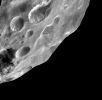
PHOEBE-PIA06067_modest.jpgPhoebe - closing up72 visitenessun commento
|
|
| 25353 immagini su 2113 pagina(e) |
 |
|
|
|
|
893 | |
|
|
|
|
|
|





