| Piú viste |
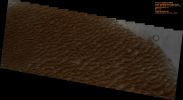
Craters-Proctor_Crater-20090922a.jpgProctor Crater (Natural Colors; credits: Lunar Explorer Italia)73 visitenessun commentoMareKromium
|
|
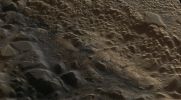
IaniChaos-ESA-PF.jpgIani Chaos (possible Natural Colors; credits ESA - additional color. and process. Dr Paolo C. Fienga)73 visiteIani Chaos on Mars, an area where Light Toned Deposits, or LTD, are known to be present. An analysis of data and images from Mars Express suggests that several LTD, some of the least understood structures on Mars, were formed when large amounts of groundwater burst on to the Surface. Scientists propose that groundwater had a greater role in shaping the Martian Surface than previously believed, and may have sheltered primitive life forms as the Planet started drying up.
This image was obtained with the High Resolution Stereo Camera on board ESA’s Mars Express Spacecraft.
Nota Lunexit: a nostro avviso questa "immagine" NON E' VERA! E' un disegno. Al limite, è la trasposizione digitale di un frame RAW originale unprocessed (ma ne dubitiamo). MareKromium
|
|

ESP_014380_1775_RED_abrowse-02.jpgExtremely Unusually-looking Skylight (SuperEDM n.2 - credits: Dr G. Barca)73 visitenessun commentoMareKromium
|
|
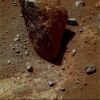
OPP-SOL2059-MF-LXT1.jpgErratic Boulder - Sol 2059 (True Colors - credits: Dr M. Faccin)73 visitenessun commentoMareKromium
|
|

Enceladus-N00145393lll.jpgFountains of Light (Natural Colors; image processing credits: Dr M. Faccin)73 visitenessun commentoMareKromium
|
|

OPP-SOL1010-1N217764749EFF768UP0635R0M1~0.jpgAround Victoria Crater - Sol 1010 (Natural Colors; credits: Lunexit)73 visitenessun commentoMareKromium
|
|

PSP_001390_1735_RED_abrowse.jpgCandor Chasma (Natural Colors; credits: Lunexit)73 visitenessun commentoMareKromium
|
|

FIGURA_18.jpgThe Santa Rita-San Marco Platforms'-System73 visiteLe piattaforme Santa Rita 1 e 2 (Dx) e S. Marco (Sx), oggi.MareKromium
|
|

Kessler_Syndrome.jpgBeware of the Kessler Syndrome...73 visite"...le Esperienze più profonde hanno, in sè, un che di vitale.
Esse, simili a macchie di muffa, si attaccano alle mura di casa, o ai cardini di una porta, magari sull'anta di un armadio o, chissà, nell'angolo - illuminato - di un solaio.
Esse restano lì, aggrappate - anzi, appiccicate - alle cose terrene e, nel contempo, si dibattono furiosamente nel turbinìo del Tempo che passa, ma senza perdere forza, anzi: acquistandone sempre più.
Giorno dopo giorno.
Anno dopo anno.
Secolo dopo secolo.
Un millennio dopo l'altro...
Queste Esperienze possono essere osservate, anzi: vanno osservate, si.
Ma MAI troppo da vicino..."
Paolo C. FiengaMareKromium
|
|
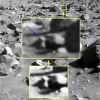
OPP-SOL2161-1P320038058EFFABEIP2379L2M1-IT-LXTT1.jpgExtremely unusually-looking Surface Feature - Sol 2161 (CTX Frame and EDM - credits: Ivana Tognoloni - Lunexit Team)73 visite...Si, certo, noi - per altro giustamente! - continuiamo a dirci e ripeterci che si tratta soltanto di rocce le cui forme sono curiose, ai limiti dell'assurdo però...a volte, anche su Marte, la Natura "esagera"!...
EccoVi, infatti, una nuova "Martian Oddity" - davvero straordinaria e singolare - che ci arriva dalla nostra sempre attenta e bravissima Amica a Partner, Ivana Tognoloni: Complimenti, OTTIMO "Occhio"!MareKromium
|
|

SOL843-MF3-LXTT.gifPossible "Water-Mechanics" on Mars - Sol 843 (GIF-Movie; credits: Dr Marco Faccin - Lunexit Team)73 visiteNoi, nel ringraziare il nostro Dr Faccin, Vi rammentiamo - ancora una volta - quanto scrisse per Lunexit, ormai quasi 5 anni fa, l'Ing. Pullini (si veda "TruePlanets"), che salutiamo affettuosamente.
La Sub-Superficie di Marte, sia in Gusev, sia in Meridiani, è/appare cedevole e questo è un fatto che riteniamo acclarato.
Ma perchè lo è? La NASA dice che TUTTA la Sub-Superficie del Pianeta Rosso (o comunque una gran parte di essa) è intrisa di ghiaccio.
Si, diciamo noi, questo può anche essere...Ma, Logica e Buon Senso alla mano, ad elevate Latitudini.
Provocazione: e se nelle Regioni più calde di Marte - diciamo le Regioni Equatoriali e peri-Equatoriali - la Sub-Superficie di Marte fosse - semplicemente - intrisa d'acqua?
Un'acqua che, di quando in quando, talora a seguito di azioni mareali, talora a seguito di azioni meccaniche (come il passaggio di un Rover, ad esempio), affiora e poi, subito o quasi, si ritira, o sublima, o magari evapora (chissà...) lasciandosi dietro quel fango estremamente duttile ed adesivo che, tante volte, abbiamo visto nelle zone di transito dei nostri Esploratori su ruote?
Osservate bene i margini delle fissures evidenziate da Spirit, e quindi prestate attenzione al "verso" delle zone più prossime all'area di infossamento: la "risposta", è tutta lì...MareKromium
|
|

Solar_Prominence~0.jpgSolar Prominence73 visiteCaption NASA, da "NASA - Picture of the Day" del giorno 23 Marzo 2010:"Dramatic Prominences can sometimes be seen looming just beyond the edge of the Sun.
Such was the case last week as a Giant Prominence, visible above on the right, highlighted a Sun showing increased activity as it comes off an unusually quiet Solar Minimum. A changing carpet of hot gas is visible in the Chromosphere of the Sun in the above image taken in a very specific color of light emitted by Hydrogen.
A Solar Prominence is a cloud of Solar Gas held just above the Surface by the Sun's Magnetic Field. The Earth would easily fit below the Prominence on the right. Although very hot, Prominences typically appear dark when viewed against the Sun, since they are slightly cooler than the Surface.
A quiescent Prominence typically lasts about a month, and may erupt in a Coronal Mass Ejection (CME) expelling hot gas into the Solar System. The next day, the same prominence looked slightly different".MareKromium
|
|
| 25353 immagini su 2113 pagina(e) |
 |
|
|
|
|
889 | |
|
|
|
|





