| Piú viste |

ZY-Z-MERB_Sol1162_1.jpgRolling around Victoria: Opportunity Traverse Map from Sol 943 up to Sol 116273 visitenessun commentoMareKromium
|
|
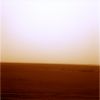
OPP-SOL1233-1P237639524EFF85W0P2688L5M1.jpgAlmost Clear Skies over Meridiani (2) - Sol 123373 visitenessun commentoMareKromium
|
|
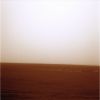
OPP-SOL1235-1P237817044EFF85W0P2689L4M1.jpgThe pale Sky over Meridiani (1 - natural colors, elab. Lunexit)73 visitenessun commentoMareKromium
|
|

as17-152-23341.jpgAS 17-152-23341 - Mare Crisium and Mare Marginis73 visitenessun commentoMareKromium
|
|

000-Kaguya.jpgThe Kaguya (SELENE) Probe73 visiteThe SELenological and ENgineering Explorer "KAGUYA"(SELENE), Japan’s 1st large Lunar Explorer, was launched by the H-IIA rocket on September 14, 2007 (JST). The mission, which is the largest Lunar Mission since the Apollo Program, is being keenly anticipated by many countries.
The major objectives of the Mission are to understand the Moon’s origin and evolution and to observe the Moon in various ways in order to utilize it in the future. The Lunar Missions that have been conducted so far have gathered a large amount of information on the Moon, but the mysteries of its origin and evolution have been left unsolved.
KAGUYA will investigate the entire Moon in order to obtain information on its elemental and mineralogical composition, geography, surface and sub-surface structure, the remnant of its magnetic field and its gravity field.
The results are expected to lead to a better overall understanding of the Moon’s evolution. At the same time, the observation equipment installed on the orbiting satellite will observe plasma, the electromagnetic field and high-energy particles. The data obtained in this way will be of great scientific importance for exploring the possibility of using the moon for human endeavors.MareKromium
|
|

Kaguya-010-20071113.gifRelative locations of the KAGUYA Probe, the Moon, and the Earth73 visitenessun commentoMareKromium
|
|
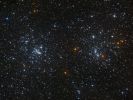
NGC-869.jpgNGC 869 and NGC 884 - Double Cluster in Perseus73 visite"...Est haec Natura mortalium, ut nihil magis placeat, quam quod amissum est..."
(Seneca)
"...E questa è la Natura degli uomini: nulla a loro piace più delle cose che persero..."MareKromium
|
|

as16-107-17510.JPGAS 16-107-17510 - "Bad Aim" for John...73 visite145:46:03 MT - John Young took this "locator" for the Magnetometer at Station 5 at the back of the Rover. John did not aim his camera high enough to actually show the instrument.
MareKromium
|
|
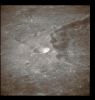
as08-13-2266.jpgAS 08-13-2266 - Beautiful Vision (1 - MULTISPECTRUM; credits: Lunexit)73 visiteLatitude: approx. 13,5° South
Longitude: approx: 79,5° EastMareKromium
|
|
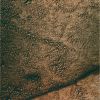
SOL1409-2M251448206EFFAX00P2936M2M1-1.jpgTexture and Colors of the terrain near Spirit (1) - Sol 1409 (MULTISPECTRUM; credits: Lunexit)73 visitenessun commentoMareKromium
|
|

as10-29-4181-0.JPGAS 10-29-4181 - Chaplygin Crater and a (possible) small Lunar Shield-Volcano73 visiteImage Collection: 70mm Hasselblad
Mission: 10
Magazine: 29
Magazine Letter: P
Latitude: 8,2° South
Longitude: 151,0° East
Film Type: 3400
Film Width: 70 mm
Film Color: black & white
Feature(s): CHAPLYGINMareKromium
|
|
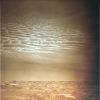
OPP-SOL1419-1P254154733EFF8884P2418R2M1.jpgVictoria's "Lake" (2 - MULTISPECTRUM; credits: Lunexit)73 visitenessun commentoMareKromium
|
|
| 25353 immagini su 2113 pagina(e) |
 |
|
|
|
|
883 | |
|
|
|
|





